Maya Angelou
Quick Facts
- Born
- April 4, 1928
- Died
- May 28, 2014
- Movement
- African American Literature
- Known For
- I Know Why the Caged Bird Sings, Still I Rise, Phenomenal Woman, On the Pulse of Morning
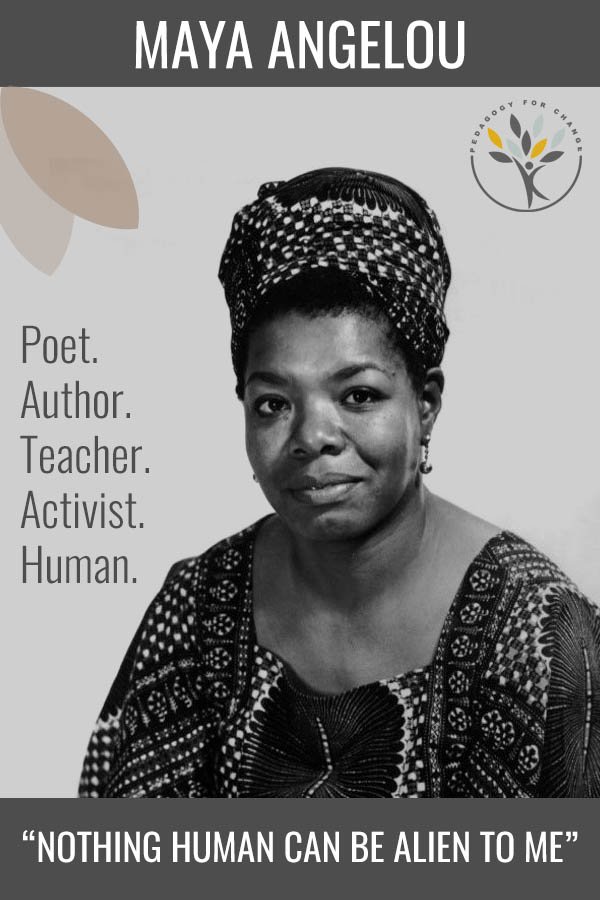
Maya Angelou (April 4, 1928 – May 28, 2014) was an American poet, memoirist, civil rights activist, actress, and educator best known for I Know Why the Caged Bird Sings and the inspirational poem Still I Rise. She became one of the most influential literary voices of the twentieth century by writing honestly about identity, race, resilience, and hope.
Her works continue to inspire readers, students, and leaders around the world. Beyond literature, Angelou worked alongside Dr. Martin Luther King Jr. and Malcolm X, performed on stage and screen, and became the first Black woman to recite a poem at a U.S. presidential inauguration. Her remarkable life combined art with activism, making her a lasting symbol of courage, dignity, and perseverance.
Maya Angelou Quick Facts
| Fact | Details |
|---|---|
| Full Name | Marguerite Annie Johnson |
| Pen Name | Maya Angelou |
| Born | April 4, 1928 |
| Died | May 28, 2014 |
| Birthplace | St. Louis, Missouri, United States |
| Nationality | American |
| Occupation | Poet, memoirist, author, actress, educator, civil rights activist |
| Famous Works | I Know Why the Caged Bird Sings, Still I Rise, Phenomenal Woman, On the Pulse of Morning |
| Literary Movement | African American Literature, Civil Rights Literature, Contemporary Poetry |
| Education | California Labor School (dance and drama studies) |
| Awards | Presidential Medal of Freedom, National Medal of Arts, Grammy Awards, more than 50 honorary degrees |
Who Is Maya Angelou?
Maya Angelou was an American poet, author, and civil rights activist whose writing inspired millions through its messages of strength and hope.
Born as Marguerite Annie Johnson, she adopted the name Maya Angelou early in her performing career. Throughout her life, she became known not only for her poetry but also for her autobiographies, public speaking, and lifelong commitment to equality.
Her memoir I Know Why the Caged Bird Sings broke new ground by openly discussing childhood trauma, racism, and personal resilience. The book remains one of the most widely studied works in American literature.
Angelou’s poetry celebrates dignity, self-respect, courage, and the power to overcome hardship. These universal themes have made her one of the most quoted writers in modern history.
Where Was Maya Angelou Born?
Maya Angelou was born in St. Louis, Missouri, on April 4, 1928.
She spent much of her childhood in Stamps, Arkansas, where she lived with her grandmother after her parents separated. Growing up in the segregated American South exposed her to racial discrimination from an early age.
Despite these hardships, Angelou found comfort in books. She developed a deep love for literature by reading works from William Shakespeare, Charles Dickens, Edgar Allan Poe, and Black American writers.
These early reading experiences helped shape both her imagination and her future writing style.
Maya Angelou’s Early Life and Childhood
Maya Angelou experienced significant hardships during childhood, but those experiences became the foundation of her later writing.
At the age of eight, Angelou suffered a traumatic assault. After speaking about the crime, she stopped talking for several years because she believed her words had caused the attacker’s death.
During this period of silence, she immersed herself in literature. Reading became her way of understanding people, emotions, and the world around her. This quiet time greatly strengthened her love of language.
With encouragement from teachers and family members, Angelou gradually regained her voice. She later described this period as one of the most important stages in becoming a writer.
As a teenager in San Francisco, she became the city’s first Black female streetcar conductor. This achievement reflected the determination that would define the rest of her life.
How Did Maya Angelou Begin Her Writing Career?
Maya Angelou began her literary career after working as a performer, journalist, actress, and civil rights activist.
Before becoming a bestselling author, Angelou enjoyed a diverse career. She worked as a singer, dancer, actress, and stage performer while traveling through Europe and Africa.
Her friendships with leading civil rights figures, including Dr. Martin Luther King Jr. and Malcolm X, deeply influenced her perspective on justice and equality. These experiences later became central themes in both her poetry and prose.
In 1969, she published I Know Why the Caged Bird Sings. The memoir became an international bestseller and established her as one of America’s most important literary voices.
Its honest storytelling transformed autobiographical writing and opened doors for many future writers to share personal experiences with similar courage.
Maya Angelou’s Civil Rights Work
Maya Angelou actively supported the American Civil Rights Movement through writing, organizing, and public advocacy.
She worked with Dr. Martin Luther King Jr. as the Northern Coordinator for the Southern Christian Leadership Conference. She also collaborated with Malcolm X during efforts to establish the Organization of Afro-American Unity.
Her activism extended beyond speeches and meetings. Angelou believed literature could inspire social change by helping readers understand injustice through personal stories.
This commitment to equality remained visible throughout her career and became one of the defining characteristics of her work.
What Makes Maya Angelou’s Writing Style Unique?
Maya Angelou’s writing combines simple language, emotional honesty, powerful imagery, and rhythmic storytelling.
Unlike many poets who relied on complex literary language, Angelou wrote in a clear and accessible style. Her words are easy to understand while carrying deep emotional meaning.
She frequently used repetition, symbolism, biblical references, personal memories, and conversational rhythms. These techniques made her poems memorable and powerful when read aloud.
Another hallmark of her work is optimism. Even when writing about pain, discrimination, or loss, Angelou consistently emphasized resilience, dignity, forgiveness, and hope.
Her ability to balance personal experience with universal human emotions continues to attract readers across generations.
Maya Angelou’s Major Literary Accomplishments
Maya Angelou became one of America’s most celebrated writers through groundbreaking memoirs, influential poetry, and public service.
Her autobiography I Know Why the Caged Bird Sings changed American literature by presenting a deeply personal story that resonated with readers around the world. It remains widely taught in schools and universities.
Angelou also wrote several bestselling poetry collections, memoirs, essays, and children’s books. Her literary success earned dozens of honorary degrees and numerous prestigious awards.
In 1993, she made history by reading her poem On the Pulse of Morning at President Bill Clinton’s inauguration. It was the first inaugural poetry reading by an African American woman and only the second by a poet in U.S. history.
Her influence extended beyond books, making her a respected educator, lecturer, and cultural icon whose words continue to inspire millions.
Maya Angelou Poems
Maya Angelou wrote dozens of poems across several acclaimed collections, with many becoming classics of modern American poetry.
Her poetry is known for its uplifting tone, powerful rhythm, and honest exploration of race, identity, womanhood, freedom, and resilience. Rather than using overly complex language, Angelou wrote in a style that speaks directly to readers while conveying profound emotional truths. Many of her poems are widely taught in schools and continue to inspire people around the world.
Below are some of Maya Angelou’s most famous poems and poetry collections.
Still I Rise
“Still I Rise” is Maya Angelou’s most famous poem and a lasting symbol of resilience and self-confidence.
Published in 1978 as part of the poetry collection And Still I Rise, the poem celebrates courage in the face of racism, sexism, and oppression. Through confident repetition and uplifting imagery, Angelou portrays an unbreakable spirit that refuses to be defeated. Today, Still I Rise remains one of the most widely quoted and studied poems in modern American literature.
Phenomenal Woman
“Phenomenal Woman” celebrates confidence, self-worth, and the unique beauty of every woman.
First published in 1978, this empowering poem challenges traditional ideas of beauty by focusing on inner strength, dignity, and self-assurance. Its conversational style and memorable rhythm have made it one of Angelou’s most beloved works, frequently shared during women’s empowerment events and educational programs.
Caged Bird
“Caged Bird” explores the contrast between freedom and oppression through the image of two birds.
Published in 1983, the poem expands on themes introduced in Angelou’s memoir I Know Why the Caged Bird Sings. The free bird represents opportunity, while the caged bird symbolizes those restricted by injustice. Its vivid symbolism has made it one of the defining poems of African American literature.
On the Pulse of Morning
“On the Pulse of Morning” was written for President Bill Clinton’s first presidential inauguration in 1993.
Angelou became the first Black woman to recite a poem at a U.S. presidential inauguration. The poem encourages unity, responsibility, and hope while inviting Americans to build a more inclusive future together. Its historic public reading introduced Angelou’s poetry to millions of viewers worldwide.
Alone
“Alone” reminds readers that lasting happiness and success depend on community rather than isolation.
Published in 1975, the poem reflects Angelou’s belief that compassion and human connection are essential parts of life. Its straightforward language and universal message continue to resonate with readers across cultures and generations.
Woman Work
“Woman Work” honors the unseen labor performed by countless women every day.
Appearing in And Still I Rise, the poem follows the exhausting responsibilities of a working woman before finding comfort in nature. Angelou’s rhythmic language captures both physical hardship and emotional resilience, making it one of her most recognizable feminist poems.
Equality
“Equality” is a passionate call for justice, fairness, and equal opportunity for all people.
Through powerful repetition and musical rhythm, Angelou expresses the ongoing struggle against discrimination. The poem remains relevant in discussions about civil rights, human dignity, and social justice, reflecting her lifelong commitment to equality.
Life Doesn’t Frighten Me
“Life Doesn’t Frighten Me” encourages children and adults to face fear with courage and imagination.
Originally published in 1993, the poem uses simple language and playful imagery to inspire confidence. It later became especially popular through an illustrated edition featuring artwork by Jean-Michel Basquiat, introducing Angelou’s work to younger audiences.
Maya Angelou Books
Maya Angelou wrote more than 30 books, including autobiographies, poetry collections, essays, and children’s books.
Although she gained worldwide recognition as a poet, Angelou was equally admired for her autobiographical writing. Her memoirs blended personal experiences with broader themes of race, identity, and perseverance, influencing generations of writers.
Some of her best-known books include:
- I Know Why the Caged Bird Sings (1969)
- Gather Together in My Name (1974)
- Singin’ and Swingin’ and Gettin’ Merry Like Christmas (1976)
- The Heart of a Woman (1981)
- All God’s Children Need Traveling Shoes (1986)
- Wouldn’t Take Nothing for My Journey Now (1993)
- Letter to My Daughter (2008)
- Mom & Me & Mom (2013)
These books remain widely read because they combine personal storytelling with universal lessons about resilience, family, and hope.
What Is Still I Rise by Maya Angelou About?
“Still I Rise” celebrates resilience, dignity, and the determination to overcome prejudice and hardship.
The poem addresses people who attempt to diminish or silence others because of race, gender, or social status. Instead of responding with anger or despair, the speaker rises with confidence and pride.
Its message reaches beyond any one community. Readers around the world connect with the poem because it speaks to anyone who has faced rejection, discrimination, or personal setbacks. The poem’s optimistic tone has made it an enduring symbol of perseverance.
Maya Angelou’s Son
Maya Angelou had one son, Guy Johnson, who remained an important part of her life.
Angelou gave birth to Guy Johnson in 1944, when she was just sixteen years old. Raising him as a single mother brought many challenges, yet she often described motherhood as one of the most meaningful experiences of her life.
Guy Johnson later built successful careers in writing, business, and public service. Throughout Angelou’s memoirs, readers gain insight into the close relationship between mother and son and the sacrifices she made to provide him with opportunities.
Maya Angelou’s Greatest Accomplishments
Maya Angelou earned worldwide recognition for her achievements in literature, education, civil rights, and public service.
Her accomplishments extended far beyond publishing bestselling books. Through decades of activism, teaching, and public speaking, she became one of America’s most respected cultural figures.
Some of her greatest accomplishments include:
- Publishing the bestselling memoir I Know Why the Caged Bird Sings.
- Writing internationally celebrated poetry collections.
- Receiving the Presidential Medal of Freedom in 2011.
- Earning more than 50 honorary degrees.
- Winning multiple Grammy Awards for spoken-word recordings.
- Becoming the first Black woman to recite a poem at a U.S. presidential inauguration.
- Serving as a professor at Wake Forest University for many years.
- Inspiring generations through literature and civil rights advocacy.
Major Themes in Maya Angelou’s Poetry
Maya Angelou’s poetry explores universal themes rooted in personal experience and social justice.
Some of the recurring themes include:
- Resilience: Her poems encourage readers to rise above adversity with confidence and determination.
- Freedom: Angelou often explored the struggle for personal and social liberation.
- Identity: Many works celebrate self-acceptance, cultural pride, and individuality.
- Womanhood: She honored women’s strength, dignity, and independence.
- Equality: Civil rights and justice appear throughout both her poetry and prose.
- Hope: Even difficult experiences are presented with optimism and faith in a better future.
- Love and Compassion: Angelou believed kindness and empathy could transform lives.
- Community: Her writing frequently emphasizes unity, shared humanity, and mutual support.
Maya Angelou Quarter
The Maya Angelou quarter honors the poet as the first Black woman featured on a circulating U.S. quarter.
Released in 2022 through the American Women Quarters Program, the coin celebrates Angelou’s extraordinary contributions to American literature and culture. The reverse design depicts her with raised arms, symbolizing hope and freedom, while a bird and the rising sun appear behind her as references to themes found throughout her writing.
The quarter quickly became popular among collectors and history enthusiasts because it recognizes both Angelou’s literary achievements and her lasting influence on American society.
Interesting Maya Angelou Facts
Maya Angelou’s remarkable life included many achievements beyond writing.
- She was born as Marguerite Annie Johnson in 1928.
- The nickname “Maya” came from her older brother.
- She became San Francisco’s first Black female streetcar conductor.
- Angelou spoke several languages, including French, Spanish, Italian, Arabic, and Fante.
- She lived and worked in Egypt and Ghana during the 1960s.
- She collaborated with both Dr. Martin Luther King Jr. and Malcolm X.
- She wrote seven autobiographies, an unusual achievement for a single author.
- She received the Presidential Medal of Freedom from President Barack Obama.
- Wake Forest University appointed her as a professor despite her not holding a traditional college degree.
- Her works continue to be translated into numerous languages and taught worldwide.
How Did Maya Angelou Die?
Maya Angelou died on May 28, 2014, at her home in Winston-Salem, North Carolina, at the age of 86.
Her health had gradually declined in her later years, leading her to reduce public appearances while continuing to write and mentor younger authors. Her passing prompted tributes from world leaders, writers, educators, and millions of readers who admired her work.
Although Maya Angelou is no longer living, her poetry and memoirs remain central to American literature. Her words continue to inspire conversations about courage, equality, dignity, and hope across the globe.
Maya Angelou’s Legacy and Lasting Influence
Maya Angelou transformed American literature by giving voice to experiences that had long been overlooked.
Her memoirs reshaped autobiographical writing by combining personal honesty with broader discussions of race, gender, and identity. Many contemporary writers credit her work with encouraging more open and authentic storytelling.
Angelou’s influence extends beyond literature. Her speeches, poems, and activism continue to inspire educators, artists, political leaders, and readers seeking strength during difficult times. Schools, libraries, and universities around the world regularly include her works in their curricula.
Today, Maya Angelou is remembered not only as a gifted poet but also as a humanitarian whose words continue to encourage compassion, resilience, and the belief that every person has the power to rise above adversity.
Maya Angelou
Maya Angelou remains one of the most influential poets and memoirists in American history because her words continue to inspire courage, equality, and hope. From her difficult childhood in the segregated South to becoming a world-renowned author, educator, and civil rights activist, she transformed personal struggles into timeless literature. Her poems, memoirs, and speeches encourage readers to face challenges with confidence while treating others with dignity and compassion. Works such as Still I Rise, Phenomenal Woman, and I Know Why the Caged Bird Sings continue to shape classrooms, inspire social movements, and comfort millions of readers worldwide. Whether you are discovering Maya Angelou for the first time or returning to her writing, her legacy reminds us that resilience, kindness, and the courage to speak our truth can leave a lasting impact on generations to come.
Frequently Asked Questions
Who is Maya Angelou?
Maya Angelou was an American poet, memoirist, actress, educator, and civil rights activist. She is best known for I Know Why the Caged Bird Sings, Still I Rise, and her lifelong advocacy for equality and human dignity.
When was Maya Angelou born?
Maya Angelou was born on April 4, 1928, in St. Louis, Missouri, United States.
How did Maya Angelou die?
Maya Angelou died of natural causes on May 28, 2014, at her home in Winston-Salem, North Carolina. She was 86 years old.
What is Maya Angelou’s most famous poem?
Her most famous poem is Still I Rise, which celebrates resilience, confidence, and the ability to overcome discrimination and hardship.
What are Maya Angelou’s most famous books?
Her best-known books include I Know Why the Caged Bird Sings, Gather Together in My Name, The Heart of a Woman, Letter to My Daughter, and Mom & Me & Mom.
Did Maya Angelou have children?
Yes. Maya Angelou had one son, Guy Johnson, whom she raised while building her writing and performing career.
Why is Maya Angelou important?
Maya Angelou is important because she used literature to address racism, identity, equality, and resilience. Her work influenced generations of writers, educators, and civil rights advocates.
What awards did Maya Angelou receive?
She received numerous honors, including the Presidential Medal of Freedom, the National Medal of Arts, multiple Grammy Awards, and more than 50 honorary degrees.
What is the Maya Angelou quarter?
The Maya Angelou quarter is a U.S. quarter released in 2022 through the American Women Quarters Program. It honors her achievements as a poet, author, and civil rights activist.
What themes appear in Maya Angelou’s poetry?
Her poetry commonly explores resilience, freedom, hope, identity, equality, love, womanhood, dignity, and the strength of the human spirit.
Poems by Maya Angelou
No poems published yet for this poet.