Robert Frost
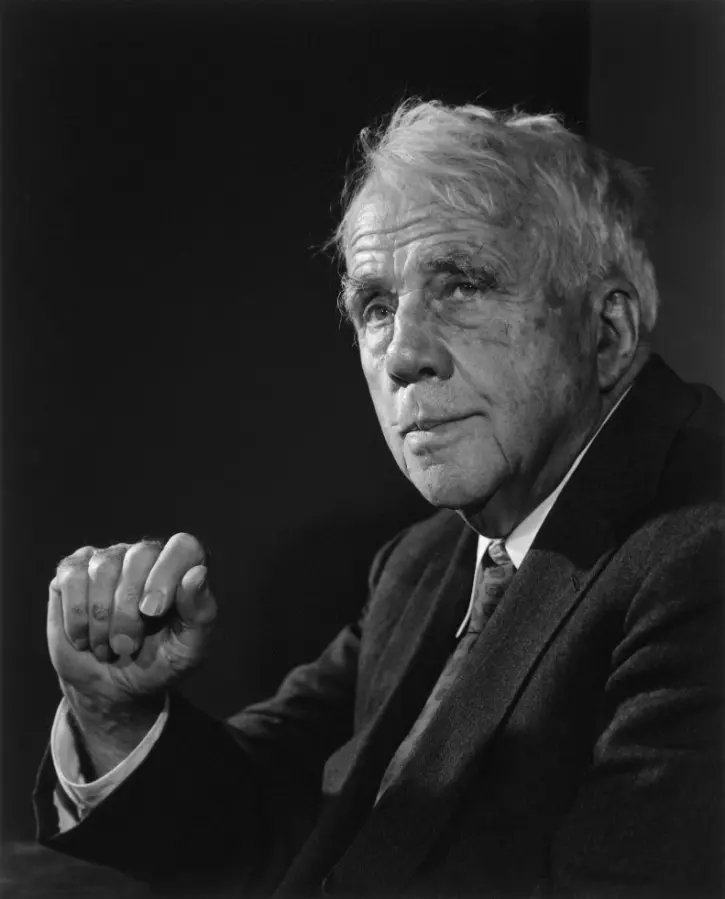
Quick Facts
- Born
- March 26, 1874
- Died
- January 29, 1963
- Movement
- Modernism
Robert Frost remains one of the most admired and influential poets in American literature. Celebrated for his vivid descriptions of rural New England, thoughtful reflections on nature, and timeless exploration of human emotions, Frost created poetry that continues to inspire readers around the world. Although his poems often appear simple on the surface, they reveal deep philosophical ideas about life, choice, loneliness, love, work, and the relationship between people and the natural world.
Winner of four Pulitzer Prizes for Poetry, Robert Frost earned a reputation as one of the greatest American poets of the twentieth century. His works, including The Road Not Taken, Stopping by Woods on a Snowy Evening, Fire and Ice, and Mending Wall, have become classics studied in schools and universities worldwide.
Early Life and Family Background
Robert Lee Frost was born on March 26, 1874, in San Francisco, California. His parents were William Prescott Frost Jr., a journalist and teacher, and Isabelle Moodie, a Scottish immigrant. Frost’s childhood changed dramatically when his father died of tuberculosis in 1885. His mother then moved the family across the country to Lawrence, Massachusetts, where they lived with relatives and rebuilt their lives.
While attending Lawrence High School, Frost developed a passion for literature and writing. He published his first poems in the school magazine, served as class poet, and graduated as co-valedictorian alongside his future wife, Elinor White. Even during these early years, his love for language and storytelling was evident.
Education and Early Career
After graduating from high school in 1892, Frost briefly attended Dartmouth College before leaving to support himself through various jobs. He worked as a teacher, factory laborer, and newspaper delivery driver while continuing to write poetry in his spare time.
In 1894, his poem “My Butterfly: An Elegy” was accepted by The Independent, earning him $15—his first professional payment as a poet. The publication encouraged him to continue pursuing literature despite many rejections from magazines and publishers.
Frost later enrolled at Harvard University, but poor health forced him to leave without completing a degree. Although he never earned a college diploma, universities across the United States would later honor him with numerous honorary degrees in recognition of his extraordinary literary achievements.
Marriage and Life on the Farm
In 1895, Robert Frost married Elinor Miriam White, his longtime sweetheart and strongest supporter. The couple eventually had six children and shared both joyful moments and heartbreaking tragedies throughout their lives.
Frost’s grandfather purchased a farm in Derry, New Hampshire, where Robert spent nearly a decade farming while writing poetry during the early mornings and evenings. Farming proved financially difficult, but those years became one of the most important periods of his creative life.
The peaceful countryside, changing seasons, forests, stone walls, snowy landscapes, and hardworking rural communities became lasting inspirations for his poetry. Many of his best-known poems grew directly from the experiences and observations he made while living in rural New England.
Journey to England and Literary Breakthrough
By 1912, Frost had become discouraged by repeated rejection from American publishers. Hoping for a fresh start, he moved with his family to England, where his literary career finally began to flourish.
Within two years, he published his first two poetry collections:
- A Boy’s Will (1913)
- North of Boston (1914)
These books received widespread praise from leading literary figures, including Ezra Pound and Edward Thomas, helping establish Frost as an important new poetic voice. His writing combined traditional poetic forms with natural speech, creating a style that felt both elegant and accessible.
When Frost returned to the United States in 1915, he was no longer an unknown writer. Instead, he arrived as a respected poet whose work was already attracting national attention.
Rise to National Fame
Throughout the following decades, Robert Frost became one of America’s most celebrated literary figures. He taught at respected institutions including Amherst College, the University of Michigan, and the Bread Loaf School of English, where he mentored countless aspiring writers.
His poetry collections continued to receive critical acclaim, and he earned an unprecedented four Pulitzer Prizes for Poetry for:
- New Hampshire (1924)
- Collected Poems (1931)
- A Further Range (1937)
- A Witness Tree (1943)
No other American poet has matched this remarkable achievement. Frost also served as the United States Poet Laureate and received the Congressional Gold Medal for his outstanding contribution to American literature.
Robert Frost’s Writing Style
Robert Frost developed a poetic voice that balanced simplicity with profound meaning. Instead of relying on overly decorative language, he wrote in the rhythms of everyday conversation while preserving traditional poetic structures such as meter and rhyme.
His poems frequently explore ordinary experiences walking through woods, repairing fences, harvesting apples, or watching snowfall but beneath these familiar scenes lie complex reflections on life, identity, responsibility, freedom, and human relationships.
Frost believed that poetry should reveal unexpected truths. His famous statement, “No surprise for the writer, no surprise for the reader,” reflects his belief that genuine poetry should uncover new understanding for both the poet and the audience.
Major Themes in Robert Frost’s Poetry
Several recurring themes define Frost’s work:
Nature as a Mirror of Human Life
Nature appears throughout Frost’s poetry, not simply as beautiful scenery but as a reflection of human thoughts, emotions, and choices.
Choice and Decision-Making
Poems like The Road Not Taken explore how decisions shape our lives and identities, making them some of the most discussed works in American literature.
Isolation and Loneliness
Many poems examine emotional distance, personal struggles, and the quiet challenges individuals face throughout life.
Work and Responsibility
Having lived as a farmer and teacher, Frost respected honest labor. His poetry often highlights the dignity of work and the responsibilities people carry toward family and society.
Mortality and Time
Frost frequently reflected on aging, death, memory, and the passage of time, yet his poems rarely lose their sense of hope or resilience.
Personal Struggles
Although Robert Frost achieved extraordinary professional success, his personal life was marked by repeated tragedy. He experienced the deaths of several family members, including his father, wife, and multiple children. Mental illness also affected members of his family, creating emotional burdens that remained with him throughout his life.
These experiences gave his poetry emotional depth without making it sentimental. Instead of offering easy answers, Frost explored grief, endurance, and the complexities of the human experience with honesty and compassion.
Later Years and Lasting Legacy
In the later stages of his career, Frost became one of the most recognizable cultural figures in the United States. A memorable moment came in 1961 when he participated in President John F. Kennedy’s inauguration. Unable to read the poem he had prepared because of the bright sunlight, Frost instead recited “The Gift Outright” entirely from memory, creating one of the most iconic moments in American literary history.
Robert Frost passed away on January 29, 1963, at the age of 88. His epitaph, taken from one of his poems, reads: “I had a lover’s quarrel with the world.”
Today, his influence reaches far beyond classrooms and poetry collections. His works remain among the most quoted, analyzed, and beloved poems in English literature. Schools, libraries, museums, and literary organizations continue to preserve his legacy, while generations of readers discover fresh meaning in his timeless verses.
Robert Frost’s Enduring Influence
More than six decades after his death, Robert Frost continues to shape modern poetry and literary education. His ability to combine everyday language with profound philosophical insight has made his work accessible to casual readers while remaining rich enough for scholarly study.
Whether reflecting on the beauty of snowy woods, the symbolism of a country road, or the quiet wisdom hidden within ordinary moments, Frost demonstrated that poetry can reveal extraordinary truths through familiar experiences. His legacy endures because his poems speak to universal human questions that remain just as meaningful today as they were during his lifetime.
For readers seeking poetry that blends nature, wisdom, emotion, and timeless storytelling, Robert Frost remains one of the greatest voices in American literature.
Poems by Robert Frost
No poems published yet for this poet.