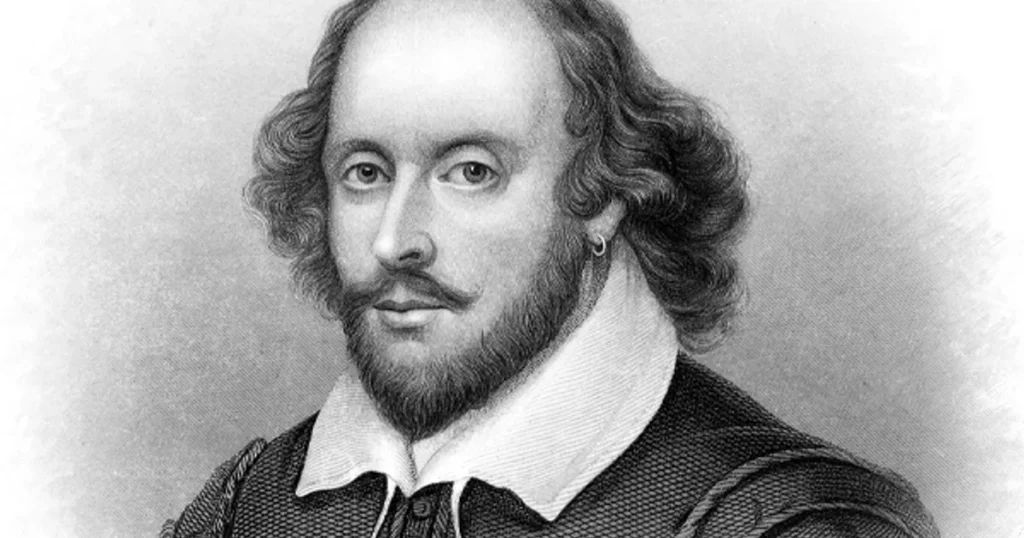
William Shakespeare: Famous Poet, Playwright & Bard of Avon
Quick Facts
- Born
- April 23, 1564
- Died
- April 23, 1616
- Movement
- English Renaissance
William Shakespeare was born on April 23, 1564, in Stratford-upon-Avon, Warwickshire, England, and died on April 23, 1616, at the age of 52 , widely believed to be the same calendar date. Known as the Bard of Avon and England’s national poet, Shakespeare is considered the greatest writer in the English language. As a poet, playwright, and actor during the Elizabethan and Jacobean eras, he wrote approximately 39 plays, 154 sonnets, and several narrative poems that continue to be performed and studied worldwide.
His plays explore universal human experiences such as love, ambition, jealousy, revenge, power, friendship, and forgiveness. Whether readers enjoy tragedy, comedy, history, or romance, Shakespeare’s writing remains relevant because it captures emotions and conflicts that transcend time and culture.
Early Life and Family
Shakespeare was born in Stratford-upon-Avon, Warwickshire, England , a bustling market town located approximately 100 miles northwest of London. His father John Shakespeare was a glove-maker and leather merchant . He was the third child of John Shakespeare, a respected local businessman and civic official, and Mary Arden, who came from a prosperous farming family. Growing up in a thriving market town exposed Shakespeare to everyday life, local traditions, and stories that later influenced his writing.
Scholars believe he attended the King’s New School in Stratford, where he likely studied Latin grammar, classical literature, rhetoric, and history. Although there is no evidence that he attended a university, his extensive knowledge of history, mythology, politics, and human nature is reflected throughout his works.
William Shakespeare’s Wife — Anne Hathaway
William Shakespeare married Anne Hathaway in November 1582. At the time, Shakespeare was 18 years old and Anne was 26 — eight years his senior. Anne was born around 1556 in Shottery, a village near Stratford-upon-Avon, and grew up on a 90-acre farm. Their marriage lasted over 30 years until Shakespeare’s death in 1616. Anne survived her husband and died on August 6, 1623.
William Shakespeare’s Children
William Shakespeare had three children with Anne Hathaway. Their eldest daughter, Susanna, was baptized on May 26, 1583. The following year, Anne gave birth to twins: Hamnet and Judith, baptized on February 2, 1585. Hamnet, Shakespeare’s only son, died at the age of eleven in 1596. Scholars often link this personal tragedy to the grief and mortality themes found in Shakespeare’s later tragedies. Susanna and Judith both survived to adulthood. Shakespeare had four grandchildren, but none had children of their own, so there are no known direct descendants of William Shakespeare alive today.
Journey to London
Sometime during the late 1580s or early 1590s, Shakespeare moved to London, where he established himself as both an actor and playwright.
London was experiencing a cultural renaissance, and public theatres attracted audiences from every social class. Shakespeare became associated with the Lord Chamberlain’s Men, one of the city’s most successful acting companies. After King James I came to the throne, the company received royal patronage and became known as the King’s Men.
His involvement in both writing and performing gave him a unique understanding of theatre, allowing him to create plays that entertained audiences while exploring complex human emotions.
William Shakespeare’s Writing Career
Shakespeare’s writing career spanned roughly three decades, from the early 1590s until his retirement around 1613. He worked primarily as a playwright for the Lord Chamberlain’s Men (later the King’s Men under royal patronage from King James I), but his career as a writer covered multiple genres.
As a poet, Shakespeare published Venus and Adonis (1593) and The Rape of Lucrece (1594), both narrative poems dedicated to the Earl of Southampton. His 154 sonnets, published in 1609, are considered among the finest achievements in English poetry, exploring themes of love, time, mortality, and beauty.
As a playwright, his career is often divided into three phases: early works featuring histories and comedies (1590–1600), the great tragedies (1600–1608), and the late romances (1608–1613). The Globe Theatre, which he co-owned from 1599, became the primary home of his work.
Shakespeare’s Greatest Works
William Shakespeare wrote approximately 39 plays, 154 sonnets, and several narrative poems. His works are generally grouped into four categories:
Tragedies
Shakespeare’s tragedies examine ambition, betrayal, revenge, and the consequences of flawed decisions. Famous examples include Hamlet, Macbeth, Othello, and King Lear. These plays feature memorable characters whose struggles continue to resonate with modern audiences.
Comedies
His comedies celebrate love, mistaken identities, clever dialogue, and joyful endings. Popular titles include A Midsummer Night’s Dream, Twelfth Night, Much Ado About Nothing, and As You Like It . But A Midsummer Night’s Dream remains one of Shakespeare’s most widely studied and performed plays, frequently appearing in school curricula worldwide
Histories
The history plays dramatize the lives of English monarchs and major political events. Works such as Henry V, Richard III, and Henry IV explore leadership, loyalty, and national identity.
Poetry
Beyond theatre, Shakespeare was also an accomplished poet. His 154 sonnets examine themes including love, beauty, time, friendship, and mortality. Many literary critics consider the Shakespearean sonnet one of the greatest achievements in English poetry.
William Shakespeare’s Writing Style and Influence on the English Language
Shakespeare’s works are written in Early Modern English, combining iambic pentameter with colloquial dialogue, making his verse both structured and emotionally immediate.
One reason William Shakespeare remains influential is his extraordinary command of language. He blended poetic expression with natural dialogue, making his characters feel authentic and emotionally compelling.
His writing introduced memorable metaphors, vivid imagery, and expressive vocabulary that enriched the English language. Many common English expressions are believed to have originated in or been popularized by his works.
Shakespeare’s ability to portray complex personalities also changed dramatic literature. Characters such as Hamlet, Lady Macbeth, Juliet, and Falstaff possess psychological depth rarely seen in earlier plays.
Themes That Continue to Inspire Readers
Across his works, Shakespeare explored timeless subjects that remain meaningful today:
- Love and romance
- Ambition and power
- Revenge and justice
- Family relationships
- Friendship and loyalty
- Fate versus free will
- Identity and self-discovery
- Life, death, and mortality
Because these themes reflect universal human experiences, Shakespeare’s writing continues to connect with readers across generations.
Lasting Legacy
William Shakespeare’s influence extends far beyond literature. His plays are regularly performed by theatres worldwide and adapted into films, television series, novels, and modern stage productions. Schools and universities continue to teach his works because they offer valuable insights into language, history, philosophy, and human behavior.
His contribution to English literature is unmatched, inspiring countless playwrights, poets, novelists, filmmakers, and scholars. Many of his stories have been reimagined in contemporary settings while preserving the emotional depth that made the originals enduring classics.
Today, Shakespeare’s works are available in hundreds of languages, making him one of the most widely read and performed authors in history.
Famous William Shakespeare Quotes
Shakespeare’s writing produced some of the most quoted lines in the English language. A few of his most celebrated include:
“We know what we are, but know not what we may be.” — Hamlet
- “To be, or not to be, that is the question.” — Hamlet
“All the world’s a stage, and all the men and women merely players.” — As You Like It
“What’s in a name? That which we call a rose by any other name would smell as sweet.” — Romeo and Juliet
Frequently Asked Questions About William Shakespeare
1. When was William Shakespeare born?
William Shakespeare was born on approximately April 23, 1564, in Stratford-upon-Avon, Warwickshire, England. His exact birth date is uncertain because no official birth certificate exists from that era. The date of April 23 is traditionally accepted based on his baptism record dated April 26, 1564, as baptisms were typically performed within a few days of birth.
2.When did William Shakespeare die?
William Shakespeare died on April 23, 1616, at the age of 52. His date of death is confirmed by historical records. He had retired from London and returned to his hometown of Stratford-upon-Avon approximately three years before his death. The exact cause of his death remains unknown, though some accounts suggest a brief illness.
3.Where was William Shakespeare born?
William Shakespeare was born in Stratford-upon-Avon, a market town in Warwickshire, England, located approximately 100 miles northwest of London. His birthplace on Henley Street still stands today and is preserved as a heritage site known as Shakespeare’s Birthplace.
4.Who was William Shakespeare’s wife?
William Shakespeare’s wife was Anne Hathaway, whom he married in November 1582. Anne was born around 1556 in Shottery, near Stratford-upon-Avon, and was eight years older than Shakespeare. Their marriage lasted over 30 years until Shakespeare’s death in 1616. Anne Hathaway survived her husband and died in 1623.
5.Did William Shakespeare have children?
Yes, William Shakespeare had three children with his wife Anne Hathaway. Their eldest daughter Susanna was born in 1583, followed by twins Hamnet and Judith in 1585. Hamnet, his only son, died at age eleven in 1596. Shakespeare’s four grandchildren all died without leaving heirs, meaning there are no known direct descendants of William Shakespeare alive today.
6.Who is William Shakespeare?
William Shakespeare was an English playwright, poet, and actor widely regarded as the greatest writer in the English language and the world’s greatest dramatist. Born in 1564 in Stratford-upon-Avon, he wrote approximately 39 plays, 154 sonnets, and several narrative poems during the Elizabethan and Jacobean eras. He is also known as the Bard of Avon and England’s national poet.
7.What are William Shakespeare’s most famous works?
William Shakespeare’s most famous plays include Hamlet, Macbeth, Romeo and Juliet, Othello, King Lear, and A Midsummer Night’s Dream. His 154 sonnets are considered his greatest poetic achievement. Among his famous narrative poems are Venus and Adonis and The Rape of Lucrece.
8.What was William Shakespeare’s birth year?
William Shakespeare’s birth year was 1564. He was baptized on April 26, 1564, and his birth is traditionally celebrated on April 23 of that year.
Poems by William Shakespeare: Famous Poet, Playwright & Bard of Avon