
Bluebird by Charles Bukowski
“Bluebird” by Charles Bukowski explores the conflict between emotional vulnerability and the tough public identity a person builds to protect himself. Written in free verse and published in Bukowski’s later career, the poem uses the image of a small bluebird trapped inside the speaker’s heart to represent feelings he struggles to express. The speaker hides this sensitive part of himself behind alcohol, cigarettes, and a deliberately hardened personality, fearing that honesty could damage his reputation and success. Yet he never completely silences the bird. Through conversational language, dark humor, and a surprisingly tender ending, Bukowski examines the price of emotional repression and the private need for connection.
Meaning and Summary of Bluebird
The meaning of Charles Bukowski’s “Bluebird” centers on a person who suppresses his emotions because he believes vulnerability threatens the identity he has constructed. The bluebird represents the speaker’s tender, sensitive, and emotionally honest side. Although this part of him wants to emerge, he repeatedly forces it back inside, worried that other people will see him differently.
The speaker protects himself through drinking, smoking, and maintaining a tough exterior. His concern about damaging his book sales reveals that his public image and professional success have become part of the barrier separating him from his feelings. However, he occasionally allows the bird to emerge when nobody is watching. He acknowledges its presence, offers it a small measure of comfort, and then hides it again.
The ending complicates the idea that the speaker has completely rejected his sensitivity. He admits that the bird is still alive and that their secret arrangement brings him close to tears. His denial of crying suggests that the struggle remains unresolved. The poem is therefore not simply about sadness; it is about the compromises people make to protect themselves from emotional exposure.
Themes in Bluebird
One of the poem’s central themes is emotional repression. The speaker repeatedly tells the bird to remain hidden, treating his own sensitivity as something that could interfere with his life. His language suggests that vulnerability is not merely uncomfortable; he fears it could disrupt his identity and professional standing.
Another major theme is masculinity and emotional toughness. The speaker presents himself as someone who must remain hard, independent, and unaffected. His repeated insistence that he does not cry exposes the pressure behind this performance. The need to appear strong becomes a restriction that prevents him from expressing ordinary human feelings.
Public identity versus private self is equally important. The speaker interacts with people in everyday settings without revealing his inner emotional life. His reference to European book sales makes the conflict particularly personal: the sensitive self threatens not only his social image but also the commercial identity he has built as a writer.
Finally, the poem explores loneliness and the need for tenderness. The bird remains alive, suggesting that the speaker cannot entirely destroy his emotional capacity. Their secret relationship provides a form of companionship, even if it is limited by fear. Bukowski presents vulnerability as something the speaker resists but still needs.
Form, Meter, and Rhyme Scheme
“Bluebird” is written in free verse, meaning it does not follow a fixed pattern of meter, stanza length, or end rhyme. Bukowski uses irregular line breaks and uneven spacing to make the poem sound like a private conversation. The speaker seems to be thinking aloud, arguing with himself, and trying to maintain control over an uncomfortable truth.
There is no consistent rhyme scheme. Instead, the poem gains its rhythm through repetition, conversational phrasing, pauses, and the recurring image of the bird. The repeated opening statement creates a circular structure, returning the reader to the same emotional conflict even as the speaker reveals more about himself.
Enjambment also plays an important role. Sentences frequently continue across short lines, delaying a thought or emphasizing an individual word. This gives the speaker’s voice a hesitant, spontaneous quality. The final lines slow into short fragments, reflecting the delicate balance between acknowledging emotion and denying it. The poem’s loose structure suits its subject: the speaker’s feelings cannot be neatly organized because he is constantly trying to suppress them.
Literary and Poetic Devices in Bluebird
The central device is extended metaphor. The bluebird represents the speaker’s hidden emotional life, particularly his tenderness, sadness, and desire for self-expression. Rather than describing these feelings abstractly, Bukowski gives them a living form that can be restrained, threatened, comforted, and heard.
Personification develops this metaphor. The bird behaves like an independent companion with needs and feelings of its own. The speaker addresses it directly, creating the impression that he is conducting a conversation with a part of himself that he cannot fully control.
Repetition reinforces the emotional conflict. The recurring statement about the bird wanting to escape functions almost like a refrain. Each return reveals another aspect of the speaker’s resistance, from his insistence on toughness to his fear of professional embarrassment.
Bukowski also uses contrast and irony. Alcohol, cigarettes, and the speaker’s public persona represent the hard exterior he maintains, while the bird suggests emotional delicacy. His reference to commercial success introduces dark humor: he treats emotional honesty as though it might threaten his business interests. The closing question about crying is ironic because the reader has just witnessed a deeply moving admission. His denial reveals the very vulnerability he is trying to conceal.
Finally, the short lines and frequent enjambment create pauses that make the speaker’s hesitation audible. The form itself reflects the struggle between what he feels and what he allows himself to say.
Stanza-by-Stanza Analysis
The poem develops through a series of returns to the same image, with each passage revealing a different reason the speaker refuses to release his emotions.
In the opening passage, the speaker introduces the bluebird and immediately establishes a conflict between emotional expression and toughness. He commands the bird to remain hidden because he does not want others to see it. This opening establishes that the problem is not an absence of feeling but a fear of being exposed.
The next passage expands the speaker’s strategy of concealment. He uses alcohol and cigarette smoke while moving through ordinary social environments. The people he encounters remain unaware of the bird’s existence. These details suggest that he can participate in everyday life while keeping his emotional struggles private.
In the following passage, the speaker becomes more openly defensive. He questions whether allowing the bird out would disrupt his life. His concern about book sales in Europe is especially revealing. The possibility of showing vulnerability is treated as a threat to his reputation as a writer, and the humor makes his fear seem both understandable and absurd.
The poem then introduces a small change. Rather than keeping the bird imprisoned at all times, the speaker occasionally allows it to emerge when everyone else is asleep. Darkness and privacy create a space in which he can acknowledge feelings that seem unacceptable in public. He reassures the bird, suggesting that beneath his harsh exterior there is genuine concern for his own emotional well-being.
In the final passage, the bird returns inside, but its song continues. This detail matters because the speaker has not completely silenced or destroyed his sensitivity. The two exist together through an uneasy private arrangement. The speaker’s suggestion that this arrangement could make someone weep, followed by his insistence that he does not cry, creates the poem’s final irony. His denial becomes evidence of the emotional truth he cannot comfortably express.
Historical and Literary Context
Charles Bukowski (1920–1994) was a German-born American poet and prose writer strongly associated with Los Angeles, working-class life, drinking, loneliness, and unconventional literary voices. His writing often uses direct language, everyday situations, and a deliberately rough persona to explore experiences that more polished literary styles might conceal.
“Bluebird” fits this literary identity while also complicating the tough, hard-drinking image associated with Bukowski’s work. The speaker resembles the writer’s familiar public persona, but the poem exposes the emotional cost of maintaining it. Its casual speech and dark humor make the admission of vulnerability feel unplanned, as if the speaker has revealed more than he intended.
The poem is also associated with Bukowski’s later literary legacy. His poetry collection The People Look Like Flowers at Last was published posthumously in 2007, although the precise original publication history of “Bluebird” should not be assumed from that collection alone.
Conclusion
“Bluebird” remains compelling because it reveals the vulnerability hidden beneath a carefully maintained image of toughness. Through the metaphor of a trapped bird, Bukowski explores the fear of emotional exposure, the pressure to appear strong, and the difficulty of accepting one’s own sensitivity. The speaker never reaches a complete resolution: he continues to hide his feelings, yet he cannot silence them entirely. That contradiction gives the poem its emotional force. Readers may recognize the same struggle in their own lives, especially when they feel compelled to conceal sadness or tenderness to meet other people’s expectations.
Frequently Asked Questions
“Bluebird” describes a person who hides his sensitive emotions to protect his tough public image. The bluebird symbolizes the feelings he fears revealing to others. Although he repeatedly suppresses these feelings, he secretly allows them to emerge, showing that emotional vulnerability remains an essential part of his identity.
The bluebird symbolizes the speaker’s inner tenderness, sadness, emotional honesty, and capacity for vulnerability. Its desire to escape represents the urge to express feelings that the speaker considers incompatible with his public persona. Because the bird remains alive and continues singing, it also suggests that suppressed emotions cannot be completely eliminated.
The speaker fears that revealing his emotional side will undermine his reputation and the identity he has built around toughness. His concern about book sales adds a professional dimension to this fear. He believes that appearing vulnerable could interfere with his success, so he permits himself emotional expression only when he is alone.
The poem uses an extended metaphor, personification, repetition, contrast, irony, and enjambment. The bluebird serves as the central metaphor for the speaker’s hidden emotions, while repetition emphasizes his ongoing struggle to suppress them. Irony becomes especially important at the end, when his denial of crying follows an admission that his private arrangement with the bird could move him to tears.
Yes. “Bluebird” is a free-verse poem without a fixed meter or regular rhyme scheme. Its rhythm comes from conversational language, repeated phrases, short lines, and enjambment. This flexible structure supports the poem’s intimate, confessional voice and mirrors the speaker’s shifting attempts to control his emotiread
Read about more Poems
About Charles Bukowski
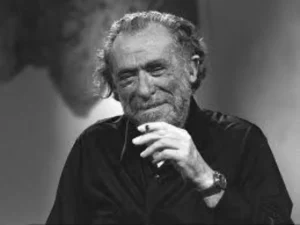
Charles Bukowski was a German-American poet born on August 16, 1920, in Andernach, Germany, and best known for his raw poetry and fiction about ordinary life. He grew up in Los Angeles, where poverty, difficult…
Read Full Biography →More Poems by Charles Bukowski