
Charles Bukowski Biography: Poems, Books, Life, Style and Legacy
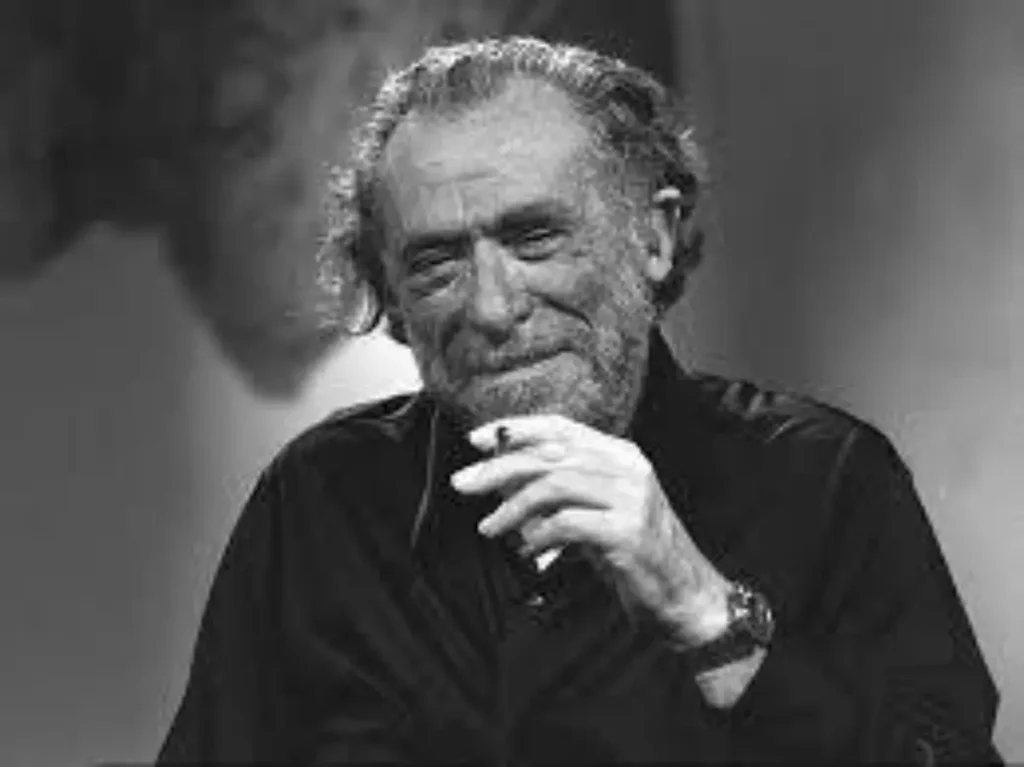
Quick Facts
- Born
- August 16, 1920
- Died
- March 9, 1994
- Movement
- Dirty Realism
- Known For
- Love Is a Dog from Hell
Charles Bukowski was a German-American poet born on August 16, 1920, in Andernach, Germany, and best known for his raw poetry and fiction about ordinary life. He grew up in Los Angeles, where poverty, difficult jobs, drinking, loneliness, relationships, gambling, and city life became major subjects in his writing. His work often follows outsiders and working-class people who live far from the polished image of American success. Bukowski wrote thousands of poems, hundreds of short stories, and six novels, while also working for many years at the U.S. Postal Service. His most famous books include Post Office, Factotum, Women, Ham on Rye, and Love Is a Dog from Hell. His simple, direct style helped make him a major underground literary figure and an enduring voice of American outsider literature.
Charles Bukowski Quick Facts
| Fact | Details |
|---|---|
| Full name | Henry Charles Bukowski Jr. |
| Birth name | Heinrich Karl Bukowski |
| Born | August 16, 1920 |
| Died | March 9, 1994 |
| Birthplace | Andernach, Germany |
| Deathplace | San Pedro, California, United States |
| Nationality | German-American |
| Occupation | Poet, novelist, short-story writer, columnist |
| Education | Los Angeles City College, 1939–1941 |
| Famous works | Post Office, Factotum, Women, Ham on Rye, Love Is a Dog from Hell |
| Literary style | Free verse, autobiographical fiction, underground and outsider literature |
| Major subjects | Work, alcohol, love, loneliness, poverty, Los Angeles, writing, death |
| Spouse | Barbara Frye; Linda Lee Beighle |
| Child | Marina Louise |
| Literary movement | Often linked with underground literature and dirty realism; not formally a Beat writer |
Bukowski was born in Germany to an American father and German mother and moved with his family to Los Angeles when he was about two years old. He later became closely associated with Los Angeles and its working-class neighborhoods.
What Is Charles Bukowski Most Famous For?
Charles Bukowski is most famous for gritty poetry and fiction about drinking, work, sex, loneliness, poverty, gambling, and life on the margins.His writing became popular because it sounded different from polished literary poetry. He used everyday speech, short lines, humor, shocking details, and stories drawn from ordinary life.Much of his fiction and poetry centers on Henry Chinaski, a fictionalized version of Bukowski. Chinaski appears in works such as Post Office, Factotum, Women, and Ham on Rye.Bukowski became a cult literary figure rather than a traditional academic poet. His books first reached many readers through small presses and underground publications before his reputation expanded internationally.
Charles Bukowski Early Life and Childhood
Charles Bukowski’s early life was shaped by family conflict, bullying, acne, loneliness, and life in Los Angeles.His father, Henry Bukowski, was an American soldier who worked in Los Angeles after returning from Europe. Bukowski later described his father as extremely strict and physically abusive. These childhood experiences became important material in his autobiographical writing.
As a teenager, Bukowski suffered severe acne and was bullied by other boys. He also felt isolated from his classmates. Books became an important escape, and his difficult childhood later provided material for Ham on Rye.Alcohol entered his life when he was young. Bukowski later turned his experiences with drinking, poverty, rejection, and alienation into a literary world that was both comic and painful.
What Was Charles Bukowski’s Education?
Charles Bukowski attended Los Angeles City College from 1939 to 1941 but did not complete a degree.
While at college, he studied subjects including journalism, literature, and art. He was more interested in becoming a writer than following a conventional career path.
After leaving college, Bukowski moved through different cities and jobs while trying to establish himself as a writer. His education therefore came partly from books and partly from the difficult experiences that later filled his poems and stories.
How Did Charles Bukowski Become a Writer?
Charles Bukowski began publishing short fiction in the 1940s, but his early attempts brought many rejection letters and little financial success.
His first published story appeared in Story magazine in 1944. For several years, however, he became discouraged and largely stopped writing seriously.
During the 1950s, a serious health crisis changed his direction. After suffering a near-fatal bleeding ulcer, he returned to writing and increasingly focused on poetry. The experience helped push him toward the writing career that later made him famous.
His first poetry collection, Flower, Fist and Bestial Wail, appeared in 1960. It marked the beginning of a highly productive period that eventually produced dozens of books.
Charles Bukowski’s Writing Career and Literary Rise
Charles Bukowski’s writing career grew through small magazines, underground newspapers, and independent presses during the 1950s and 1960s.
One of the most important developments was his relationship with publisher John Martin of Black Sparrow Press. Martin later offered Bukowski financial support that allowed him to leave his postal job and write full-time.
That decision transformed his career. During the 1970s and 1980s, he produced novels, poetry collections, short stories, letters, essays, and other literary works at an extraordinary rate.
His growing success did not completely change his subject matter. He continued writing about ordinary people, bars, racetracks, relationships, writing, aging, failure, and the strange humor of daily life.
Charles Bukowski Poems and Poetry
Charles Bukowski wrote thousands of poems, and a major Bukowski database currently catalogs thousands of poems alongside hundreds of stories and other works.
His poetry is usually written in free verse, meaning it does not follow a fixed rhyme or meter. He favored conversational language, simple sentence structures, sharp observations, humor, and stories drawn from everyday experience.
Unlike highly formal poetry, his poems often sound like someone speaking directly to the reader. Yet the apparent simplicity can hide careful control of rhythm, line length, repetition, timing, and narrative.
“Bluebird”
“Bluebird” is one of Charles Bukowski’s most famous poems and explores the hidden emotional side of a tough public personality.
The poem contrasts an outwardly hard speaker with a vulnerable inner self. Its central bird image represents tenderness that the speaker tries to keep hidden.
The poem is important because it challenges the common image of Bukowski as only a hard-drinking, aggressive writer. Beneath that public mask, his poetry often contains loneliness and emotional sensitivity.
“The Laughing Heart”
“The Laughing Heart” is a widely read Bukowski poem about choice, possibility, and the small amount of control people may still have over their lives.
Its tone is more hopeful than many of his darker poems. Instead of focusing only on defeat, it encourages readers to recognize moments when life can still change.
The poem is often associated with Bukowski’s ideas about personal freedom. Its simple language makes the message accessible without turning it into a traditional motivational poem.
“Alone with Everybody”
“Alone with Everybody” examines loneliness and the strange distance between people. It reflects a major concern in Bukowski’s poetry: the desire for connection alongside a strong habit of isolation.
The poem is significant because it shows how Bukowski could turn a simple human problem into an existential question. Being surrounded by people does not necessarily remove loneliness.
“So, You Want to Be a Writer”
“So, You Want to Be a Writer” is often searched for by aspiring writers because it presents Bukowski’s blunt view of artistic work.
The poem questions the idea of forcing yourself to write merely because you want the identity of being a writer. Its larger message is about authentic creative need rather than literary ambition alone.
“The Crunch”
“The Crunch” reflects Bukowski’s interest in failure, aging, work, and the pressures of ordinary existence. Like many of his poems, it finds drama in experiences that conventional poetry might ignore.
Its importance comes from the way Bukowski makes ordinary frustration feel like a larger statement about human survival.
“Love Is a Dog from Hell”
“Love Is a Dog from Hell” is both the title of a major poetry collection and one of the best-known phrases associated with Bukowski’s writing about relationships. The collection was published in 1977.
The poems explore attraction, sex, heartbreak, jealousy, loneliness, and the unpredictable nature of romantic relationships. The title captures Bukowski’s habit of mixing tenderness with humor and bitterness.
“Dinosauria, We”
“Dinosauria, We” is a later poem that imagines a damaged society heading toward collapse. Its large-scale imagery differs from Bukowski’s usual small stories of bars, work, and personal relationships.
The poem shows that his poetry could move beyond autobiography. It also demonstrates his ability to use simple language for a much larger social and historical vision.
“For Jane”
“For Jane” is connected to Jane Cooney Baker, an important early relationship in Bukowski’s life. Her death in 1962 became the subject of one of his deeply personal poems.
The poem reveals a softer side of his writing. It combines love, regret, memory, and grief, showing that his treatment of relationships was not always cynical or detached.
What Are Charles Bukowski’s Best and Most Famous Poems?
Charles Bukowski’s best-known poems include “Bluebird,” “The Laughing Heart,” “Alone with Everybody,” “So, You Want to Be a Writer,” “Dinosauria, We,” “For Jane,” and “The Crunch.”
Readers often choose different favorites because Bukowski’s poetry covers several moods. Some poems are funny and rebellious, while others are lonely, romantic, angry, or quietly hopeful.
His poetry collections are also useful for readers who want to understand his development rather than reading individual poems separately.
Charles Bukowski Books and Major Literary Works
Charles Bukowski published more than forty books of poetry and prose during his lifetime, and many additional works appeared after his death.
His books include novels, poetry collections, short-story collections, letters, journals, and other prose. Together they create a fictional and semi-autobiographical world built around Los Angeles and its outsiders.
Post Office
Post Office was published in 1971 and became Bukowski’s first novel. It draws heavily on his years working for the United States Postal Service.
The novel follows Henry Chinaski through a monotonous postal job filled with supervisors, difficult customers, drinking, gambling, relationships, and exhaustion.
The book became important because it turned an ordinary working life into literary material. It also established Chinaski as one of Bukowski’s central fictional identities.
Factotum
Factotum was published in 1975 and follows Chinaski through a series of low-paying jobs. The word “factotum” refers to someone who performs many different kinds of work.
The novel reflects Bukowski’s experience of moving from job to job. Instead of presenting work as a source of pride or progress, it often appears as something a person tolerates to survive.
Women
Women was published in 1978 and focuses heavily on relationships, sex, aging, desire, and the complicated behavior of Bukowski’s fictional alter ego.
The novel is deliberately provocative. It also raises questions about the difference between the author, his fictional persona, and the exaggerated masculine character presented in his books.
Ham on Rye
Ham on Rye was published in 1982 and is one of Bukowski’s most autobiographical novels. It follows Henry Chinaski during childhood and adolescence.
The novel explores family violence, bullying, acne, poverty, school, loneliness, and the formation of a young outsider.
It is especially useful for understanding the Charles Bukowski childhood story because many elements of the novel echo details from his own early life.
Hollywood
Hollywood was published in 1989 and draws on Bukowski’s experience writing the screenplay for Barfly. The novel turns the strange process of making a film into comic and autobiographical fiction.
The book shows how Bukowski responded to literary fame and Hollywood without completely abandoning his outsider identity.
Pulp
Pulp was published in 1994, shortly before Bukowski’s death. Unlike his strongly autobiographical novels, it is a surreal detective story featuring private investigator Nick Belane.
The novel demonstrates that Bukowski could experiment with genre. It also contains the dark humor and strange situations that had long been part of his writing.
Charles Bukowski Short Stories
Charles Bukowski’s short stories often focus on struggling writers, workers, drinkers, gamblers, lovers, and other outsiders.
His stories are usually fast-moving and direct. They often build around an unusual event, a conversation, a failed relationship, a strange job, or an encounter in a bar.
Erections, Ejaculations, Exhibitions, and General Tales of Ordinary Madness
Published in 1972, this collection brought together stories built around Bukowski’s recurring subjects of sex, violence, drinking, and absurdity.
The provocative title reflects his refusal to use polite literary language. Beneath the shock, however, the stories often reveal loneliness and frustration.
Hot Water Music
Hot Water Music was published in 1983. Its stories feature many of the people and situations associated with Bukowski’s fictional world, including struggling writers, cheap hotels, relationships, alcohol, and sudden violence.
The collection is useful for readers who want shorter examples of his prose style. It shows how his plain language can create fast, strange, and memorable scenes.
What Are Charles Bukowski’s Main Themes?
Charles Bukowski’s themes include work, poverty, loneliness, alcohol, love, sex, death, gambling, writing, aging, failure, and the search for meaning in ordinary life.
- Work and boredom: Jobs often appear as exhausting systems that people endure rather than meaningful careers.
- Loneliness: His characters may be surrounded by people while still feeling deeply isolated.
- Love and desire: Relationships are shown as messy, physical, tender, funny, painful, and unpredictable.
- Alcohol: Drinking is both a recurring behavior and a symbol of escape, self-destruction, and social life.
- Poverty and outsiders: Bukowski often writes about people living outside respectable middle-class society.
- Writing: The struggle to create art is one of his most persistent subjects.
- Death and aging: His work repeatedly confronts mortality without offering easy answers.
- Freedom: His characters often resist institutions, social rules, and conventional ideas of success.
- Los Angeles: The city is more than a setting; it becomes part of the emotional world of his writing.
- Failure: Bukowski frequently treats failure as an ordinary part of human life rather than something that must be hidden.
Charles Bukowski Writing Style
Charles Bukowski’s writing style is direct, conversational, humorous, repetitive, and deliberately rough, with free verse and plain prose at its center.
He often avoided elaborate metaphors when a simple story or sharp observation could make the same point. His poems may look easy to write because the language is simple, but their timing and line breaks are carefully controlled.
His writing also uses shock. Sex, drinking, violence, gambling, and vulgar language appear frequently. Some critics have viewed this as crude or sexist, while others see it as part of his attempt to expose hypocrisy and social pretension.
The Henry Chinaski character also became central to his style. By repeatedly turning versions of himself into fiction, Bukowski blurred the boundary between autobiography and invented storytelling.
Was Charles Bukowski Part of the Beat Generation?
Charles Bukowski was not formally a member of the Beat Generation, although his work sometimes appeared alongside Beat writers and he shared some outsider interests with them.
The Beat writers are usually associated with figures such as Jack Kerouac, Allen Ginsberg, and William S. Burroughs. Bukowski followed a more solitary path and did not belong to their main social circle.
He was sometimes called a Beat because of his countercultural reputation and underground publishing history. However, scholars and critics have argued that placing him neatly inside the Beat movement is misleading.
Bukowski is better understood as an independent American outsider writer whose work developed alongside several postwar literary movements.
Who Influenced Charles Bukowski?
Charles Bukowski was influenced by writers including John Fante, Knut Hamsun, Louis-Ferdinand Céline, Ernest Hemingway, and other authors whose writing valued directness and strong individual voices.
John Fante was especially important. Bukowski admired Fante’s Los Angeles setting and his ability to turn an outsider’s life into compelling fiction.
Bukowski also developed his own reading culture outside academic literary fashion. His influences help explain why his writing combines realism, humor, pulp storytelling, autobiography, and poetic observation.
Charles Bukowski on Love
Charles Bukowski wrote about love as a mixture of desire, loneliness, attraction, conflict, tenderness, and disappointment. His love poems often avoid idealized romance and focus instead on imperfect human relationships.
His collection Love Is a Dog from Hell is one of the clearest examples of this approach. The poems explore the emotional confusion that can come with wanting another person while also wanting independence.
Bukowski’s treatment of love can seem cynical, but many poems reveal a strong desire for connection. The tension between tenderness and emotional self-protection is one reason his love poetry continues to attract readers.
Charles Bukowski Poems About Life
Charles Bukowski’s poems about life often focus on ordinary experiences rather than heroic events. He writes about work, money, loneliness, aging, relationships, writing, failure, and the strange beauty found inside routine.
His strength comes from making small experiences feel important. A bad job, a night at a bar, a horse race, or a lonely room can become a way of thinking about existence.
This is one reason his poetry remains accessible. Readers do not need specialist knowledge of literary theory to understand the basic human situations behind his poems.
Charles Bukowski Quotes and Famous Sayings
Charles Bukowski quotes are widely shared online because his writing often expresses complicated ideas in short, memorable language. However, many popular quotations attributed to him online are misquoted, shortened, or taken out of context.
His famous epitaph, “Don’t Try,” is closely connected with his ideas about writing and creativity. The phrase was placed on his gravestone and has become one of the most recognized parts of his public image.
For copyright reasons, this biography does not reproduce extended passages from Bukowski’s copyrighted works. Instead, the most commonly searched ideas can be summarized: he often argued that genuine writing should come from an authentic inner need rather than forced ambition, and he repeatedly valued persistence, honesty, and attention to ordinary life.
Why Did the FBI Keep a File on Charles Bukowski?
The FBI kept a file on Charles Bukowski largely because of his writing for the underground Los Angeles newspaper Open City.
Bukowski wrote a recurring column called “Notes of a Dirty Old Man” for the newspaper. The publication attracted government attention, and a 1968 investigation produced more than 100 pages of FBI material.
The FBI interviewed Bukowski about his columns. He explained that his pieces mixed fact and fiction and were deliberately exaggerated for storytelling effect. The surviving file contains reports about his writing and people who knew him.
The episode is important because it shows how unusual Bukowski’s public image had become. He was a postal worker and underground writer who attracted government attention through provocative literary journalism rather than through a conventional political career.
Did Kurt Cobain Like Charles Bukowski?
Yes. Kurt Cobain publicly identified Charles Bukowski as one of the writers he liked.
A 1991 interview records Cobain naming Bukowski alongside writers such as William S. Burroughs and Samuel Beckett. The connection makes sense because both figures became associated with outsider culture, alienation, and resistance to polished mainstream expectations.
There is also a more complicated story in Cobain’s journals, where he wrote about burning his Bukowski books. That passage suggests his relationship with Bukowski was not simple admiration. The evidence supports the conclusion that Cobain knew and engaged with Bukowski’s writing, while his personal feelings about it could be critical or conflicted.
Charles Bukowski’s Marriage and Family
Charles Bukowski married Barbara Frye in the 1950s, and the marriage ended in divorce. He later married Linda Lee Beighle in 1985, and they remained together until his death in 1994.
Bukowski had one daughter, Marina Louise, with Frances Smith. His relationships and family life sometimes appeared in fictionalized form throughout his literary works.
His later years with Linda Lee were more settled than the chaotic image associated with his earlier life. She also became an important figure in preserving and managing his literary legacy after his death.
Charles Bukowski’s Final Years and Death
Charles Bukowski died from leukemia on March 9, 1994, in San Pedro, California, at the age of 73.
Even after serious health problems developed, he continued writing. His final novel, Pulp, appeared in 1994, shortly before his death.
He was buried at Green Hills Memorial Park in Rancho Palos Verdes, California. His gravestone carries the famous words “Don’t Try,” along with a boxer image.
The epitaph has been interpreted in many ways. Rather than simply meaning that people should avoid effort, it is connected to Bukowski’s belief that genuine creative work should arrive naturally rather than being forced.
Charles Bukowski’s Major Literary Achievements
Charles Bukowski’s major achievements include publishing more than forty books, creating six novels, producing thousands of poems and stories, and becoming one of America’s best-known underground writers.
His novels transformed ordinary working-class experiences into literary subjects. His poetry brought a blunt, conversational voice to subjects that many writers avoided.
He also wrote the screenplay for Barfly, the 1987 film directed by Barbet Schroeder and starring Mickey Rourke and Faye Dunaway. His experiences with the film later became material for Hollywood.
His influence has continued through musicians, writers, artists, and readers who connect with his outsider voice. His work has been especially influential in alternative and popular culture.
Charles Bukowski’s Legacy and Influence
Charles Bukowski’s legacy comes from his ability to turn ordinary, uncomfortable, and often ignored parts of life into accessible literature. His work continues to attract readers who may not normally read poetry.
His influence can be seen in musicians and writers who use direct language and outsider perspectives. Artists connected to his legacy include figures from rock, alternative music, and contemporary literature.
His popularity also shows how literature can grow outside traditional academic institutions. Bukowski built much of his early readership through small presses and underground publications before reaching a much wider audience.
At the same time, his work remains controversial. Critics have questioned its treatment of women, alcohol, violence, and masculinity. Those criticisms are part of the modern discussion of his literary legacy and should not simply be ignored.
Charles Bukowski Facts
- Charles Bukowski was born in Andernach, Germany, on August 16, 1920.
- His family moved to Los Angeles when he was about two years old.
- He attended Los Angeles City College from 1939 to 1941.
- His first published short story appeared in 1944.
- His first poetry collection, Flower, Fist and Bestial Wail, appeared in 1960.
- He worked for many years in the United States Postal Service.
- His fictional alter ego Henry Chinaski appears in several major novels and stories.
- Post Office was published in 1971.
- He wrote the screenplay for Barfly, released in 1987.
- He died of leukemia on March 9, 1994.
Final Talk
Charles Bukowski remains a powerful figure in American literature because he wrote about ordinary life without making it look polished or heroic. His poems, novels, and short stories gave literary attention to workers, outsiders, lonely people, struggling writers, gamblers, lovers, and people living at the edge of society. Books such as Post Office, Factotum, Ham on Rye, and Love Is a Dog from Hell show the range of his literary voice. His direct language made his work easy to approach, while his themes of loneliness, love, failure, work, death, and freedom gave it lasting depth. Although critics continue to debate his treatment of gender and his celebration of destructive behavior, his influence is difficult to deny. Decades after his death, new readers still find his poems honest, funny, uncomfortable, and strangely hopeful.
FAQs
Charles Bukowski is most famous for his raw poetry, autobiographical fiction, and stories about working-class life, drinking, relationships, loneliness, gambling, and Los Angeles. His novels Post Office and Ham on Rye and poetry collections such as Love Is a Dog from Hell are among his best-known works.
Bukowski’s most famous saying is often associated with the words on his gravestone, “Don’t Try.” The phrase reflects his unusual approach to creativity and is connected with his belief that genuine writing should not be artificially forced.
Some of Charles Bukowski’s most famous poems include “Bluebird,” “The Laughing Heart,” “Alone with Everybody,” “So, You Want to Be a Writer,” “Dinosauria, We,” “For Jane,” and “The Crunch.” His poetry is known for direct language, free verse, humor, loneliness, love, and observations about ordinary life.
Charles Bukowski’s most famous books include Post Office, Factotum, Women, Ham on Rye, Hollywood, Pulp, and the poetry collection Love Is a Dog from Hell. These books cover work, relationships, aging, writing, poverty, and outsider life.
Yes. Kurt Cobain identified Bukowski as one of the writers he liked in a 1991 interview, alongside William S. Burroughs and Samuel Beckett. However, Cobain’s journals also contain a provocative passage about burning Bukowski books, suggesting his relationship with the writer was complicated rather than simple admiration.
Read About Other Poets
Poems by Charles Bukowski Biography: Poems, Books, Life, Style and Legacy
No poems published yet for this poet.