Countee Cullen: Biography, Life, Poems, Books, and Legacy
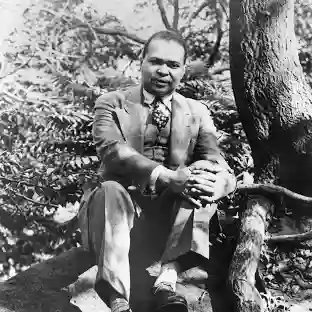
Quick Facts
- Born
- May 30, 1903
- Died
- January 9, 1946
- Movement
- Harlem Renaissance
- Known For
- Color
Countee Cullen was an African American poet born on May 30, 1903, and a leading voice of the Harlem Renaissance. He became famous in his early twenties for poetry that combined traditional English forms with questions about race, faith, beauty, love, and identity. His first collection, Color, appeared in 1925 and included poems such as “Yet Do I Marvel,” “Incident,” and “Heritage.” Cullen studied at New York University and Harvard, edited the influential anthology Caroling Dusk, and received a Guggenheim Fellowship in 1928. He also wrote fiction, drama, children’s literature, and literary criticism. Unlike some Harlem Renaissance writers, Cullen often preferred sonnets, ballads, rhyme, and other established poetic forms. His work shows the tension between classical literary traditions and the experience of being a Black poet in America.
Quick Facts About Countee Cullen
| Fact | Details |
|---|---|
| Full name | Countee LeRoy Porter; later Countee Cullen |
| Born | May 30, 1903 |
| Birthplace | Commonly given as Louisville, Kentucky; the exact birthplace remains disputed |
| Died | January 9, 1946 |
| Nationality | American |
| Ethnicity | African American |
| Occupation | Poet, novelist, playwright, editor, teacher |
| Education | New York University; Harvard University |
| Literary movement | Harlem Renaissance |
| Famous book | Color |
| Famous poems | “Yet Do I Marvel,” “Incident,” “Heritage,” “From the Dark Tower” |
| Major poetry collections | Color, Copper Sun, The Ballad of the Brown Girl, The Black Christ and Other Poems, The Medea and Some Poems |
| Major award | Guggenheim Fellowship, 1928 |
| First wife | Yolande Du Bois |
| Second wife | Ida Mae Roberson |
| Children | None documented |
| Death | January 9, 1946, New York City |
Who Was Countee Cullen?
Countee Cullen was a major African American poet of the Harlem Renaissance who became known for traditional poetic forms and powerful themes of race, faith, love, and identity.
Cullen rose to national attention while still in his early twenties. His poetry appeared in major magazines, and his first collection, Color, established him as one of the leading young writers of the New Negro era.
His work was unusual within the Harlem Renaissance because he often drew on English and European literary traditions. He admired poets such as John Keats and A. E. Housman and used forms such as the sonnet, ballad, and rhymed lyric.
At the same time, Cullen wrote directly about racism and Black identity. Poems such as “Incident,” “Heritage,” and “Yet Do I Marvel” show how his classical style could carry deeply personal questions about being Black in America.
Where Was Countee Cullen Born?
Countee Cullen was born on May 30, 1903, but his exact birthplace remains disputed.
His New York University records reportedly listed Louisville, Kentucky, as his birthplace. Other sources have identified Baltimore, Maryland, or New York City. Cullen himself later gave New York City as his birthplace, adding to the uncertainty surrounding his early life.
Because reliable sources disagree, it is safer to describe Louisville as the commonly cited birthplace while noting that the historical record is uncertain. This is one of the unusual facts in a Countee Cullen biography.
What Was Countee Cullen’s Early Life Like?
Countee Cullen’s childhood was marked by loss, uncertainty, and a major move into Harlem’s religious and cultural world.
Born Countee LeRoy Porter, he was raised for part of his childhood by his grandmother, Amanda Porter. After her death during his teenage years, he entered the household of Reverend Frederick A. Cullen and Carolyn Belle Cullen in Harlem.
Frederick Cullen was the pastor of Salem Methodist Episcopal Church, one of Harlem’s major churches. The household gave the young poet stability and placed him close to the political, religious, and cultural life of Black New York.
Cullen later adopted the Cullen surname. His upbringing also helped shape his relationship with Christianity, which became an important source of imagery and conflict in his poetry.
Where Did Countee Cullen Go to School?
Countee Cullen attended DeWitt Clinton High School before studying at New York University and Harvard University.
At DeWitt Clinton, he excelled academically, edited the school newspaper, became involved in literary activities, and won a citywide poetry competition. His early success showed that he had developed serious poetic ambitions while still a teenager.
Cullen entered New York University in 1921 and graduated in 1925 with Phi Beta Kappa honors. While there, he won important poetry prizes and began publishing in national literary magazines.
He then attended Harvard University and earned a master’s degree in English in 1926. His academic training deepened his knowledge of English literature, classical texts, and poetic form.
How Did Countee Cullen Start His Poetry Career?
Countee Cullen started his poetry career as a talented student and became nationally recognized before publishing his first book.
His early poem “I Have a Rendezvous with Life” won a citywide competition while he was in high school. His work later appeared in magazines such as Poetry, The Bookman, Opportunity, and Crisis.
Cullen’s breakthrough came with Color in 1925. The collection received strong critical attention and established him as one of the major young poets associated with the Harlem Renaissance.
His early career developed very quickly. By his early twenties, Cullen had become a celebrated literary figure, with critics comparing his formal skill to established poets and calling attention to his unusual command of traditional verse.
Countee Cullen and the Harlem Renaissance
Countee Cullen was one of the leading poets of the Harlem Renaissance and helped define its literary culture.
The Harlem Renaissance was a major period of Black artistic and intellectual growth during the 1920s and early 1930s. Cullen became part of this movement alongside writers such as Langston Hughes, Claude McKay, Zora Neale Hurston, and Jean Toomer.
Cullen’s role was distinctive because he did not believe Black poets needed to abandon traditional English forms. He argued that African American writers could master the established traditions of English and American poetry while still writing about their own experiences.
This position sometimes put him at odds with other Harlem Renaissance writers. Langston Hughes, for example, placed greater emphasis on Black vernacular speech, jazz rhythms, and distinctly African American forms of expression.
Cullen therefore represents an important debate within the Harlem Renaissance: whether Black literature should develop primarily through inherited European forms, new Black cultural forms, or a mixture of both.
What Was Countee Cullen’s Writing Style?
Countee Cullen’s writing style was formal, musical, and strongly influenced by English Romantic poetry and classical literature.
He frequently used sonnets, ballads, rhyme, regular meter, and carefully structured stanzas. His poems often sound controlled and polished even when they describe painful experiences such as racism, death, religious doubt, or social exclusion.
Cullen’s admiration for John Keats was especially important. At Harvard, he studied under John Livingston Lowes, and his literary education encouraged a close relationship with the English poetic tradition. He also wrote about Edna St. Vincent Millay in his master’s thesis.
His style is sometimes described as Keatsian because of its attention to beauty, sound, nature, love, and formal craftsmanship. Yet Cullen’s poems often place these traditional concerns beside the realities of Black American life.
That contrast is one of the most important features of his literary style. The poem may look traditional on the page, but its subject can challenge racism and racial stereotypes.
Why Did Countee Cullen Use Traditional Poetry Forms?
Countee Cullen used traditional forms because he believed Black poets could claim and master the established traditions of English literature.
He did not see formal poetry as something that belonged only to white writers. Instead, he viewed mastery of the sonnet, ballad, and other forms as a way for African American poets to demonstrate their artistic range.
This approach became controversial during the Harlem Renaissance. Some writers wanted a more distinctly Black literary voice based on jazz, African American speech, folklore, and cultural traditions.
Cullen’s work is valuable partly because it reveals this debate from inside the movement. He was a Black poet who wanted to write about universal subjects while also confronting the racial realities that shaped his life.
What Are Countee Cullen’s Main Poetry Themes?
Countee Cullen’s poetry themes include race, religion, beauty, love, death, identity, nature, and the struggle between faith and doubt.
- Race and racism: Cullen examined racial prejudice, Black identity, and the emotional effects of discrimination.
- Religion: Christian belief, God’s justice, suffering, and spiritual doubt appear throughout his work.
- Beauty: Physical and artistic beauty are important subjects, often connected to racial identity.
- Love: Cullen wrote many love poems about attraction, longing, loss, and emotional uncertainty.
- Death: Mortality appears repeatedly, often alongside questions about faith and divine purpose.
- Identity: His poems explore what it means to be Black while living within American and European cultural traditions.
- Nature: Natural images often become symbols for beauty, freedom, mortality, and spiritual questions.
- Art and poetry: Cullen sometimes questioned what it meant for a Black poet to work within established literary traditions.
These themes make Cullen’s poetry broader than a simple collection of protest poems. His work moves between personal emotion, religious thought, classical literature, and racial experience.
Countee Cullen’s Major Works and Books
Countee Cullen’s major works include Color, Copper Sun, The Ballad of the Brown Girl, The Black Christ and Other Poems, The Medea and Some Poems, and the novel One Way to Heaven.
His career was brief, but he produced poetry, fiction, drama, children’s literature, and edited work by other Black writers. The Library of America describes its 2013 Collected Poems as the most comprehensive collection of his poetry.
Color
Color was published in 1925 and became Countee Cullen’s breakthrough poetry collection.
The book contains several of his best-known poems, including “Yet Do I Marvel,” “Incident,” “Heritage,” “Near White,” and “From the Dark Tower.” It combines traditional forms with questions about race, beauty, religion, and identity.
The success of Color made Cullen famous at only twenty-two. It remains the best starting point for readers who want to understand his poetry and his place in the Harlem Renaissance.
Copper Sun
Copper Sun was published in 1927 and continued Cullen’s exploration of love, beauty, race, nature, and personal emotion.
The collection showed his continued commitment to traditional poetic forms. Although it did not receive the same level of acclaim as Color, it is important for understanding the development of Cullen’s early poetry.
The Ballad of the Brown Girl
The Ballad of the Brown Girl appeared in 1927 and reflects Cullen’s interest in the English ballad tradition.
The work adapts traditional narrative techniques while bringing questions of race and identity into the story. It demonstrates how Cullen could use an inherited European form for subjects connected to Black experience.
Caroling Dusk
Caroling Dusk was an influential 1927 anthology edited by Cullen that collected poetry by Black writers.
The book was important because Cullen used his position as a successful young poet to promote other African American writers. Its introduction also revealed his belief that Black poets could benefit from the rich traditions of English and American poetry.
The Black Christ and Other Poems
The Black Christ and Other Poems appeared in 1929 and brought religious imagery and racial violence together.
The title poem compares the suffering and killing of a Black man with the Christian story of Christ’s crucifixion. The collection attracted criticism, but it remains important because it shows Cullen confronting the relationship between Christianity, racial violence, suffering, and justice.
The Medea and Some Poems
The Medea and Some Poems appeared in 1935 and showed Cullen’s continued interest in classical literature.
The work included his adaptation of Euripides’ Medea, making it another example of his use of classical European material. It also demonstrated that Cullen’s interest in older literary traditions continued throughout his career.
One Way to Heaven
One Way to Heaven, published in 1932, was Countee Cullen’s only novel.
The book is a social comedy about Black life in New York and contrasts working-class characters with members of Harlem’s Black middle and upper classes. It allowed Cullen to explore social class, religion, respectability, and relationships through prose rather than poetry.
Countee Cullen’s Most Famous Poems
Countee Cullen wrote hundreds of poems across several published collections, with his work later gathered in comprehensive editions such as Countee Cullen: Collected Poems.
The most frequently studied poems include “Yet Do I Marvel,” “Incident,” “Heritage,” “From the Dark Tower,” “For a Lady I Know,” “Saturday’s Child,” and “The Black Christ.” His poems move between racial experience, religion, love, beauty, mortality, and classical literary traditions.
“Yet Do I Marvel”
“Yet Do I Marvel” was published in Color in 1925 and is one of Countee Cullen’s most famous poems.
The sonnet asks how a good God can allow suffering and injustice to exist. Cullen refers to classical stories of suffering before turning the question toward his own experience as a Black poet.
The poem’s famous ending creates a sharp tension between religious faith and racial reality. Because the poem is from a 1925 publication, its original text is in the public domain in the United States.
“To make a poet black, and bid him sing!”
Yet Do I Marvel, Color (1925).
“Incident”
“Incident” was published in Color in 1925 and is one of Cullen’s most powerful poems about racism.
The speaker remembers visiting Baltimore as a child and experiencing a racist insult from another child. The poem is striking because the speaker remembers almost nothing else from the trip, showing how one moment of prejudice can overwhelm an entire memory.
The poem is very short, but its structure makes the emotional effect stronger. A seemingly small incident becomes the only memory that remains from months spent in the city.
“Of all the things that happened there”
Incident, Color (1925).
“Heritage”
“Heritage” was published in Color in 1925 and explores Cullen’s complicated relationship with Africa and African American identity.
The poem asks what Africa means to a Black American poet whose education and literary training were deeply shaped by European traditions. Its central question reveals a divided sense of cultural belonging.
“Heritage” is especially important for understanding Cullen’s place in the Harlem Renaissance. It shows that questions of identity were not simple even among writers who were actively shaping Black literature.
“From the Dark Tower”
“From the Dark Tower” is a poem about Black labor, suffering, patience, and the hope of eventual justice.
Cullen uses the image of a garden to suggest that Black people have worked and suffered while others enjoyed the results. The poem then turns toward the possibility that Black people will eventually enjoy the fruits of their own labor.
Its controlled rhyme and metaphor show how Cullen could use a traditional poetic structure to express racial injustice and hope.
“Saturday’s Child”
“Saturday’s Child” explores class, poverty, and the unequal conditions into which people are born.
The poem contrasts a privileged birth with the difficult circumstances experienced by a poor child. Cullen uses the idea of birth to question the unfairness of social class and opportunity.
The poem is important because it expands Cullen’s treatment of race into a broader discussion of poverty and social inequality.
“For a Lady I Know”
“For a Lady I Know” uses irony to expose racist attitudes held by people who consider themselves respectable.
The poem presents a supposedly polite view of racial hierarchy and makes its prejudice visible through understatement. Cullen’s restrained style makes the criticism sharper rather than weaker.
It is a good example of how his formal poetry could address racism without using an openly confrontational tone.
“The Black Christ”
“The Black Christ” is a long narrative poem published in The Black Christ and Other Poems in 1929.
The poem connects the murder of a Black man with the story of Christ’s suffering and crucifixion. Cullen uses Christian imagery to examine racial violence, faith, sacrifice, and justice.
The poem received mixed critical responses, but it remains central to discussions of Cullen’s religious poetry and his attempt to connect Christian tradition with Black American experience.
“The Shroud of Color”
“The Shroud of Color” explores racial identity and the emotional burden of being Black in a society shaped by prejudice.
The title image suggests that color can become a covering or burden that affects how a person is seen. The poem reflects Cullen’s recurring interest in race while maintaining his preference for carefully controlled poetic language.
It also helps explain why Cullen’s early poetry became important during the Harlem Renaissance.
What Is Countee Cullen’s Religious Poetry About?
Countee Cullen’s religious poetry often questions how a loving God can allow suffering, death, and racial injustice.
Christianity was an important part of Cullen’s upbringing. His adoptive father was a Methodist minister, and religious language appears throughout Cullen’s work.
His faith was not simple or unquestioning. Poems such as “Yet Do I Marvel” ask difficult questions about divine justice, while “The Black Christ” connects Christian suffering with the violence experienced by Black Americans.
This tension between belief and doubt gives his religious poetry much of its power. Cullen could accept Christian ideas while still questioning what God’s justice meant in a world filled with racial violence.
What Are Countee Cullen’s Love Poems About?
Countee Cullen’s love poems explore attraction, longing, beauty, rejection, emotional pain, and the uncertainty of romantic relationships.
Love was one of the subjects Cullen considered universal. His poetry often moves away from direct political themes and toward personal emotion, nature, beauty, and romance.
Poems such as “The Dance of Love,” “If You Should Go,” and “The Wise” show his ability to treat private emotion with the same formal care found in his racial and religious poems.
His love poetry also demonstrates why it is too simple to label Cullen only as a protest poet. His work covered a wide emotional range.
Why Is Countee Cullen’s Sonnet Poetry Important?
Countee Cullen’s sonnet poetry is important because he used a traditional European form to explore Black identity and American racism.
“Yet Do I Marvel” is a clear example. It follows the structure and rhythm of a traditional Italian sonnet while confronting the contradiction between Christian belief and racial injustice.
The sonnet gave Cullen a disciplined framework for complex ideas. He could build an argument, develop an emotional conflict, and then create a powerful turn at the end.
His use of traditional forms helped establish that African American poets could claim the full history of English-language poetic technique while writing about distinctly Black experiences.
What Awards Did Countee Cullen Receive?
Countee Cullen received major literary recognition while still a young man, including the Witter Bynner Poetry Prize and a Guggenheim Fellowship.
At New York University, he won the Witter Bynner Poetry Prize for “The Ballad of the Brown Girl.” His academic success also included Phi Beta Kappa recognition.
In 1928, Cullen received a Guggenheim Fellowship that allowed him to travel and write in France. He was one of the first Black writers to receive the fellowship.
His greatest achievement was his rapid rise as a poet. By age twenty-two, he had become one of the most celebrated literary figures of the Harlem Renaissance.
Did Countee Cullen Marry?
Yes. Countee Cullen married Yolande Du Bois in 1928, and the marriage ended in divorce in 1930.
Yolande was the daughter of prominent intellectual and civil rights leader W. E. B. Du Bois. Their wedding at Salem Methodist Episcopal Church in Harlem became a major social event within the African American community.
The marriage was short-lived. It ended after Cullen acknowledged his attraction to men, and the divorce became final in Paris in 1930. Historical accounts differ in how they discuss the private details of the relationship, so those details should be treated carefully.
Who Were Countee Cullen’s Wives?
Countee Cullen had two wives: Yolande Du Bois and Ida Mae Roberson.
His first marriage was to Yolande Du Bois from 1928 until their divorce in 1930. In 1940, Cullen married Ida Mae Roberson, and they remained married until his death in 1946.
The first marriage is more frequently discussed because of Yolande’s famous family background and the public attention surrounding their wedding. His second marriage was much more private.
Did Countee Cullen Have Children?
There are no documented children from Countee Cullen’s marriages.
His first marriage to Yolande Du Bois ended in divorce, and his second marriage to Ida Mae Roberson lasted until his death. Available biographical records do not identify children belonging to Cullen.
What Was Countee Cullen’s Religion?
Countee Cullen was raised in a Methodist Christian environment and frequently used Christian ideas in his poetry.
His adoptive father, Reverend Frederick A. Cullen, was a Methodist minister in Harlem. Religious language therefore became a natural part of Cullen’s literary vocabulary.
However, Cullen’s religious poetry is often questioning rather than simply devotional. He wrestled with the problem of suffering and asked how a good God could permit racial injustice, death, and pain.
Was Countee Cullen Black?
Yes. Countee Cullen was an African American poet and one of the leading Black writers of the Harlem Renaissance.
Race was a recurring subject in his poetry, although Cullen sometimes resisted the idea that his work should be defined only by race. His writing demonstrates the tension between wanting to be recognized as a universal poet and confronting the specific realities of Black life in America.
This tension is especially clear in “Yet Do I Marvel” and “Heritage,” where Cullen uses traditional literary forms to address questions about Black identity and racial experience.
Was Countee Cullen Gay?
Historical evidence indicates that Cullen was attracted to men, although he kept much of his private life secret.
His first wife, Yolande Du Bois, later described his attraction to men as a reason for the failure of their marriage. The National Museum of African American History and Culture notes that Cullen’s poetry is now often studied in the context of queer culture.
It is important to distinguish documented evidence from later rumors. Claims about a specific romantic relationship between Cullen and Harold Jackman have circulated for decades, but biographical sources do not establish every such claim as fact.
How Did Countee Cullen Influence Poetry?
Countee Cullen influenced poetry by showing how African American writers could use traditional forms to explore race, identity, religion, love, and social injustice.
His work also helped expand the literary reputation of the Harlem Renaissance. Through Caroling Dusk, his editorial work, and his own publications, he promoted other Black poets and helped bring African American poetry to wider audiences.
Cullen’s influence also comes from his ability to bridge different literary traditions. He drew from English Romantic poetry, classical mythology, Christian imagery, and African American experience.
Later readers have increasingly recognized the complexity of this approach. His poems can be read as both traditional formal verse and important documents of Black American cultural history.
What Was Countee Cullen’s Contribution to the Harlem Renaissance?
Countee Cullen’s contribution to the Harlem Renaissance included major poetry collections, editorial work, literary criticism, and the promotion of other African American writers.
His 1925 book Color became one of the important poetry collections of the movement. He also edited Caroling Dusk, which presented a broad selection of Black poetry to contemporary readers.
Cullen also contributed to debates about what African American poetry should be. His preference for English literary traditions differed from writers who emphasized jazz, vernacular speech, and African cultural forms.
That disagreement did not make him less important to the movement. Instead, it shows the wide range of ideas that existed within the Harlem Renaissance.
Countee Cullen’s Career After the Harlem Renaissance
Countee Cullen’s later career included teaching, writing for young readers, fiction, drama, and continued poetry.
From 1934 until his death, he taught English, French, and creative writing at Frederick Douglass Junior High School in New York City. Teaching gave him a stable professional role after the intense literary fame of his twenties had begun to fade.
He continued producing books, including The Lost Zoo in 1940 and My Lives and How I Lost Them in 1942. He also worked on drama and other literary projects.
Cullen’s later career is sometimes overshadowed by the fame of Color, but these years reveal that he remained an active writer and educator until the end of his life.
What Happened to Countee Cullen?
Countee Cullen died in New York City on January 9, 1946, at the age of forty-two.
Sources describe his death as resulting from high blood pressure and uremic poisoning. His health had deteriorated during his later years, when he was balancing teaching with writing and other literary work.
His death came just as scholars and readers were beginning to reassess the Harlem Renaissance. A collection of his selected poems, On These I Stand, was published posthumously in 1947.
Later editions, especially the Library of America Collected Poems, helped restore attention to the breadth of his work and his importance in twentieth-century American poetry.
Countee Cullen Facts
- Countee Cullen was born on May 30, 1903.
- His exact birthplace remains disputed, with Louisville, Baltimore, and New York City appearing in different sources.
- He was raised in Harlem after being taken into Reverend Frederick Cullen’s household.
- He graduated from New York University in 1925.
- He earned a master’s degree from Harvard in 1926.
- Color was published in 1925 when Cullen was only twenty-two.
- He received a Guggenheim Fellowship in 1928.
- He edited Caroling Dusk, an important anthology of Black poetry.
- He taught English, French, and creative writing in New York public schools.
- He died on January 9, 1946, at age forty-two.
What Is Countee Cullen’s Legacy?
Countee Cullen’s legacy rests on his mastery of traditional poetry, his role in the Harlem Renaissance, and his exploration of race, religion, love, and identity.
For many years, Cullen received less attention than some of his Harlem Renaissance contemporaries because his formal style seemed less connected to the jazz and vernacular traditions associated with the movement. Modern scholarship has increasingly emphasized the complexity of his choices.
His poems remain widely taught because they raise questions that still matter. “Incident” examines the lasting effect of racism, “Yet Do I Marvel” explores faith and racial injustice, and “Heritage” considers cultural identity.
His work also matters because it shows that there was no single Harlem Renaissance style. Cullen’s poetry represents one important path through African American modernism: using inherited literary forms to make Black experience impossible to ignore.
What Are Countee Cullen’s Famous Quotes?
Some of Countee Cullen’s most famous lines come from poems published in 1925, which are now in the public domain in the United States.
“To make a poet black, and bid him sing!”
Yet Do I Marvel, Color (1925).
“What is Africa to me:”
Heritage, Color (1925).
These lines capture two central questions in Cullen’s poetry: how racial identity shapes the life of a poet, and how an African American writer relates to Africa while living within American and European cultural traditions.
Final Talk
Countee Cullen remains a major figure in American poetry because he brought together two worlds that were often treated as separate. He mastered traditional English forms while writing about Black identity, racism, religion, love, beauty, and social inequality. His 1925 collection Color made him one of the brightest literary stars of the Harlem Renaissance, and poems such as “Yet Do I Marvel,” “Incident,” and “Heritage” continue to attract readers and scholars. Cullen’s life was also complex, shaped by an uncertain childhood, advanced education, a highly public marriage, private struggles, and a short but productive career. His contribution to the Harlem Renaissance was not limited to his own poems. Through editing and literary advocacy, he helped promote other Black writers. Today, his work shows the range, conflict, and creativity of African American poetry in the twentieth century.
FAQs
“Yet Do I Marvel” is generally considered one of Countee Cullen’s most famous poems. Published in Color in 1925, the sonnet explores God’s justice, suffering, and the experience of being a Black poet in America.
Yes. Countee Cullen married Yolande Du Bois in 1928 and divorced her in 1930. He later married Ida Mae Roberson in 1940, and they remained married until his death in 1946.
Countee Cullen’s wives were Yolande Du Bois and Ida Mae Roberson. Yolande was the daughter of W. E. B. Du Bois, and her marriage to Cullen became one of the most public social events of the Harlem Renaissance.
Countee Cullen is known for his Harlem Renaissance poetry, traditional sonnets, racial themes, religious poetry, and books such as Color. He is especially remembered for “Yet Do I Marvel,” “Incident,” and “Heritage.”
Langston Hughes was African American, with a multiracial family background that included African American, European American, and Native American ancestry. His background is separate from Countee Cullen’s biography, but Hughes and Cullen were both major writers of the Harlem Renaissance.
Read About Other Poets
Poems by Countee Cullen: Biography, Life, Poems, Books, and Legacy
No poems published yet for this poet.