E. E. Cummings Biography: Life, Poems, Style, and Legacy
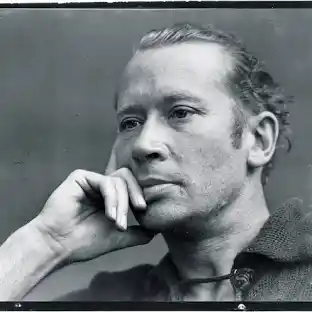
Quick Facts
- Born
- October 14, 1894
- Died
- September 3, 1962
- Movement
- Modernism
- Known For
- Tulips and Chimneys
E. E. Cummings was an American modernist poet born on October 14, 1894, in Cambridge, Massachusetts. He became famous for experimental poetry that challenged normal rules of grammar, punctuation, capitalization, and page design. Cummings wrote about love, nature, individuality, war, death, and the wonder of ordinary life. His poems often look unusual on the page because he treated words, spaces, and punctuation as parts of the poem’s meaning. He also wrote prose, plays, essays, and painted throughout his life. His World War I experience inspired The Enormous Room, while poetry collections such as Tulips and Chimneys established his reputation as an innovative writer. Today, Cummings remains one of the most recognizable American modernist poets of the twentieth century.
Quick Facts About E. E. Cummings
| Fact | Details |
|---|---|
| Full name | Edward Estlin Cummings |
| Born | October 14, 1894 |
| Birthplace | Cambridge, Massachusetts, United States |
| Died | September 3, 1962 |
| Deathplace | North Conway, New Hampshire, United States |
| Nationality | American |
| Occupation | Poet, writer, playwright, painter, essayist |
| Education | Harvard University; B.A. 1915, M.A. 1916 |
| Literary movement | Modernism |
| Famous works | Tulips and Chimneys, The Enormous Room, XLI Poems, 50 Poems, 95 Poems |
| Famous poems | “i carry your heart with me,” “anyone lived in a pretty how town,” “Buffalo Bill ’s defunct,” “in Just-,” “my father moved through dooms of love” |
| Known for | Experimental grammar, typography, punctuation, lowercase writing, love poetry, and modernist experimentation |
Who Was E. E. Cummings?
E. E. Cummings was a twentieth-century American poet best known for breaking traditional rules of poetic language and typography. His work made the printed page part of the poem itself.
His full name was Edward Estlin Cummings, although he became widely known as E. E. Cummings. He was born into an educated Cambridge family and began writing poems when he was still a child. His early education in Latin, Greek, and classical literature gave him a strong knowledge of traditional poetry before he began challenging its rules.
Cummings is usually associated with American Modernism. However, his poetry does not fit neatly into one school because he developed an unusually personal combination of traditional poetic forms, free verse, visual design, wordplay, satire, and experimental syntax.
Where Was E. E. Cummings Born?
E. E. Cummings was born in Cambridge, Massachusetts, on October 14, 1894.
He grew up in a well-educated family connected to Harvard and the Unitarian religious tradition. His father, Edward Cummings, was a professor at Harvard and later became a Unitarian minister. His mother, Rebecca Haswell Clarke Cummings, encouraged Estlin’s writing and drawing from an early age.
His childhood gave him unusual freedom to explore language, drawing, nature, and imagination. Family summers at Joy Farm in New Hampshire also became important to his lifelong relationship with the natural world.
E. E. Cummings Early Life and Childhood
E. E. Cummings began writing poetry at a remarkably young age and reportedly wrote poems regularly throughout his childhood and youth. His parents supported his artistic interests rather than treating poetry as a passing hobby.
His mother played word games with him and encouraged his creativity, while his father introduced him to nature, literature, religion, and intellectual discussion. These experiences later appeared in his poetry through playful language, spiritual ideas, and detailed images of the natural world.
The young Cummings also studied the poetry of writers such as Shelley, Keats, Tennyson, Longfellow, and Emerson. His knowledge of older poetic forms became important because he later broke those forms deliberately rather than simply ignoring them.
E. E. Cummings Education at Harvard
E. E. Cummings studied at Harvard University, where he earned his B.A. in 1915 and M.A. in 1916. His education focused strongly on literature and classical languages.
At Harvard, Cummings studied Latin, Greek, English literature, and other subjects that strengthened his understanding of language. He also encountered newer artistic ideas, including avant-garde literature, Cubism, and experimental art.
His Harvard years helped him understand both the power and limits of traditional literary forms. This background later allowed him to manipulate grammar, syntax, punctuation, and poetic structure with unusual confidence.
His earliest poems appeared in Eight Harvard Poets in 1917. This early publication marked an important step in the E. E. Cummings career and showed that his ambition to become a poet was becoming a professional reality.
E. E. Cummings Family
E. E. Cummings grew up in a close family with strong intellectual and artistic interests. His father was a Harvard professor and Unitarian minister, while his mother actively supported his creative development.
His family environment exposed him to books, religion, nature, education, and the intellectual culture of Cambridge. These influences can be seen in his later interest in individuality, spiritual experience, love, and the natural world.
Cummings married several times during his life. In 1924, he married Elaine Orr Thayer, the mother of his daughter Nancy, but the marriage ended after a short period. He later married Anne Minnerly Barton in 1929. In the 1930s, he became closely associated with Marion Morehouse, who remained his companion for the rest of his life.
E. E. Cummings and World War I
E. E. Cummings served as a volunteer ambulance driver in France during World War I. His wartime experience strongly influenced his later prose and ideas about individuality, freedom, and authority.
In 1917, Cummings went to France with the ambulance service. He and his friend John Dos Passos were detained by French authorities after officials misunderstood some of Cummings’s letters and suspected him of espionage. He spent several months in a detention camp.
This experience became the basis for The Enormous Room, his 1922 autobiographical prison memoir. The book presents confinement through a mixture of humor, irony, observation, and reflection on individual freedom.
Cummings’s war experience did not simply make him a conventional war poet. Instead, it strengthened his distrust of systems that reduce individuals to numbers or categories. This concern became one of the major ideas running through his later work.
E. E. Cummings Career and Literary Development
The E. E. Cummings career developed across several forms, including poetry, prose, drama, painting, and travel writing. Poetry remained his central form, but he continued to experiment with different artistic media throughout his life.
His first major poetry collection, Tulips and Chimneys, appeared in 1923. The book contained poems that mixed conventional forms with the unusual grammar, punctuation, and visual arrangements that became associated with his name.
The original collection was shortened by its publisher. Some removed poems were later published in &, while XLI Poems also appeared in 1925. These early books helped establish Cummings as an important experimental American poet.
During the 1930s, Cummings continued writing and publishing despite periods when publishers were reluctant to accept his work. He sometimes relied on self-publishing, especially after his travel book Eimi caused political controversy.
By the 1950s, his reputation had become much wider. Harvard invited him to deliver the Charles Eliot Norton lectures in 1952, and his public readings and university appearances helped introduce his poetry to new audiences.
Why Is E. E. Cummings Famous?
E. E. Cummings is famous for transforming punctuation, grammar, typography, spacing, and word order into poetic tools. His poems often make readers notice the visual shape of language as much as its literal meaning.
He is also famous for writing some of the best-known American love poems of the twentieth century. His poetry celebrates romantic love, nature, individuality, sensual experience, childhood wonder, and freedom from social conformity.
His fame also comes from his ability to combine experimental writing with emotional accessibility. A poem may look strange on the page while expressing a simple feeling about love, spring, death, or human connection.
E. E. Cummings Literary Style and Poetry Style
The E. E. Cummings literary style is marked by experimentation with language, structure, punctuation, capitalization, and visual arrangement. He often treated the poem as both a linguistic work and a visual object.
One important part of his poetry style is his use of unexpected word combinations. Cummings sometimes created new words by joining familiar words or changing the normal grammatical role of a word. This gave his poems a playful but highly controlled quality.
His poems can also shift suddenly between ordinary speech and unusual syntax. A sentence may be broken into separate pieces, while spaces and line breaks may slow down or speed up the reader’s experience.
This unique style was influenced partly by modernist art. Cummings was interested in visual art and painting, and he brought ideas about shape, fragmentation, movement, and visual balance into his poetry.
E. E. Cummings Punctuation Style and Lowercase Writing
Cummings used punctuation as an active part of poetic meaning rather than treating it only as a grammatical requirement. Commas, parentheses, hyphens, spaces, and unusual breaks can change how a reader sees and hears his poems.
His use of lowercase letters became one of his most recognizable features. However, it is too simple to say that every poem follows one fixed lowercase rule. His capitalization practices varied, and the lowercase style became a larger artistic symbol associated with his name.
The visual design of his poetry can make a word appear isolated, connected, interrupted, or repeated. In this way, the page becomes part of the poem’s voice.
His punctuation style is therefore not merely decorative. It can control rhythm, create surprise, separate ideas, or make a reader pause and reconsider a familiar word.
E. E. Cummings Themes
The major E. E. Cummings themes include love, individuality, nature, freedom, childhood wonder, war, death, and opposition to conformity.
- Love: Romantic and spiritual love is one of the strongest subjects in his poetry. He often presents love as a force that gives life meaning and helps people escape social rules.
- Individuality: Cummings repeatedly celebrates the individual against what he saw as the pressure of the crowd or mass society.
- Nature: Flowers, seasons, trees, birds, weather, and changing light often become symbols of life, growth, and renewal.
- Childhood wonder: He admired the openness and imagination associated with childhood and often contrasted it with adult conformity.
- War and freedom: His World War I experience strengthened his distrust of institutions that limit individual freedom.
- Death and time: His later poetry often considers mortality, aging, change, and the temporary nature of human life.
E. E. Cummings Love Poems
E. E. Cummings love poems are among the most widely read parts of his work. They combine romantic feeling with unusual grammar, musical rhythm, sensual images, and reflections on time and mortality.
His love poetry does more than describe romantic attraction. Love often becomes a symbol of personal freedom and emotional truth. The lover’s experience is placed against the pressure of a world that Cummings believed often encouraged people to become part of a crowd.
“i carry your heart with me” is perhaps the poem most strongly associated with modern readers’ idea of Cummings as a love poet. Although the poem was published long after 1928 and cannot be quoted here, its central idea is the complete emotional closeness between two people.
Other important love poems include “somewhere i have never travelled, gladly beyond,” “since feeling is first,” and “love is more thicker than forget.” Together, they show how Cummings could combine simple emotional subjects with highly experimental language.
E. E. Cummings War Poems and Anti-War Writing
E. E. Cummings wrote about war through both poetry and prose, but his treatment of conflict was often connected to his larger concern with individual freedom.
His experience in France and detention during World War I gave him firsthand knowledge of military and political systems. The Enormous Room became the most direct literary result of that experience.
His war-related writing often questions systems that claim authority over individuals. Instead of presenting war as a simple heroic adventure, Cummings focused attention on human personality, absurdity, fear, confinement, and freedom.
His approach is different from the direct battlefield poetry of writers such as Wilfred Owen. Cummings often uses irony, satire, and personal observation rather than realistic descriptions of combat.
E. E. Cummings Poems and Poetry
E. E. Cummings wrote approximately 2,900 poems during his lifetime, making his poetic output much larger than the small selection often encountered in anthologies.
His poetry includes sonnets, free verse, short lyric poems, experimental visual poems, love poems, nature poems, satirical poems, and poems influenced by traditional forms. His work is distinctive because he could use both old forms and radical language experiments.
Some of his best-known poems are listed below. Their popularity comes from their memorable subjects, unusual structures, emotional force, and distinctive use of language.
“Buffalo Bill ’s defunct”
“Buffalo Bill ’s defunct” is an early Cummings poem that questions fame, hero worship, and mortality. It uses compressed language and unusual punctuation to turn a famous public figure into a meditation on death and human value.
The poem first appeared in the early period of Cummings’s career and became one of the clearest examples of his ability to make a short poem feel larger than its subject. Its famous opening phrase itself creates a sudden collision between popular culture and mortality.
“in Just-”
“in Just-” is one of the best-known Cummings poems about spring, childhood, and renewal. Its playful structure reflects the energy of children moving through the changing season.
The poem is especially important for its sound, spacing, and visual arrangement. Cummings bends ordinary language so that the poem feels almost like a game happening on the page.
“my father moved through dooms of love”
This poem explores Cummings’s relationship with his father and connects family love with spiritual ideas. It was published in the 1923 collection Tulips and Chimneys.
The poem combines personal memory with religious language and images of movement. It shows that Cummings’s work could be deeply traditional in subject even when its language and structure were experimental.
“anyone lived in a pretty how town”
“anyone lived in a pretty how town” was first published in 1940 and is one of Cummings’s most studied poems. It describes life in an unnamed town while exploring love, marriage, individuality, routine, and the passage of time.
Its unusual phrase “pretty how town” immediately shows Cummings’s willingness to change normal grammar. Repeated seasons and cycles create the sense of a community moving through life without fully noticing the individuals within it.
“i carry your heart with me”
“i carry your heart with me” is one of the most famous E. E. Cummings love poems and is widely associated with his romantic poetry.
The poem presents love as something carried within the self rather than limited by physical distance. Its emotional directness helps explain why Cummings remains popular with readers who may otherwise find modernist poetry difficult.
“somewhere i have never travelled, gladly beyond”
This love poem is known for its delicate treatment of intimacy and emotional vulnerability. Cummings uses unusual syntax and imagery to describe the powerful effect another person can have on the speaker.
The poem demonstrates how his experimental language could remain tender rather than simply difficult. It is one reason Cummings is often remembered as a major twentieth-century love poet.
“love is more thicker than forget”
This poem plays with grammar and comparison while exploring the strength of love. Its title itself combines words in a way that deliberately challenges standard English.
The poem is an excellent example of Cummings’s writing style because the unusual grammar is not random. It makes the reader experience the emotional intensity of the poem through language.
“since feeling is first”
“since feeling is first” contrasts emotional experience with excessive intellectual analysis. It suggests that human feeling can sometimes be more important than logical explanation.
The poem also reflects one of Cummings’s larger artistic beliefs: poetry should be experienced rather than treated only as a puzzle that must be solved.
E. E. Cummings Books and Major Works
E. E. Cummings wrote poetry collections, prose, plays, essays, travel writing, and other works. His best-known books show how his career developed across several artistic forms.
The Enormous Room (1922)
The Enormous Room is Cummings’s autobiographical account of his imprisonment in France during World War I. It mixes memoir, humor, satire, and reflection on freedom.
The book established Cummings as a prose writer before his poetry reached its widest audience. Its central concern is the individual personality surviving inside an oppressive system.
Tulips and Chimneys (1923)
Tulips and Chimneys was Cummings’s first major poetry collection. It introduced readers to many of the qualities that later became central to his work.
The collection combines conventional poems with experimental pieces. Love, nature, youth, death, and individuality appear throughout the book.
XLI Poems (1925)
XLI Poems followed quickly after Tulips and Chimneys. The collection further developed Cummings’s unusual approach to grammar, rhythm, and poetic form.
It helped strengthen his reputation as a poet who could combine emotional intensity with formal experimentation.
& (1925)
& contained poems that had been removed from the original version of Tulips and Chimneys. The unusual title reflects Cummings’s preference for symbols and visual language.
The collection is important for understanding how publishing decisions affected his early poetry and how he continued to develop his experimental style.
EIMI (1933)
EIMI is a travel book based on Cummings’s 1931 journey through the Soviet Union. The title comes from the Greek for “I am.”
Rather than offering a simple travel report, Cummings used the journey to examine politics, society, conformity, and individual freedom. The book shows how strongly his personal philosophy shaped his prose as well as his poetry.
50 Poems (1940)
50 Poems contains many poems dealing with individuality, love, nature, society, and human experience. It includes “anyone lived in a pretty how town,” one of his most widely studied works.
The collection shows that Cummings continued experimenting with form even after his early reputation had been established.
95 Poems (1958)
95 Poems was Cummings’s last published poetry collection during his lifetime. It reflects the mature poet’s continuing interest in nature, love, language, time, and mortality.
By this point, his work had gained a large audience, and his reputation as an important American poet was firmly established.
E. E. Cummings and Painting
E. E. Cummings was also a painter, and his visual art helped shape his poetry. He explored painting while developing his literary career and was interested in modernist visual ideas.
His interest in Cubism and other avant-garde art forms encouraged him to think about composition, fragmentation, space, and visual movement.
This connection between painting and poetry helps explain why his poems often seem designed as images. Words may be separated, compressed, repeated, or arranged in unusual patterns.
For Cummings, the page was not simply a place where words were printed. It could become part of the artistic experience.
E. E. Cummings Experimental Poetry
E. E. Cummings experimental poetry is based on the idea that language does not always have to obey ordinary rules to communicate meaning.
He changed spelling, punctuation, word order, spacing, capitalization, and sentence structure. Sometimes he created new words or gave familiar words unusual grammatical roles.
These experiments can make his poems difficult at first, but the difficulty often has a purpose. A broken sentence can slow a reader down, while an isolated word can make a particular idea or emotion stand out.
His experimental poetry also reflects the broader modernist interest in breaking away from nineteenth-century literary conventions. Yet Cummings remained deeply connected to traditional lyric poetry, especially the sonnet and love lyric.
E. E. Cummings Unique Style: What Makes It Different?
The E. E. Cummings unique style comes from the combination of traditional poetic skill and radical experimentation.
He did not simply reject older poetry. His education gave him a strong knowledge of meter, rhyme, classical literature, and established poetic forms. He then reshaped those tools for modern subjects and personal expression.
His work can therefore feel both ancient and modern. A poem may use the emotional structure of a traditional love lyric while presenting its words in a highly unconventional visual form.
This combination is one reason his poetry has remained accessible to general readers while also attracting literary scholars.
E. E. Cummings Modernist Poet and Literary Movement
E. E. Cummings is generally regarded as a major American modernist poet. His work shares Modernist interests in experimentation, fragmentation, individual perception, and rejection of conventional literary forms.
At the same time, his work is difficult to place inside a single Modernist category. He developed a personal style that combined traditional lyric forms with avant-garde visual and linguistic techniques.
His poetry also reflects the cultural changes of the early twentieth century. Industrial society, mass culture, war, new art movements, and changing ideas about individuality all appear in different ways throughout his writing.
E. E. Cummings Influence on Poetry
E. E. Cummings influenced poetry by showing that typography, punctuation, spacing, and grammar could become central parts of poetic meaning.
His work helped readers see the printed poem as a visual object. This approach later became important to poets and artists interested in concrete poetry, visual poetry, experimental typography, and other forms of literary design.
His influence is also visible in the way contemporary poets use lowercase writing, unconventional punctuation, fragmented syntax, and playful word formation.
Perhaps his greatest influence is the idea that a poet can create a completely individual relationship with language. Cummings demonstrated that poetic rules can be changed when the change serves a clear artistic purpose.
E. E. Cummings Achievements and Awards
E. E. Cummings received important recognition during the later part of his career. His achievements reflected both his popularity with readers and his standing among literary critics.
In 1933, he received a Guggenheim Fellowship. He later received another Guggenheim Fellowship, and in 1957 he won the Bollingen Prize for Poetry.
He was also invited to deliver the Charles Eliot Norton lectures at Harvard in 1952. These lectures were later published as i—six nonlectures, offering readers an unusual mixture of autobiography and artistic reflection.
His long-term achievement was not simply winning awards. Cummings became one of the most widely read American poets of his generation and maintained a distinctive voice that remains immediately recognizable.
E. E. Cummings Quotes
Because many of Cummings’s best-known lines come from works published after 1928, modern copyright restrictions make it inappropriate to reproduce those passages here. The following short quotations come from his earlier work.
“Buffalo Bill ’s defunct”
“Buffalo Bill ’s defunct”, published in Tulips and Chimneys (1923).
“my father moved through dooms of love”
“my father moved through dooms of love”, published in Tulips and Chimneys (1923).
These brief lines demonstrate two important aspects of his writing. The first uses a blunt statement about death and fame, while the second combines family memory with spiritual language.
When Did E. E. Cummings Die?
E. E. Cummings died on September 3, 1962, in North Conway, New Hampshire, at the age of 67. His death was caused by a cerebral hemorrhage.
He had continued writing, painting, giving lectures, and publishing poetry into the later years of his life. His final published poetry collection during his lifetime was 95 Poems in 1958.
After his death, additional unpublished material was collected and published. 73 Poems appeared posthumously in 1963, helping preserve more of his later poetic work.
E. E. Cummings Legacy
E. E. Cummings left a lasting mark on American poetry because his work made experimentation feel personal and readable.
His poetry continues to appear in classrooms, anthologies, literary collections, and popular culture. Readers are often drawn to his love poems first, but deeper study reveals a writer equally interested in nature, individuality, language, war, politics, childhood, and mortality.
His influence is especially strong among writers who treat typography and visual form as part of meaning. His poems demonstrate that a single word can become more powerful when its position, spelling, or punctuation changes.
Cummings also showed that experimental poetry does not have to abandon emotion. His most successful poems can be formally strange while remaining direct, tender, humorous, or deeply moving.
Final Talk
E. E. Cummings remains one of the most distinctive American poets of the twentieth century because he made language itself part of the poetic experience. His life moved from a creative childhood in Cambridge to Harvard, World War I service and imprisonment, literary experimentation, painting, travel, and international recognition. His poems challenged normal grammar and punctuation while exploring universal subjects such as love, nature, freedom, individuality, and death. Works such as Tulips and Chimneys, The Enormous Room, 50 Poems, and 95 Poems reveal the range of his creative career. His unusual lowercase writing and visual poetry made him famous, but his lasting importance comes from the way he connected form with feeling. For modern readers, Cummings remains a powerful example of how poetry can break rules without losing emotion, beauty, or meaning.
FAQs
E. E. Cummings is famous for experimental poetry that uses unusual grammar, punctuation, capitalization, spacing, and typography.
“i carry your heart with me” is often considered his most famous love poem, while “anyone lived in a pretty how town” is among his most studied experimental poems.
His best-known poems include “i carry your heart with me,” “anyone lived in a pretty how town,” “Buffalo Bill ’s defunct,” “in Just-,” “since feeling is first,” “somewhere i have never travelled, gladly beyond,” and “my father moved through dooms of love.”
Major E. E. Cummings books include The Enormous Room, Tulips and Chimneys, XLI Poems, &, EIMI, 50 Poems, and 95 Poems.
Yes. He volunteered as an ambulance driver in France during World War I and was later detained by French authorities, an experience that inspired The Enormous Room.
Read About Other Poets
Allen Ginsberg Biography: Life, Poems, Howl, and Legacy
Poems by E. E. Cummings Biography: Life, Poems, Style, and Legacy
No poems published yet for this poet.