Allen Ginsberg Biography: Life, Poems, Howl, and Legacy
Quick Facts
- Born
- June 3, 1926
- Died
- April 5, 1997
- Movement
- Beat Generation
- Known For
- Howl
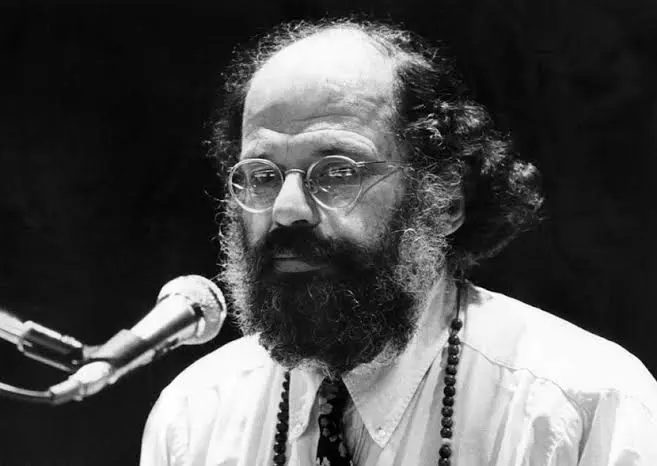
Allen Ginsberg was an American poet born on June 3, 1926, and best known for Howl, a landmark work of the Beat Generation. His writing challenged censorship, social conformity, political repression, and traditional ideas about poetry. He became one of the most visible voices of American counterculture in the 1950s and 1960s. Ginsberg grew up in New Jersey and studied at Columbia University, where he met Jack Kerouac, William S. Burroughs, and other writers who helped shape the Beat movement. His poetry also explored grief, sexuality, spirituality, war, mental illness, and freedom. Major works such as Howl, Kaddish, A Supermarket in California, and The Fall of America helped transform modern American poetry. His public activism and unusual performance style made him both influential and controversial.
Allen Ginsberg Quick Facts
| Fact | Details |
|---|---|
| Full name | Irwin Allen Ginsberg |
| Born | June 3, 1926 |
| Died | April 5, 1997 |
| Birthplace | Newark, New Jersey, United States |
| Nationality | American |
| Occupation | Poet, writer, activist, teacher, photographer |
| Education | Columbia University |
| Famous works | Howl, Kaddish, A Supermarket in California, The Fall of America |
| Literary movement | Beat Generation / Beat poetry |
| Major style | Free verse, long lines, spoken rhythms |
| Partner | Peter Orlovsky |
| Major award | National Book Award for The Fall of America |
| Legacy | Major figure in American counterculture and modern poetry |
Who Was Allen Ginsberg?
Allen Ginsberg was a leading American Beat poet whose work connected poetry with social protest, personal experience, and counterculture.
He became famous after the 1955 public reading of Howl in San Francisco and the publication of Howl and Other Poems in 1956. The poem quickly became a major symbol of the Beat Generation.
Ginsberg believed poetry could speak openly about subjects that polite society often avoided. His work addressed sexuality, poverty, war, politics, drugs, religion, mental illness, and the search for spiritual freedom.
His importance goes beyond his poems. He helped create a public role for the poet as a teacher, performer, photographer, activist, and cultural critic.
Where Was Allen Ginsberg Born and Raised?
Allen Ginsberg was born in Newark, New Jersey, and grew up mainly in nearby Paterson.
His parents, Louis and Naomi Ginsberg, were Jewish and connected to the progressive literary and political culture of the 1920s. His father was a teacher and poet, while his mother strongly influenced his emotional and political development.
Naomi experienced serious mental health problems and spent periods in psychiatric hospitals. Her illness deeply affected her son and later became an important subject in his poetry, especially Kaddish.
As a young reader, Ginsberg admired Walt Whitman. He also studied Edgar Allan Poe and other major writers. These early interests helped shape his later interest in American speech, long poetic lines, and visionary writing.
What Was Allen Ginsberg’s Education?
Allen Ginsberg entered Columbia University in 1943 and graduated in 1948 with an English education.
At Columbia, he studied under important teachers including Lionel Trilling and Mark Van Doren. He also became part of a literary circle that included Lucien Carr, Jack Kerouac, and William S. Burroughs.
His college years were not always smooth. He was twice suspended or expelled during his time at Columbia but eventually returned and graduated. The university years were crucial because they connected him with writers who would become central to the Beat Generation.
His education also encouraged him to question accepted literary rules. Rather than treating poetry as a distant academic form, he increasingly saw it as a living record of thought, speech, emotion, and experience.
How Did Allen Ginsberg’s Career Begin?
Allen Ginsberg’s career developed through poetry readings, friendships with Beat writers, travel, odd jobs, and experimentation with new forms.
After Columbia, he worked several jobs while continuing to write. He eventually moved between New York, San Francisco, Mexico, Paris, and other places connected with the emerging counterculture.
His career changed dramatically in 1955 when he read Howl at the Six Gallery in San Francisco. Lawrence Ferlinghetti later published the poem through City Lights Books in 1956.
The success and controversy surrounding Howl made Ginsberg a national literary figure. From that point, his career expanded into teaching, political activism, photography, public performance, and international travel.
What Was Allen Ginsberg’s Role in the Beat Generation?
Allen Ginsberg was one of the central poets and public voices of the Beat Generation.
The Beat Generation was a literary and cultural movement that rejected conformity, materialism, rigid social rules, and traditional literary forms. Ginsberg helped give the movement its strongest poetic voice.
His friendships with Kerouac, Burroughs, Gregory Corso, Neal Cassady, and other writers created a network that shaped Beat literature. Columbia University was an important early meeting place for several members of this circle.
Ginsberg’s Howl became one of the movement’s defining texts. Its long lines, direct language, social criticism, and intense emotion captured the Beat rejection of conventional American culture.
What Is Allen Ginsberg Famous For?
Allen Ginsberg is most famous for Howl, his role in the Beat Generation, and his influence on American counterculture.
He became known for combining personal confession with political protest. His poetry openly addressed subjects that were often censored or ignored in mainstream American writing.
He was also an important public activist. He protested against the Vietnam War, nuclear weapons, censorship, and other forms of political repression. He supported gay rights and became an important cultural voice for greater freedom of expression.
His influence also reached beyond literature. He performed poetry publicly, worked with musicians and artists, taught younger writers, and helped establish institutions that supported experimental poetry.
Allen Ginsberg’s Writing Style and Techniques
Allen Ginsberg’s writing style is known for free verse, long lines, spoken rhythms, repetition, direct language, and intense personal expression.
He rejected the idea that poetry needed to follow strict traditional forms. Instead, he often tried to capture the natural movement of thought and speech. Columbia describes his work as free verse often presented through a rapid stream-of-consciousness style.
Walt Whitman was one of his strongest poetic influences. Ginsberg also learned from William Carlos Williams, whose attention to everyday speech encouraged him to make poetry sound more natural.
Jack Kerouac’s idea of spontaneous writing also influenced him. Ginsberg developed a method built around writing from direct experience rather than polishing every thought into a traditional poetic structure.
What Inspired Allen Ginsberg’s Poetry?
Allen Ginsberg’s poetry was inspired by personal experience, Walt Whitman, William Carlos Williams, William Blake, Buddhism, jazz, politics, sexuality, and the Beat circle.
His mother’s illness strongly influenced poems about madness, family, memory, and grief. His friendships with Kerouac and other Beat writers encouraged experimentation with spontaneous expression.
William Blake had a special spiritual influence. Ginsberg described visionary experiences connected with reading Blake, which encouraged his later interest in mysticism and altered states of consciousness.
His travels in India also changed his spiritual outlook. Meditation, yoga, chanting, and Buddhism became important parts of his life and later influenced the rhythm and spiritual character of his poetry.
Allen Ginsberg’s Major Poems and Poetry
Allen Ginsberg wrote more than 40 poetry collections, along with many individual poems, essays, journals, and other works.
His poetry combines personal confession, political protest, spiritual searching, sexuality, grief, and observations of American life. He often used long lines and spoken rhythms to make poems feel like performances rather than silent page exercises.
Howl
Howl was first publicly performed in 1955 and published in Howl and Other Poems in 1956.
The poem explores madness, poverty, sexuality, drugs, spiritual longing, and the pressures of modern American society. Its long lines and powerful repetitions created a distinctive Beat poetic voice.
Its publication caused an important obscenity case. U.S. Customs seized copies, and City Lights publisher Lawrence Ferlinghetti faced prosecution for publishing the book. Judge Clayton W. Horn eventually ruled that Howl was not obscene.
America
America is a political and satirical poem that presents the United States through Ginsberg’s personal voice.
The poem mixes political concerns with humor, frustration, national identity, and the poet’s own hopes for America. It shows how Ginsberg turned political poetry into something conversational and personal.
Rather than writing as a distant political commentator, he places himself directly inside the argument. That approach became a major part of his political poetry.
Kaddish
Kaddish is one of Ginsberg’s most important poems and focuses on his mother, Naomi Ginsberg.
Published in Kaddish and Other Poems in 1961, the long poem explores his mother’s life, mental illness, death, and the complicated relationship between mother and son.
The title refers to the Jewish prayer traditionally associated with mourning. Ginsberg transforms that cultural form into a deeply personal poetic memorial.
A Supermarket in California
A Supermarket in California was written in 1955 and imagines a nighttime encounter with Walt Whitman in a supermarket.
The poem connects Whitman’s ideas about America, desire, loneliness, and human connection with Ginsberg’s own experiences. It also examines same-sex desire and the loneliness of people who do not fit conventional social roles.
The supermarket becomes an ordinary American setting where the poet can question love, family, sexuality, and the country Whitman imagined.
Footnote to Howl
Footnote to Howl is the concluding section of Howl and changes the emotional tone of the larger poem.
After the anger and suffering of the earlier sections, the poem turns toward affirmation. It presents the world as worthy of attention despite its pain and disorder.
Its repeated structure and spiritual energy show how Ginsberg could turn protest into a form of celebration.
Wichita Vortex Sutra
Wichita Vortex Sutra is one of Ginsberg’s best-known political poems.
The poem responds to the Vietnam War and attempts to use poetic language as a form of resistance. Ginsberg’s political poetry often treats speech itself as an active force against violence and propaganda.
Its title combines an American place with the Sanskrit-derived word “sutra,” reflecting the poet’s mixture of political protest and spiritual thought.
Plutonian Ode
Plutonian Ode focuses on nuclear power and the threat of nuclear weapons.
Ginsberg uses the poem as a dramatic warning about technologies capable of destroying human life. Like Wichita Vortex Sutra, it shows his belief that poetry could participate directly in political and moral debate.
The Fall of America
The Fall of America gathers poems written between 1965 and 1971 and presents a wide-ranging poetic portrait of the United States.
The work examines war, politics, travel, media, landscapes, technology, and American culture. It won the National Book Award for Poetry in 1974.
The collection is important because it combines documentary observation with poetic experimentation. Ginsberg turns roads, cities, conversations, and political events into parts of one large national poem.
What Are the Major Themes in Allen Ginsberg’s Poetry?
The major themes in Allen Ginsberg’s poetry include freedom, madness, sexuality, spirituality, politics, war, grief, and American identity.
- Freedom: His poems challenge censorship and social rules that restrict individual expression.
- Madness: Mental illness, especially his mother’s illness, became a major subject of his personal poetry.
- Sexuality: He wrote openly about desire and challenged the sexual norms of postwar America.
- Politics: War, nuclear weapons, government power, and political repression appear throughout his work.
- Spirituality: Buddhism, meditation, chanting, Jewish traditions, and mystical experiences shaped his later poetry.
- American identity: He repeatedly questioned what America meant and what kind of country it could become.
- Grief: Poems such as Kaddish transform personal loss into a wider meditation on memory and death.
- Counterculture: His work records the struggles and hopes of people who rejected mainstream social expectations.
Allen Ginsberg’s Political Poetry and Activism
Allen Ginsberg used poetry and public action to challenge war, censorship, political repression, and social inequality.
His political work included opposition to the Vietnam War, nuclear weapons, and other government policies. He was arrested during protests and became closely associated with the protest culture of the 1960s and 1970s.
His political poetry did not simply argue for one party or ideology. Instead, it often questioned authority itself and defended individual freedom, free speech, and the right to challenge powerful institutions.
This made him an important figure in American counterculture. His poetry readings became public events where literature, politics, music, spirituality, and protest could meet.
Why Was Allen Ginsberg Controversial?
Allen Ginsberg was controversial because he openly discussed sexuality, drugs, politics, religion, and subjects that many Americans considered unacceptable.
The controversy surrounding Howl became especially important. Authorities treated the book as potentially obscene, but the 1957 court decision recognized its literary value and allowed the work to remain in circulation.
His public support for free expression also brought criticism. Some of his political positions and associations remained controversial throughout his life.
Ginsberg did not avoid controversy. He believed artists should be willing to discuss difficult subjects honestly, even when that honesty challenged social or political expectations.
Who Was Allen Ginsberg’s Lover?
Allen Ginsberg’s best-known lifelong partner was poet Peter Orlovsky, whom he met in San Francisco in 1954.
The two remained partners for decades and traveled together extensively. Their relationship became an important part of Ginsberg’s personal life and his understanding of love, sexuality, and artistic partnership.
Ginsberg also had complex romantic and sexual relationships within the Beat circle. His relationship with Jack Kerouac was primarily a close friendship, although Ginsberg later said that they had been sexually intimate.
These relationships mattered to his poetry because he treated personal experience as legitimate poetic material rather than something that had to remain private.
Were Allen Ginsberg and Ruth Bader Ginsburg Related?
There is no well-established evidence that poet Allen Ginsberg and Supreme Court Justice Ruth Bader Ginsburg were close relatives.
They shared the surname Ginsberg, but the available biographical sources identify different family histories. Allen Ginsberg was born to Louis and Naomi Ginsberg in Newark, New Jersey, while Ruth Bader Ginsburg was born Joan Ruth Bader to Nathan and Celia Bader in Brooklyn.
The similarity of their surnames has led to online curiosity, but a shared surname alone does not establish a family relationship.
Was Allen Ginsberg in Love With Jack Kerouac?
Allen Ginsberg had a deep friendship and complicated emotional relationship with Jack Kerouac.
The two met through the Columbia literary circle and remained important influences on each other’s writing. Their correspondence shows a long relationship shaped by friendship, creativity, disagreement, and mutual influence.
Ginsberg later acknowledged that he and Kerouac had been sexually intimate, while also describing Kerouac as primarily heterosexual. Their relationship is therefore better understood as a complex friendship that included emotional and sexual dimensions rather than a conventional romantic partnership.
Allen Ginsberg’s Books and Famous Works
Allen Ginsberg published poetry collections, essays, journals, photographs, and other literary works across several decades.
Important books include Howl and Other Poems (1956), Kaddish and Other Poems (1961), Planet News (1968), The Fall of America (1973), Mind Breaths (1978), White Shroud (1986), and Cosmopolitan Greetings (1994).
His books show the development of Beat poetry from the raw energy of the 1950s toward broader political, spiritual, and cultural concerns in later decades.
He also published Photographs, reflecting another side of his artistic career. His photographs documented Beat writers and friends and became valuable records of the movement’s social world.
Allen Ginsberg Achievements and Awards
Allen Ginsberg received major recognition during his lifetime for both his poetry and cultural influence.
His most important literary honor was the National Book Award for The Fall of America. He also received the National Arts Club gold medal, the Robert Frost Medal, the Golden Wreath of the Struga Poetry Evenings, and other honors.
He also became a teacher and helped establish the Jack Kerouac School of Disembodied Poetics at Naropa Institute with Anne Waldman and others.
His achievements were therefore not limited to books. He helped build institutions, support other writers, preserve Beat history through photography, and bring poetry into public political life.
Allen Ginsberg Influence on American Poetry
Allen Ginsberg changed American poetry by showing that poems could sound like speech while still carrying powerful rhythm and structure.
His free verse, long lines, repetition, and public performance style influenced poets who wanted to write more directly about personal and political experience. His work also helped break down the boundary between literary poetry and popular counterculture.
The success of Howl demonstrated that experimental poetry could reach a large audience. The obscenity trial also made the poem part of a wider debate about artistic freedom and censorship.
His influence continued through teaching. At Naropa and later Brooklyn College, he worked directly with younger writers and helped promote experimental approaches to poetry.
Allen Ginsberg, Buddhism, and Spiritual Poetry
Spiritual searching became increasingly important in Allen Ginsberg’s later life and poetry.
His travels in India introduced him to meditation, yoga, chanting, and other spiritual practices. He later studied Tibetan Buddhism with Chögyam Trungpa Rinpoche and formally took Buddhist vows in 1972.
Ginsberg saw rhythm, breath, chanting, and meditation as connected to poetry. This helped him develop a style in which poetry readings could feel almost like musical or spiritual performances.
His spiritual interests did not replace his political concerns. Instead, Buddhism became another way for him to think about suffering, compassion, awareness, death, and human connection.
How Did Allen Ginsberg Die?
Allen Ginsberg died on April 5, 1997, in New York City after being diagnosed with liver cancer.
In the final period of his life, he continued writing and produced a group of short poems after learning about his illness. He then suffered a stroke and died two days later.
His final poems were later collected in Death & Fame: Poems, 1993–1997. The collection provided a final stage in a poetic career that had lasted for more than four decades.
His death marked the end of one of the most visible literary careers of twentieth-century America, but his work continued to influence readers, poets, activists, and artists.
Allen Ginsberg’s Legacy
Allen Ginsberg’s legacy rests on his poetry, his role in the Beat Generation, his activism, and his defense of artistic freedom.
Howl remains one of the most recognizable poems of modern American literature. Its publication helped expand the possibilities of what poets could say publicly and how they could say it.
His influence also reaches beyond literature. He helped connect poetry with protest, photography, music, spirituality, and public performance. His work showed that a poet could participate directly in cultural debates.
For modern readers, his importance comes from the way he turned private experience into public art. His poems continue to ask difficult questions about freedom, identity, war, desire, suffering, and the meaning of America.
Final Talk
Allen Ginsberg remains one of the most important American poets of the twentieth century because he expanded both the subject and sound of modern poetry. His life connected the Beat Generation with the wider counterculture, while works such as Howl, Kaddish, and The Fall of America gave readers new ways to think about madness, grief, sexuality, politics, spirituality, and freedom. His long lines and natural speech patterns challenged traditional poetic forms, while his public activism made him a visible voice for social change. Ginsberg’s relationship with writers such as Jack Kerouac and William S. Burroughs helped shape Beat literature, and his lifelong partnership with Peter Orlovsky influenced his personal and artistic life. His legacy continues because his poetry treats individual experience as something worthy of public attention, even when that experience challenges society’s accepted rules.
FAQs
Allen Ginsberg’s most famous poem is Howl, first performed publicly in 1955 and published by City Lights in 1956.
His best-known poems include Howl, America, Kaddish, A Supermarket in California, Footnote to Howl, Wichita Vortex Sutra, and Plutonian Ode. These poems cover personal, political, spiritual, and social themes.
Howl explores madness, alienation, sexuality, poverty, drugs, spiritual longing, and the destructive pressures of modern society. It became a defining work of Beat poetry.
Allen Ginsberg is important because he helped transform American poetry through free verse, spoken rhythms, personal confession, political protest, and public performance. His work also helped define Beat poetry.
The major themes include freedom, sexuality, madness, spirituality, war, political protest, grief, American identity, social conformity, and the search for personal truth.
Read About Other Poets
Poems by Allen Ginsberg Biography: Life, Poems, Howl, and Legacy
No poems published yet for this poet.