Emily Dickinson Biography: Life, Poems, Facts, and Legacy
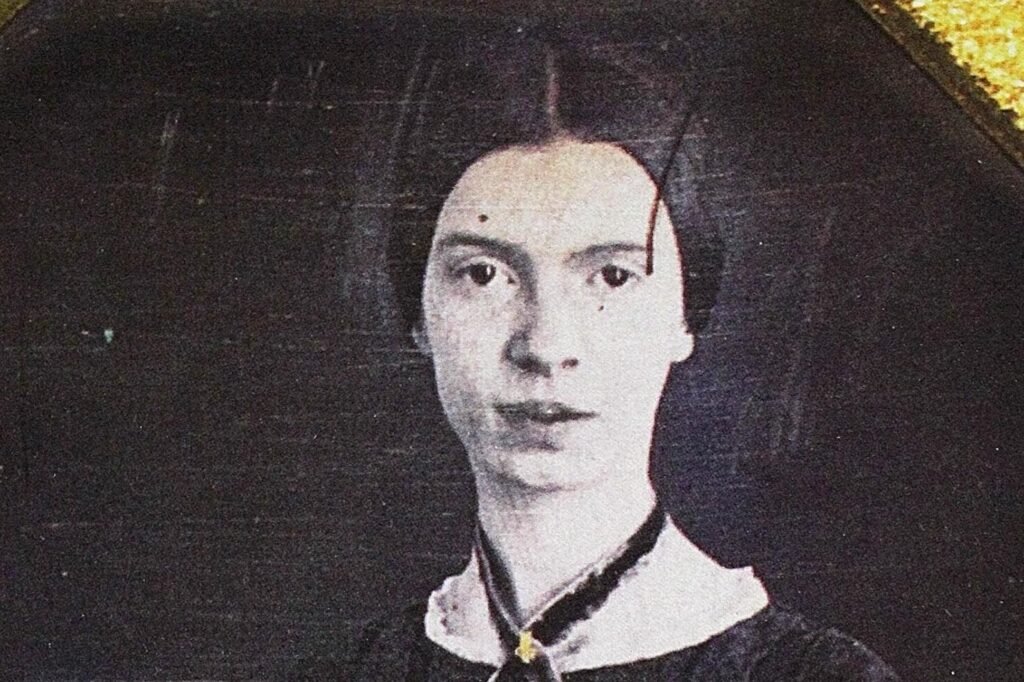
Quick Facts
- Born
- December 10, 1830
- Died
- May 15, 1886
- Movement
- American Romanticism
- Famous Quote
- "That it will never come again is what makes life so sweet."
Emily Dickinson was an American poet born on December 10, 1830, in Amherst, Massachusetts, and is now considered one of the greatest poets in American literature. Although only a few of her poems were published during her lifetime, her work later transformed modern poetry. Emily Dickinson wrote nearly 1,800 poems that explored death, nature, love, hope, loneliness, and the human soul.
Today, readers around the world search for Emily Dickinson poems, Emily Dickinson quotes, and facts about her unusual life. Her short yet powerful verses remain popular because they speak about universal emotions in simple but memorable language. Poems such as Because I Could Not Stop for Death and Hope Is the Thing with Feathers continue to be studied in schools and universities.
Emily Dickinson’s life was quiet, but her imagination was vast. Her poetry changed how writers used language, rhythm, and imagery, making her one of America’s most influential literary voices.
Emily Dickinson Quick Facts
| Fact | Details |
|---|---|
| Full Name | Emily Elizabeth Dickinson |
| Born | December 10, 1830 |
| Died | May 15, 1886 |
| Age at Death | 55 years |
| Birthplace | Amherst, Massachusetts, United States |
| Nationality | American |
| Occupation | Poet |
| Literary Movement | American Romanticism |
| Known For | Innovative poetry and unique writing style |
| Number of Poems | Nearly 1,800 |
| Famous Poems | Because I Could Not Stop for Death, Hope Is the Thing with Feathers, I’m Nobody! Who Are You?, A Bird Came Down the Walk |
| Family Home | Emily Dickinson House, Amherst |
Who Is Emily Dickinson?
Emily Dickinson was an American poet whose innovative poems changed the course of American literature.
She spent most of her life in Amherst, Massachusetts, where she wrote nearly 1,800 poems. Unlike many famous writers, Dickinson did not seek public attention and published very little during her lifetime.
Her poetry explored subjects such as death, immortality, nature, faith, loneliness, and human emotions. Emily Dickinson’s unusual punctuation, short lines, and use of dashes made her work different from traditional poetry of the nineteenth century.
Today, scholars consider Emily Dickinson one of the most important American poets, and her works are studied across the world.
Where Was Emily Dickinson Born?
Emily Dickinson was born in Amherst, Massachusetts, on December 10, 1830.
Amherst was a small New England town known for education and religion. Dickinson’s family played an important role in local society, and the town greatly influenced her writing. Many images in her poems, including gardens, birds, flowers, and changing seasons, came from the natural world around her home.
The Dickinson family lived in a house called the Homestead, which is now known as the Emily Dickinson Museum. Visitors still travel there to learn about her life and writing.
Emily Dickinson’s Family and Childhood
Emily Dickinson grew up in a respected and educated family.
Her father, Edward Dickinson, was a lawyer, politician, and member of the United States Congress. Her mother was Emily Norcross Dickinson. Emily had two siblings: an older brother, Austin, and a younger sister, Lavinia.
Books, religion, and education were important parts of family life. Dickinson formed close relationships with her siblings, especially Lavinia, who later discovered and preserved Emily’s poems after her death.
Childhood experiences in Amherst shaped many of Dickinson’s ideas about nature, society, and spirituality.
Where Did Emily Dickinson Study?
Emily Dickinson received a strong education for a woman of her time.
She attended Amherst Academy, where she studied literature, science, history, botany, and classical subjects. Her interest in plants and nature later appeared in many of her poems.
After Amherst Academy, Dickinson studied briefly at Mount Holyoke Female Seminary, now known as Mount Holyoke College. She stayed for only one year before returning home.
Scholars still debate why she left, but some believe she preferred the quiet life of Amherst and wanted more freedom for reading and writing.
Emily Dickinson’s Life in Amherst
Emily Dickinson spent nearly her entire life in Amherst, Massachusetts.
As she grew older, she became increasingly private and limited her contact with the outside world. This has led to many stories about her being a recluse, though recent research suggests she remained active through letters and relationships.
Dickinson maintained friendships through correspondence and exchanged thoughtful letters with family, editors, and friends. Her letters reveal humor, intelligence, and deep emotional insight.
The quiet environment of Amherst gave Dickinson the time and space to develop her unique poetic voice.
Emily Dickinson’s Writing Career
Emily Dickinson wrote nearly 1,800 poems, but only a small number were published while she was alive.
Most of her poems were written between the late 1850s and mid-1860s. She carefully copied many poems into small handmade booklets called fascicles. These manuscripts provide important evidence of how she organized and revised her work.
Publishers of her time often changed her punctuation and wording because her style seemed unusual. Dickinson preferred her own forms, using dashes, slant rhyme, and unexpected capitalization.
After her death in 1886, her sister Lavinia discovered hundreds of poems hidden in drawers and boxes. Editors gradually published these works, and Emily Dickinson’s reputation grew steadily throughout the twentieth century.
Why Was Emily Dickinson’s Poetry Different?
Emily Dickinson changed poetry by breaking many traditional rules.
Most poets of her time used regular rhythms and clear punctuation. Dickinson used short lines, dashes, unusual capitalization, and incomplete rhymes. These choices created poems that felt more personal and mysterious.
Her poetry often asks questions instead of giving direct answers. She wrote about large ideas such as death, eternity, faith, and identity in simple language.
Modern readers appreciate Dickinson because her poems feel fresh, emotional, and timeless even more than a century after they were written.
What Literary Movement Was Emily Dickinson Part Of?
Emily Dickinson is usually associated with American Romanticism.
Romantic writers valued imagination, emotions, nature, and personal experience. Dickinson shared these interests but also created a style that looked ahead to modern poetry.
Her work influenced many twentieth-century poets because of its originality and freedom. Some literary scholars describe her as a bridge between Romantic poetry and modern poetry.
This lasting influence explains why Emily Dickinson remains one of the most studied figures in American literature.
Emily Dickinson Poems and Poetry
Emily Dickinson wrote nearly 1,800 poems, making her one of the most prolific poets in American literary history.
Although only about ten of her poems appeared in print during her lifetime, her complete body of work was discovered after her death. Today, Emily Dickinson poems are admired for their emotional depth, striking imagery, and innovative use of language. Her poetry explores universal themes such as death, hope, faith, nature, love, loneliness, and immortality.
Unlike many nineteenth-century poets, Dickinson preferred short lyric poems instead of long narrative works. Her unique use of dashes, slant rhyme, and unexpected capitalization created a style that continues to influence poets worldwide.
Emily Dickinson’s Most Famous Poems
Because I Could Not Stop for Death
Written around 1863 and published after Dickinson’s death in 1890, Because I Could Not Stop for Death is widely regarded as her masterpiece.
The poem presents death as a calm and polite companion who escorts the speaker on a peaceful journey. Rather than portraying death as frightening, Dickinson describes it as a natural passage toward eternity. Its quiet tone and powerful symbolism have made it one of the most analyzed poems in American literature.
Hope Is the Thing with Feathers
Written in 1861, this poem compares hope to a small bird that continues singing through every storm.
The bird symbolizes the strength that helps people endure hardship without asking for anything in return. Its memorable central image has made the poem one of Emily Dickinson’s best-loved works and a favorite in classrooms around the world.
I’m Nobody! Who Are You?
This short poem explores identity and society with wit and humor.
Dickinson contrasts private individuality with public fame, suggesting that remaining unknown can be more meaningful than seeking attention. Despite its brief length, the poem offers a lasting reflection on self-worth and authenticity.
A Bird Came Down the Walk
This nature poem carefully observes the behavior of a bird in its natural environment.
Dickinson combines scientific observation with vivid imagination, turning an ordinary moment into a meditation on beauty and freedom. The poem reflects her lifelong fascination with the natural world around Amherst.
I Heard a Fly Buzz—When I Died
This famous poem imagines the final moments before death.
Instead of dramatic scenes, Dickinson introduces the quiet sound of a buzzing fly, creating a surprising contrast between ordinary life and life’s greatest mystery. The poem is celebrated for its originality and psychological depth.
Wild Nights – Wild Nights!
One of Dickinson’s most passionate poems, Wild Nights – Wild Nights! explores longing and emotional desire.
Its vivid imagery and energetic rhythm have inspired many interpretations over the years. Literary scholars continue to debate whether the poem reflects romantic love, spiritual yearning, or both.
There Is No Frigate Like a Book
This short poem celebrates the power of reading.
Dickinson compares books to ships that carry readers anywhere through imagination alone. It remains one of her most quoted works about literature and learning.
Success Is Counted Sweetest
This poem argues that success is understood best by those who never achieve it.
Using the image of a defeated soldier, Dickinson explains how failure can deepen a person’s appreciation of victory. The poem became one of the few works published during her lifetime.
Emily Dickinson Books
Emily Dickinson did not publish traditional books while she was alive.
Instead, editors collected her poems after her death into several important volumes. These books introduced her work to readers around the world and helped establish her literary reputation.
Some of the most notable collections include:
- Poems by Emily Dickinson (1890)
- Poems: Second Series (1891)
- Poems: Third Series (1896)
- The Single Hound (1914)
- The Complete Poems of Emily Dickinson (1955)
- The Poems of Emily Dickinson: Reading Edition (1998)
Modern editions aim to preserve Dickinson’s original punctuation, capitalization, and handwritten formatting whenever possible.
What Themes Appear in Emily Dickinson’s Poetry?
Emily Dickinson explored timeless human experiences through concise yet powerful poems.
- Death and Immortality – She examined death as both an ending and a doorway into eternity.
- Nature – Birds, flowers, bees, gardens, and changing seasons appear throughout her poetry.
- Hope – Dickinson often described hope as an inner strength that survives hardship.
- Faith and Doubt – Many poems question religion while still searching for spiritual truth.
- Love – Her poems explore affection, longing, absence, and emotional intimacy.
- Identity – Dickinson frequently examined the relationship between the individual and society.
- Solitude – Quiet reflection and isolation became sources of creativity rather than loneliness.
- Time and Eternity – Many poems compare ordinary moments with infinite existence.
Emily Dickinson’s Writing Style
Emily Dickinson developed one of the most recognizable poetic styles in English literature.
She preferred short lyric poems built around powerful images instead of lengthy narratives. Many poems contain only a few stanzas yet communicate complex emotions with remarkable precision.
Her frequent use of dashes creates pauses that invite readers to think carefully about each line. She also used slant rhyme, where words sound similar without forming perfect rhymes, giving her poetry a distinctive musical quality.
Another hallmark of Dickinson’s style is her ability to transform ordinary objects—a bird, a flower, a fly, or a sunset—into symbols of profound philosophical ideas.
Emily Dickinson Quotes
Many of Emily Dickinson’s best-known lines come from works now in the public domain.
“Hope is the thing with feathers.”
— Hope Is the Thing with Feathers
“Forever is composed of nows.”
— Life
“The soul selects her own society.”
— The Soul Selects Her Own Society
“Unable are the loved to die.”
— My Life Closed Twice Before Its Close
“That it will never come again is what makes life so sweet.”
— If I Can Stop One Heart from Breaking
Emily Dickinson Facts
- Emily Dickinson wrote nearly 1,800 poems.
- Fewer than a dozen of her poems were published while she was alive.
- Her sister Lavinia Dickinson discovered hundreds of unpublished manuscripts after her death.
- Dickinson spent almost her entire life in Amherst, Massachusetts.
- She often wrote her poems into handmade booklets called fascicles.
- Many early editors changed her punctuation and wording before publication.
- She is considered one of America’s greatest lyric poets.
- Her poetry has been translated into dozens of languages.
- Dickinson’s original manuscripts are preserved by libraries and museums.
- Her influence extends across poetry, literature, music, theater, and education.
Was Emily Dickinson a Lesbian?
Emily Dickinson’s sexual orientation remains unknown.
Modern scholars have discussed the affectionate language found in some of her letters, particularly those written to close female friends such as Susan Gilbert Dickinson. However, there is no definitive historical evidence confirming Emily Dickinson’s sexual orientation.
Most historians agree that applying modern labels to nineteenth-century relationships can be difficult. As a result, the topic remains an area of scholarly discussion rather than established fact.
Emily Dickinson House
The Emily Dickinson House is located in Amherst, Massachusetts.
Known as the Homestead, it was the poet’s birthplace, lifelong home, and the place where she wrote nearly all of her poetry. The house has been carefully preserved as part of the Emily Dickinson Museum.
Visitors can tour the home, view period furnishings, learn about Dickinson’s daily life, and explore the gardens that inspired many of her poems.
How Did Emily Dickinson Die?
Emily Dickinson died on May 15, 1886, at the age of 55.
Medical records indicate that the primary cause of death was Bright’s disease, a historical term commonly used for chronic kidney disease. Some scholars also believe she may have experienced complications from high blood pressure.
She was buried in West Cemetery in Amherst, Massachusetts, where her grave continues to attract admirers from around the world.
Emily Dickinson’s Death and Lasting Legacy
Emily Dickinson’s literary reputation grew rapidly after her death.
When Lavinia Dickinson discovered hundreds of carefully preserved poems, editors began publishing them in collections that introduced readers to an extraordinary new poetic voice. Although early editions altered her style, later scholarly editions restored much of her original punctuation and wording.
Today, Dickinson is recognized as one of the most influential American poets. Her poems are studied in schools, universities, and literary programs across the world. Writers continue to admire her originality, emotional honesty, and fearless exploration of life’s deepest questions.
Her influence extends beyond literature into music, theater, film, and popular culture, ensuring that each new generation discovers the timeless brilliance of Emily Dickinson’s poetry.
Emily Dickinson Biography: A Lasting Literary Legacy
Emily Dickinson remains one of the most admired and influential poets in American literature because her words continue to speak to readers across generations. Although she lived a quiet life and received little public recognition during her lifetime, her poetry transformed the way people think about language, emotion, and imagination. Nearly 1,800 poems survived because her family carefully preserved her manuscripts, allowing future generations to appreciate her remarkable talent.
Today, Emily Dickinson’s poems are studied in schools, universities, and literary circles around the world. Her reflections on hope, nature, love, faith, identity, and mortality remain as meaningful now as they were in the nineteenth century. Whether you are reading Because I Could Not Stop for Death, discovering her famous quotes, or exploring her fascinating life story, Emily Dickinson offers timeless insights that continue to inspire readers, writers, and poets everywhere.
Frequently Asked Questions
Who is Emily Dickinson?
Emily Dickinson was an American poet born on December 10, 1830, in Amherst, Massachusetts. She wrote nearly 1,800 poems and is considered one of the greatest poets in American literary history.
What is Emily Dickinson’s most famous poem?
Because I Could Not Stop for Death is generally regarded as Emily Dickinson’s most famous poem. Other well-known works include Hope Is the Thing with Feathers, I’m Nobody! Who Are You?, and I Heard a Fly Buzz—When I Died.
How many poems did Emily Dickinson write?
Emily Dickinson wrote nearly 1,800 poems during her lifetime. Most remained unpublished until after her death, when her sister Lavinia discovered her handwritten manuscripts.
How did Emily Dickinson die?
Emily Dickinson died on May 15, 1886, at the age of 55. Historians believe the primary cause of death was Bright’s disease, a historical name for chronic kidney disease.
Where is the Emily Dickinson House?
The Emily Dickinson House is located in Amherst, Massachusetts. Today, it operates as the Emily Dickinson Museum and preserves the home where she lived and wrote most of her poetry.
Was Emily Dickinson married?
No. Emily Dickinson never married and spent most of her life with her family in Amherst. Although scholars have discussed some of her close personal relationships, no historical evidence confirms that she had a spouse.
What books did Emily Dickinson publish?
Emily Dickinson did not publish any books during her lifetime. Her poems were first collected and published in 1890, four years after her death, and have since appeared in numerous scholarly editions.
Why is Emily Dickinson important?
Emily Dickinson revolutionized American poetry through her original style, concise language, and exploration of universal themes. Her innovative use of punctuation, slant rhyme, and imagery influenced generations of poets and helped shape modern poetry.
Learn More About Other Poets
Poems by Emily Dickinson Biography: Life, Poems, Facts, and Legacy
No poems published yet for this poet.