Edgar Allan Poe Biography: Life, Poems, Books, Death & Literary Legacy
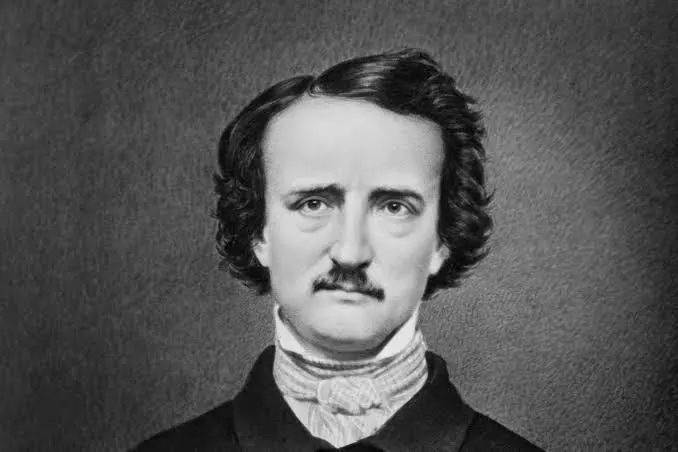
Edgar Allan Poe remains one of the most celebrated and influential writers in American literature. Best known for his haunting poems, suspenseful short stories, and pioneering detective fiction, Poe transformed the literary world with his unique imagination and unforgettable style. His works continue to inspire readers, writers, filmmakers, and scholars across the globe. From the famous poem The Raven to chilling stories like The Tell-Tale Heart and The Fall of the House of Usher, Poe’s writing combines mystery, horror, psychological depth, and poetic beauty.
This Edgar Allan Poe biography explores his early life, education, literary career, major works, personal struggles, mysterious death, and enduring legacy.
Early Life of Edgar Allan Poe
Edgar Allan Poe was born on January 19, 1809, in Boston, Massachusetts, United States. His parents, David Poe Jr. and Elizabeth Arnold Poe, were professional actors. Sadly, Poe’s father abandoned the family, and his mother died from illness when Edgar was only a young child.
After becoming an orphan, Poe was taken in by wealthy merchant John Allan and his wife, Frances Allan, in Richmond, Virginia. Although John Allan never legally adopted him, Edgar added “Allan” to his name and spent much of his childhood in their household.
Poe received an excellent education during his early years. He also spent several years in England and Scotland, where he attended boarding schools before returning to the United States. These experiences exposed him to classical literature and European culture, influences that later appeared in his writing.
Education and Early Writing Career
In 1826, Poe enrolled at the University of Virginia. He excelled academically, particularly in languages, but financial difficulties soon created problems. Because John Allan provided insufficient funds, Poe accumulated debts through gambling and eventually left the university after only one year.
Following his departure, Poe moved to Boston, where he published his first collection of poetry, Tamerlane and Other Poems, in 1827. Although the book received little attention, it marked the beginning of his literary journey.
During this period, Poe also enlisted in the United States Army under an assumed name. After completing military service, he briefly attended the United States Military Academy at West Point. However, conflicts with authority and personal circumstances led to his dismissal, allowing him to devote himself fully to writing.
Rise as a Professional Writer
Edgar Allan Poe worked as an editor, literary critic, poet, and fiction writer throughout his career. He contributed to several magazines and journals, gaining a reputation for his sharp literary criticism and demanding editorial standards.
Unlike many writers of his time, Poe depended almost entirely on writing for his income. Although financially challenging, this career path allowed him to experiment with different literary forms, including poetry, horror fiction, detective stories, science fiction, satire, and literary criticism.
His innovative storytelling techniques helped establish entirely new genres that continue to influence modern literature.
Famous Poems by Edgar Allan Poe
Poetry occupies a special place in Poe’s literary achievements. His poems are admired for their musical language, emotional intensity, symbolism, and exploration of love, beauty, grief, and mortality.
Some of his most famous poems include:
- The Raven
- Annabel Lee
- The Bells
- A Dream Within a Dream
- To Helen
- Lenore
- Ulalume
Among these works, The Raven, published in 1845, brought Poe international recognition. The poem’s memorable refrain, atmospheric setting, and exploration of sorrow made it one of the most famous poems in American literature.
Edgar Allan Poe’s Most Famous Stories
Poe revolutionized short fiction through psychological horror and suspense. His stories focus on fear, guilt, madness, crime, and the darker side of human nature.
His best-known stories include:
- The Tell-Tale Heart
- The Black Cat
- The Fall of the House of Usher
- The Cask of Amontillado
- The Masque of the Red Death
- The Pit and the Pendulum
- The Murders in the Rue Morgue
“The Murders in the Rue Morgue” is widely regarded as one of the world’s first modern detective stories. Poe’s fictional detective, C. Auguste Dupin, later inspired famous literary detectives such as Sherlock Holmes.
Literary Style and Themes
Edgar Allan Poe developed a distinctive literary style characterized by precision, symbolism, atmosphere, and emotional intensity. He believed that every word in a literary work should contribute to a single emotional effect.
Recurring themes in his writing include:
- Death and mourning
- Lost love
- Psychological conflict
- Fear and guilt
- Madness
- Revenge
- Mystery
- Supernatural elements
- Beauty and melancholy
His ability to combine poetic language with psychological realism distinguishes his work from many of his contemporaries.
Personal Life
In 1836, Poe married his cousin Virginia Clemm, who was only thirteen years old at the time. Their marriage has been widely discussed by historians and literary scholars.
Virginia suffered from tuberculosis for several years before her death in 1847. Her illness deeply affected Poe emotionally and influenced many of his poems and stories dealing with loss, grief, and the death of beautiful young women.
Following Virginia’s death, Poe struggled with poor health, financial hardship, and emotional instability, although he continued writing until the end of his life.
Edgar Allan Poe’s Mysterious Death
One of the greatest mysteries surrounding Edgar Allan Poe concerns his death.
In late September 1849, Poe disappeared while traveling. Several days later, he was discovered in Baltimore in a confused and distressed condition. He was taken to a hospital but never fully recovered.
Edgar Allan Poe died on October 7, 1849, at the age of 40.
The exact cause of his death remains unknown. Over the years, researchers have suggested numerous possibilities, including illness, alcohol-related complications, infections, heart disease, rabies, or a practice known as “cooping,” in which individuals were forced to vote multiple times during elections. However, no single explanation has been conclusively proven.
Edgar Allan Poe’s Legacy
Edgar Allan Poe’s influence extends far beyond American literature. He helped shape the modern horror story, detective fiction, psychological thriller, and science fiction.
Many renowned authors—including Arthur Conan Doyle, H. P. Lovecraft, Jules Verne, Stephen King, Agatha Christie, and Charles Baudelaire—have acknowledged Poe’s influence on their work.
Today, his writings are studied in schools and universities worldwide. His stories have inspired countless films, television adaptations, stage productions, graphic novels, and works of art.
Poe’s lasting contribution lies not only in his unforgettable stories and poems but also in his innovative approach to storytelling and literary theory.
Interesting Facts About Edgar Allan Poe
- He is considered the father of modern detective fiction.
- The Raven made him internationally famous.
- Poe was also a respected literary critic.
- He believed every story should create a “single effect” on the reader.
- His works have been translated into dozens of languages.
- The exact cause of his death remains one of literature’s greatest mysteries.
- His influence continues to shape horror, mystery, detective, and gothic literature.
Final Talk
Edgar Allan Poe occupies a unique place in literary history as a master of horror, mystery, and poetry. Despite facing personal tragedies, financial struggles, and an untimely death, he created works that remain timeless classics. His unforgettable poems, psychologically rich stories, and groundbreaking detective fiction continue to captivate readers more than 170 years after his death. Whether admired for The Raven, The Tell-Tale Heart, or his pioneering literary ideas, Edgar Allan Poe’s legacy remains an enduring source of inspiration for readers and writers around the world.
Read More About Other Poets
Poems by Edgar Allan Poe Biography: Life, Poems, Books, Death & Literary Legacy
No poems published yet for this poet.