Nikki Giovanni Biography: Life, Poems, Works, and Legacy
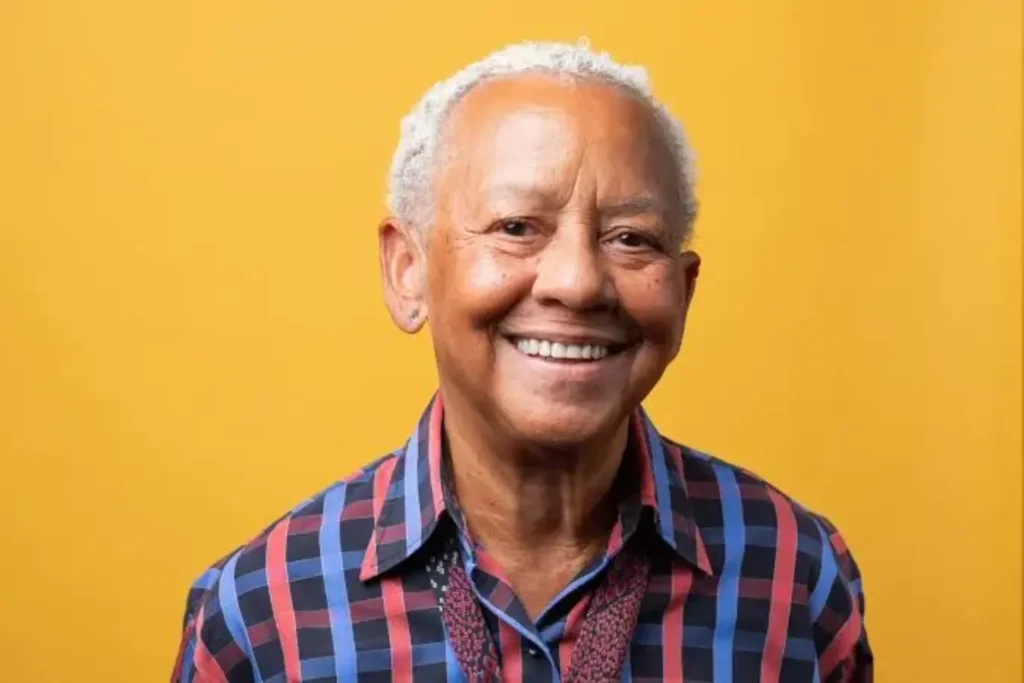
Nikki Giovanni was an American poet, writer, educator, and activist born on June 7, 1943, in Knoxville, Tennessee. She became one of the most important African American poets of the 20th and 21st centuries. Her early work grew from the Civil Rights Movement, Black Power, and Black Arts Movement of the 1960s. She became known for poetry about Black identity, race, family, love, women, politics, and everyday life. Her first poetry collection, Black Feeling, Black Talk, appeared in 1968 and helped establish her as a major literary voice. Over a career lasting more than five decades, Giovanni published poetry, essays, children’s books, and spoken-word recordings. She also taught at several universities, including Virginia Tech. She died on December 9, 2024, at age 81, leaving a lasting influence on African American literature.
Quick Facts About Nikki Giovanni
| Fact | Details |
|---|---|
| Full name | Yolande Cornelia “Nikki” Giovanni Jr. |
| Born | June 7, 1943 |
| Died | December 9, 2024 |
| Birthplace | Knoxville, Tennessee, United States |
| Nationality | American |
| Occupation | Poet, writer, educator, activist |
| Education | Fisk University; later studied at the University of Pennsylvania and Columbia University |
| Famous works | Black Feeling, Black Talk, Black Judgement, Gemini, My House, Those Who Ride the Night Winds, Love Poems, Bicycles |
| Literary movement | Black Arts Movement |
| Major themes | Black identity, race, gender, love, family, politics, social justice |
| Son | Thomas |
| Wife | Virginia C. Fowler |
| Major honors | Seven NAACP Image Awards, Langston Hughes Award, American Book Award, Ruth Lilly Poetry Prize |
These facts are supported by major literary and biographical sources, including Poetry Foundation, the Academy of American Poets, National Archives, and Giovanni’s official website.
Who Was Nikki Giovanni?
Nikki Giovanni was an African American poet whose writing connected personal experience with major social and cultural issues. She became widely known during the Black Arts Movement and developed a direct poetic voice that reached readers beyond academic literary circles.
Her poetry often explored what it meant to be Black and American, particularly during a period of major political change. She also wrote openly about women, family, love, sexuality, childhood, history, and personal memory.
Giovanni was more than a poet. She was also a teacher, editor, essayist, children’s author, performer, and public speaker. Her career helped bring African American poetry to large audiences through books, recordings, television appearances, and live performances.
Where Was Nikki Giovanni Born and Where Did She Grow Up?
Nikki Giovanni was born in Knoxville, Tennessee, on June 7, 1943, and grew up largely in the Cincinnati, Ohio, area.
Her family maintained strong connections with Knoxville, and she often returned there to visit relatives. She later described the importance of both Tennessee and Ohio in shaping her childhood and sense of identity.
Growing up in a Black community helped her understand race and community from an early age. These experiences later became important parts of her poetry about Black life, family, memory, and social change.
What Was Nikki Giovanni’s Education?
Nikki Giovanni graduated from Fisk University in 1967 with a degree in history. She also studied at the University of Pennsylvania and Columbia University but did not complete graduate degrees there.
Her time at Fisk University was especially important because the historically Black university had a strong intellectual and cultural tradition. During this period, Giovanni became increasingly interested in civil rights and Black cultural expression.
Her academic background in history also influenced her understanding of African American identity. History became a powerful source for her later poems, essays, and books.
How Did Nikki Giovanni Begin Her Writing Career?
Giovanni’s professional writing career gained major attention in the late 1960s, when she self-published Black Feeling, Black Talk in 1968. The collection reflected the political energy of the period and established her as a strong new poetic voice.
She also published Black Judgement in 1968 and Re: Creation in 1970. These early works responded strongly to racial injustice, Black pride, political struggle, and the search for freedom.
Rather than separating poetry from everyday life, Giovanni treated poetry as a way to speak directly to people. Her accessible language helped make her work popular with readers and audiences who did not usually read academic poetry.
Nikki Giovanni and the Black Arts Movement
Nikki Giovanni became one of the leading poets associated with the Black Arts Movement of the late 1960s. Her early poetry was strongly influenced by Black Power, civil rights activism, and the demand for greater Black cultural representation.
The movement encouraged Black writers and artists to create work that reflected Black experiences and challenged racism. Giovanni’s early poems fit this goal through their direct language, political energy, and celebration of Black identity.
She was sometimes called the “Poet of the Black Revolution” because of the force of her early work. Yet her poetry later expanded beyond political protest into love, family, childhood, nature, history, aging, and personal reflection.
How Did the Civil Rights Movement Influence Nikki Giovanni?
The Civil Rights Movement strongly influenced Giovanni’s early poetry and her understanding of Black identity. She became involved with civil rights ideas while young, and the movement remained an important influence throughout her career.
Her poems often responded to racism and political violence while also celebrating Black strength. She did not treat political writing as separate from personal experience.
This combination became one of the defining features of her poetry. She could write about a national struggle while still focusing on a family, a woman, a child, a friendship, or an ordinary moment.
Nikki Giovanni’s Major Poetry Collections
Giovanni produced numerous poetry collections and other literary books over several decades, rather than a single small body of poems. Her official bibliography lists major collections from Black Feeling, Black Talk through Make Me Rain.
Her poetry changed as her life changed. Early books were strongly political, while later collections gave greater space to love, family, aging, nature, memory, grief, and personal experience.
Black Feeling, Black Talk (1968)
Black Feeling, Black Talk was Giovanni’s first major poetry collection and appeared in 1968. It helped establish her reputation during the Black Arts Movement.
The book addresses Black identity, political struggle, racism, and cultural pride. Its direct voice made the poems feel closer to spoken language than formal academic poetry.
The collection remains central to any study of her early career because it shows how strongly her poetry was connected to the social changes of the 1960s.
Black Judgement (1968)
Black Judgement was another important early collection published in 1968. It continued Giovanni’s focus on Black consciousness, political change, and cultural independence.
The collection helped strengthen her position within the Black Arts Movement. It also showed her willingness to challenge accepted ideas about race, power, and American society.
Re: Creation (1970)
Re: Creation appeared in 1970 and continued the political and cultural concerns of her earlier poetry. It belongs to the period when Giovanni was becoming one of the most visible young Black poets in America.
The work reflects her interest in rebuilding identity and community after years of racial conflict. It also shows her growing confidence in combining personal experience with wider social questions.
My House (1972)
My House marked an important development toward more personal and autobiographical poetry. The collection allowed Giovanni to explore home, relationships, identity, and everyday experiences alongside her larger social concerns.
The title itself suggests a focus on belonging and personal space. The collection helped demonstrate that her poetry could be intimate without losing its cultural and political depth.
Cotton Candy on a Rainy Day (1978)
Cotton Candy on a Rainy Day was published in 1978 and is often viewed as a more reflective period in her career. The poems respond to the changing mood of the 1970s after the major hopes of the Civil Rights era.
The collection combines tenderness with disappointment and reflection. Its emotional range shows how Giovanni’s writing had moved beyond the more openly militant voice of her early work.
Those Who Ride the Night Winds (1983)
Those Who Ride the Night Winds appeared in 1983 and honored people who challenged limits and changed society. The collection connects individual lives with larger ideas about courage, history, and freedom.
This book demonstrates the continuing importance of historical figures and cultural heroes in Giovanni’s poetry. She often used such figures to encourage readers to think about what one person can accomplish.
Love Poems (1997)
Love Poems focused more directly on intimacy, relationships, affection, and emotional experience. It showed another side of a poet who had first become famous for politically charged writing.
The collection also reflects Giovanni’s willingness to write about love without separating it from race, culture, grief, and personal history. Love remained an important part of her later literary identity.
Blues: For All the Changes (1999)
Blues: For All the Changes explored change, memory, nature, and personal struggle. Published in 1999, it belongs to the mature stage of her poetry.
The work shows how Giovanni continued to change her subjects and tone. Her poetry became increasingly interested in life experience, aging, loss, and the ability to find meaning through change.
Quilting the Black-Eyed Pea (2002)
Quilting the Black-Eyed Pea combined poems and prose and continued Giovanni’s interest in African American culture, history, science, and identity.
The title connects the act of quilting with cultural memory and community. Giovanni often brought separate pieces of history and experience together in a similar way.
Bicycles: Love Poems (2009)
Bicycles: Love Poems became one of Giovanni’s later popular poetry books. Poetry Foundation notes that it became a New York Times bestseller.
The collection returns to love while retaining Giovanni’s conversational voice. It shows that her later work could remain accessible, emotional, humorous, and thoughtful at the same time.
Make Me Rain (2020)
Make Me Rain: Poems & Prose was one of Giovanni’s final major publications. It combines poetry and prose and reflects the broad range of subjects that defined her mature work.
By this point, her writing had developed far beyond the political poetry that first made her famous. Race, memory, love, family, history, aging, and human connection remained central concerns.
Nikki Giovanni’s Most Famous Poems
There is no single officially recognized “most famous poem” by Giovanni, because her reputation rests on a large body of poetry. Nikki-Rosa, Ego Tripping, Woman Poem, Knoxville, Tennessee, and poems from her early Black Arts collections are among the works most often associated with her.
Her poems are known for direct language and strong emotional energy. She often used ordinary speech to discuss subjects that could otherwise seem difficult or distant.
“Nikki-Rosa”
“Nikki-Rosa” is one of Giovanni’s best-known poems and first appeared in Black Feeling, Black Talk in 1968. The poem challenges narrow ideas about Black childhood and success by presenting happiness, family, and community as important forms of wealth.
The poem draws on childhood memory and family life. Its central idea is that outsiders may misunderstand what makes a Black family rich, happy, or successful.
“Ego Tripping”
“Ego Tripping” became one of Giovanni’s most recognized poems, particularly through its celebration of Black womanhood and African heritage. The poem uses an enlarged, almost mythic speaker to create a powerful sense of pride.
Its dramatic voice makes history feel personal. The poem imagines Black female identity as powerful, ancient, creative, and larger than the stereotypes imposed on it.
“Woman Poem”
“Woman Poem” examines the pressures placed on Black women by both racism and sexism. It is important to discussions of Giovanni as a feminist poet because it questions the way women’s bodies and identities can be controlled or reduced to social roles.
The poem also reveals an important tension within the Black Arts era. Giovanni celebrated Black liberation while asking whether women were receiving the same freedom and respect as men.
“Knoxville, Tennessee”
“Knoxville, Tennessee” looks back toward place, family, food, childhood, and memory. Instead of focusing only on political conflict, the poem shows how ordinary experiences can become powerful parts of identity.
The poem’s simple approach is typical of Giovanni’s ability to make familiar subjects meaningful. It connects personal memory with a larger African American cultural experience.
“Revolutionary Dreams”
“Revolutionary Dreams” connects political change with personal identity and gender. Rather than presenting revolution only as a public event, Giovanni considers how social transformation could affect ordinary women’s lives.
The poem is useful for understanding her feminist concerns. It shows that freedom, for Giovanni, had to include personal and gender equality as well as racial justice.
What Are the Main Themes in Nikki Giovanni’s Poetry?
The major themes in Nikki Giovanni’s poetry include Black identity, racial justice, gender, love, family, history, childhood, politics, and cultural pride. These subjects developed and changed across her long career.
- Black identity: She celebrated Black history, culture, beauty, strength, and community.
- Race and justice: Her early work responded directly to racism, segregation, and political struggle.
- Black womanhood: She examined the experiences of Black women and challenged limiting gender roles.
- Love and relationships: Later poetry gave major attention to romantic love, intimacy, friendship, and emotional connection.
- Family: Family memories became a way to explore identity, belonging, childhood, and cultural inheritance.
- History: Historical figures and events often became symbols of courage and social change.
- Children and childhood: Giovanni’s children’s books and poems show her interest in helping young readers see themselves in literature.
- Change and aging: Her later poetry considers loss, memory, mortality, and the changes that come with time.
What Was Nikki Giovanni’s Writing Style?
Giovanni’s writing style is direct, conversational, emotional, political, and often humorous. She frequently used simple language to communicate complex ideas about race, gender, love, and identity.
Her poetry often sounds like speech rather than formal literary language. This quality made her work especially effective when performed aloud and helped her develop a large audience through readings and recordings.
She also drew from African American speech patterns and cultural traditions. Her work could shift quickly from humor to anger, tenderness, history, or political criticism.
Another key feature was accessibility. Giovanni did not believe poetry had to be difficult for readers to understand. Her clear voice helped make African American poetry more visible to broad audiences.
Nikki Giovanni as a Feminist and African American Poet
Giovanni became an important voice for Black women because she connected racial freedom with questions about gender and women’s identity. Her poems often challenged both racism and restrictive expectations placed on women.
She also supported other Black women writers. Her anthology Night Comes Softly: An Anthology of Black Female Poets helped bring attention to Black women poets and their experiences. Poetry Foundation identifies her work in support of Black women writers as an important part of her literary contribution.
Her feminism was therefore closely connected to her broader understanding of Black cultural freedom. She wanted literature to recognize Black women as complete people rather than stereotypes or supporting figures.
What Books Did Nikki Giovanni Write?
Nikki Giovanni wrote more than two dozen volumes across poetry, essays, children’s literature, and edited works. Her official bibliography includes adult poetry, children’s poetry, prose, hybrid books, and anthologies.
Important books include Black Feeling, Black Talk, Black Judgement, Re: Creation, My House, The Women and The Men, Cotton Candy on a Rainy Day, Those Who Ride the Night Winds, Love Poems, Blues: For All the Changes, Quilting the Black-Eyed Pea, Bicycles, A Good Cry, and Make Me Rain.
Her children’s books were also an important part of her career. Rosa, about Rosa Parks, received a Caldecott Honor and became one of her best-known children’s works.
Nikki Giovanni and Children’s Literature
Giovanni wrote extensively for young readers because she believed children deserved books that reflected their experiences and encouraged their imagination.
Her picture book Rosa presents the story of civil rights figure Rosa Parks and became a major success. It reached the New York Times bestseller list and received a Caldecott Honor.
Her children’s writing extended the themes found in her adult poetry. History, Black identity, confidence, family, imagination, and cultural pride remained important.
What Was Nikki Giovanni’s Teaching Career?
Giovanni was also a respected educator who taught writing and literature at several universities. She held teaching positions at Rutgers University, Queens College, and Virginia Tech, where she became a University Distinguished Professor.
She joined Virginia Tech’s faculty in 1987 and remained there until 2022. Her teaching career allowed her to influence students as well as readers.
Her role as a professor strengthened her legacy because she did not only produce literature. She also helped future generations understand writing, history, culture, and the power of a literary voice.
What Awards Did Nikki Giovanni Win?
Nikki Giovanni received major literary and cultural honors throughout her career, including seven NAACP Image Awards, the Langston Hughes Award, the American Book Award, and the Ruth Lilly Poetry Prize.
She also received the first Rosa Parks Woman of Courage Award and numerous honorary degrees. Her children’s book Rosa received a Caldecott Honor.
Her honors show the breadth of her influence. She was recognized not only as a poet but also as an educator, children’s author, cultural leader, and public intellectual.
Nikki Giovanni’s Family, Marriage, and Children
Nikki Giovanni had one son, Thomas, born in 1969, and later married English professor Virginia C. Fowler in 2016.
Giovanni’s family life became part of her public literary story, especially because she wrote openly about motherhood, family, love, and personal independence.
Her relationship with Fowler was also connected to her professional life. Fowler recruited Giovanni to teach at Virginia Tech and later wrote a biography of her.
Was Nikki Giovanni LGBTQ?
Public sources document that Giovanni married Virginia C. Fowler, but they do not establish one universally accepted public LGBTQ label for her.
Her poetry did explore sexuality, gender, love, and identity, and her long relationship with Fowler is part of her documented biography. It is more accurate to describe those facts directly than to assign a label she did not consistently use publicly.
Nikki Giovanni’s Influence on Literature
Giovanni influenced American literature by making African American poetry more visible, accessible, and connected to public life. Her work helped define the literary energy of the Black Arts Movement while continuing to evolve long after that movement ended.
She also influenced literature through teaching and mentorship. Her work encouraged readers and writers to treat Black history, family, culture, women, and everyday experience as worthy subjects for serious literature.
Her influence reached beyond printed poetry. Her recordings, performances, television appearances, children’s books, and public talks helped introduce poetry to audiences outside traditional literary spaces.
What Is Nikki Giovanni’s Legacy?
Nikki Giovanni’s legacy rests on her ability to combine political courage with personal warmth. She wrote about racial justice and Black identity, but she also wrote about love, family, childhood, humor, aging, and ordinary life.
She became one of the most recognizable African American poets of her generation and remained active as a writer and teacher for decades. Her work continues to be studied in schools, universities, libraries, and literary programs.
Her lasting importance is not limited to the Black Arts Movement. Giovanni showed how a poet could move between activism, family, history, popular culture, children’s literature, and personal reflection without losing a clear literary identity.
When Did Nikki Giovanni Die?
Nikki Giovanni died on December 9, 2024, in Virginia, at the age of 81. Reports stated that she died from complications related to lung cancer.
Her death marked the end of a career that had lasted more than five decades. She remained an active literary figure late in life and was working on The Last Book before her death.
The Academy of American Poets notes that The Last Book was her final work of poetry and was scheduled for publication after her death.
Nikki Giovanni Facts
- She was born on June 7, 1943, in Knoxville, Tennessee.
- She grew up largely in the Cincinnati, Ohio, area.
- She graduated from Fisk University with a history degree in 1967.
- Her first major poetry collection, Black Feeling, Black Talk, appeared in 1968.
- She became a major figure in the Black Arts Movement.
- Her autobiography Gemini was a finalist for the National Book Award.
- She received seven NAACP Image Awards.
- She taught at Virginia Tech from 1987 to 2022.
- She died on December 9, 2024, at age 81.
- She left a major body of poetry, prose, children’s literature, and cultural writing.
Final Talk
Nikki Giovanni remains one of the defining African American poets of modern American literature. From Black Feeling, Black Talk to Make Me Rain, she used poetry to explore Black identity, racial justice, gender, love, family, history, and personal freedom. Her connection to the Black Arts Movement gave her early work political power, while her later writing showed a wider emotional and cultural range. She was also a respected professor, children’s author, performer, and mentor who helped bring literature to audiences far beyond traditional poetry circles. Her awards and best-selling books reflect only part of her achievement. Her deeper legacy is the lasting voice she gave to Black life and experience. Giovanni died in 2024, but her poems, books, teaching, and influence continue to shape how readers understand African American poetry and its place in American culture.
FAQs
“Nikki-Rosa” is widely regarded as one of Nikki Giovanni’s most famous poems. First published in Black Feeling, Black Talk in 1968, it explores Black childhood, family, happiness, and the meaning of wealth and success.
Giovanni married Virginia C. Fowler in 2016, but reliable biographical sources do not establish a single public LGBTQ identity label for her. Her work did, however, explore love, gender, sexuality, and identity.
Yes. Nikki Giovanni married Virginia C. Fowler in 2016 after a long-term relationship. Fowler was also connected to Giovanni’s academic career and later wrote a biography about her.
Nikki Giovanni died on December 9, 2024, in Virginia, at age 81. Her death was reported as being related to complications from lung cancer.
She is famous for helping define African American poetry during and after the Black Arts Movement. Her books, performances, teaching career, children’s literature, and poems such as “Nikki-Rosa” helped make her one of America’s best-known contemporary poets.
Read About Other Poets
Bob Dylan Biography: Life, Songs, Poetry, Career, and Legacy
Charles Bukowski Biography: Poems, Books, Life, Style and Legacy
Sylvia Plath: Biography, Poems, Books, Themes, and Literary Legacy
Poems by Nikki Giovanni Biography: Life, Poems, Works, and Legacy
No poems published yet for this poet.