Bob Dylan Biography: Life, Songs, Poetry, Career, and Legacy
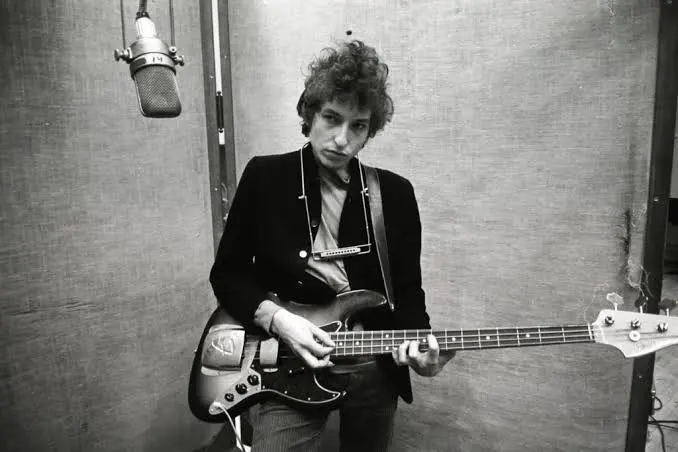
Quick Facts
- Born
- May 24, 1941
- Movement
- American folk rock
- Known For
- Songwriting
Bob Dylan was born May 24, 1941, in Duluth, Minnesota, and became the first songwriter to win the Nobel Prize in Literature for his poetic songs. He grew from a young folk musician in Minnesota into one of the most influential American singer-songwriters of the 20th century. His work changed how popular songs could tell stories, explore politics, question society, and express personal feelings. Songs such as “Blowin’ in the Wind,” “Like a Rolling Stone,” and “Tangled Up in Blue” helped define different stages of his career. His music draws from folk, blues, country, gospel, rock, and older American song traditions.
In 2016, the Swedish Academy awarded him the Nobel Prize in Literature for creating new poetic expressions within the American song tradition. His life and career have also inspired films, books, documentaries, and generations of musicians.
Bob Dylan Quick Facts
| Fact | Details |
|---|---|
| Full name | Robert Allen Zimmerman |
| Born | May 24, 1941 |
| Birthplace | Duluth, Minnesota, United States |
| Nationality | American |
| Occupation | Singer-songwriter, musician, poet, author, artist, actor |
| Famous works | “Blowin’ in the Wind,” “Like a Rolling Stone,” “Mr. Tambourine Man,” “Tangled Up in Blue” |
| Major albums | The Freewheelin’ Bob Dylan, Highway 61 Revisited, Blonde on Blonde, Blood on the Tracks |
| Literary recognition | Nobel Prize in Literature, 2016 |
| Literary influences | Modernist poets, Beat writers, American folk tradition |
| Musical influences | Folk, blues, country, gospel, early rock |
| Major movement | American folk revival and folk rock |
| Children | Six |
| Marriages | Two documented marriages |
The Nobel Prize biography confirms that Dylan was born Robert Zimmerman, grew up in a Jewish family in Hibbing, Minnesota, and developed an early interest in American folk music and blues. His later work drew from modernist poetry and Beat writers as well as older musical traditions.
Where Was Bob Dylan Born and Raised?
Bob Dylan was born in Duluth, Minnesota, on May 24, 1941, and grew up mainly in Hibbing, Minnesota.His birth name was Robert Allen Zimmerman. When he was six, his family moved from Duluth to Hibbing, where he spent most of his childhood. His family had Jewish roots, with grandparents who immigrated to the United States from Eastern Europe.
As a teenager, Dylan became deeply interested in music. He played in several groups and listened to folk, blues, country, and early rock music. Woody Guthrie became one of his major early models, while later literary influences included Beat writers and modernist poets.He briefly attended the University of Minnesota but left college after about six months. In 1961, he moved to New York City, where the Greenwich Village folk scene gave him the opportunity to perform, meet other musicians, and build his professional career.
Is Bob Dylan From Turkey?
Bob Dylan is American and was born in Duluth, Minnesota, but his family history includes a claimed connection to northeastern Turkey.The confusion comes partly from Dylan’s own account of his family background. In his memoir, he wrote that his paternal grandmother’s family came from the Kağızman area of Kars Province in what is now northeastern Turkey. However, genealogical accounts of his family also trace relatives to Ukraine and Lithuania.
Therefore, saying that Dylan is “from Turkey” is misleading. He was born and raised in the United States, and his nationality is American. The Turkey connection refers to part of his family ancestry rather than his birthplace or nationality.
How Did Bob Dylan Become a Musician?
Bob Dylan became a professional musician after moving to New York City and entering the Greenwich Village folk scene in 1961.There, he performed in clubs and cafés and became known for his unusual voice, guitar playing, harmonica work, and original songs. He also developed a close connection with Woody Guthrie, whom he admired deeply.
Record producer John Hammond signed Dylan to Columbia Records. His self-titled debut album appeared in 1962, beginning a recording career that would continue for decades.His second album, The Freewheelin’ Bob Dylan, established him as a major songwriter. It included songs that addressed love, freedom, war, social injustice, and personal uncertainty, helping make him a leading voice of the American folk revival.
What Is Bob Dylan Most Famous For?
Bob Dylan is most famous for transforming American songwriting through poetic lyrics, folk music, rock, and social commentary.His early protest songs made him closely associated with the political and cultural changes of the 1960s. “Blowin’ in the Wind” became an important song of the civil rights and peace movements, while “The Times They Are A-Changin’” captured the mood of social change.
Dylan later moved beyond protest music. His songs explored love, memory, identity, religion, aging, history, death, and uncertainty. His willingness to change musical styles helped him remain important long after the 1960s.His greatest literary recognition came in 2016, when he received the Nobel Prize in Literature. The award recognized his ability to create new poetic expressions within the American song tradition.
Bob Dylan’s Most Important Career Phases
Dylan’s career is difficult to place into one musical category because he repeatedly changed direction.His early period was strongly connected to American folk music and protest songwriting. Albums such as The Freewheelin’ Bob Dylan and The Times They Are A-Changin’ established his reputation as a major songwriter.
The mid-1960s brought a dramatic shift toward electric rock. Bringing It All Back Home, Highway 61 Revisited, and Blonde on Blonde expanded his sound and introduced more surreal, complex, and image-rich writing.His later career moved through country, gospel, rock, blues, traditional American songs, and reflective songwriting. Blood on the Tracks, Oh Mercy, Time Out of Mind, Modern Times, and Rough and Rowdy Ways show how often his musical identity changed.
Bob Dylan Songs That Made Him Famous
Bob Dylan songs remain central to discussions of American music because they combine memorable melodies with dense storytelling and poetic language.Among his best-known songs are “Blowin’ in the Wind,” “Like a Rolling Stone,” “Mr. Tambourine Man,” “All Along the Watchtower,” “Knockin’ on Heaven’s Door,” “Tangled Up in Blue,” and “The Times They Are A-Changin’.”
The official Dylan song archive shows the continuing importance of songs such as “All Along the Watchtower,” “Like a Rolling Stone,” “Highway 61 Revisited,” “Tangled Up in Blue,” and “Blowin’ in the Wind,” all of which have remained prominent parts of his live repertoire.His songs have also become important through other performers. “All Along the Watchtower,” for example, became especially famous through Jimi Hendrix’s interpretation, while later artists have continued to reinterpret Dylan’s writing.
Poems and Poetry by Bob Dylan
There is no authoritative single total for Bob Dylan poems because his poetic output is spread across hundreds of songs, lyrics, published writings, and other works.Dylan’s poetry is unusual because much of it was written to be sung. His lines often use rhyme, repetition, symbolism, historical references, surreal images, and conversational language. The Nobel Committee specifically recognized this combination of popular music and poetic expression.
Rather than separating his poetry completely from his songs, it is more accurate to view his lyrics as the main body of his poetic work. He has also published prose and experimental writing, including Tarantula, Chronicles, Volume One, and collections of lyrics and drawings.
The Freewheelin’ Bob Dylan
The Freewheelin’ Bob Dylan was released in 1963 and helped establish Dylan as a major American songwriter.The album combines protest songs, love songs, traditional influences, and highly imaginative writing. Its songs show how Dylan could use simple folk structures while discussing war, freedom, relationships, and social change.
“Blowin’ in the Wind”
“Blowin’ in the Wind” was released on The Freewheelin’ Bob Dylan in 1963 and became one of his best-known songs.
The song asks a series of questions about freedom, peace, violence, and human responsibility. Its power comes from leaving the answers open rather than giving listeners a simple political speech.
“A Hard Rain’s a-Gonna Fall”
“A Hard Rain’s a-Gonna Fall” appeared on The Freewheelin’ Bob Dylan and uses a question-and-answer structure to create a dark vision of the world.
The song combines images of war, suffering, nature, and social fear. Its long lines and repeated structure helped show how Dylan could stretch the boundaries of traditional folk songwriting.
“Like a Rolling Stone”
“Like a Rolling Stone” appeared on Highway 61 Revisited in 1965 and became one of Dylan’s defining rock songs.
Its central character experiences a sudden loss of status and security. The song’s long form, electric sound, and confrontational voice helped mark Dylan’s move from traditional folk toward folk rock.
“All Along the Watchtower”
“All Along the Watchtower” was released on John Wesley Harding in 1967 and is built around mysterious figures, tension, and symbolic imagery.
The song became even more famous after Jimi Hendrix recorded his celebrated version. Dylan continued performing his own version throughout his career, and the official song archive records thousands of live performances.
“Tangled Up in Blue”
“Tangled Up in Blue” appeared on Blood on the Tracks in 1975 and explores memory, relationships, travel, and changing identity.
The song moves between different moments and viewpoints instead of telling a simple straight-line story. That shifting structure is one reason it remains one of Dylan’s most studied and admired songs.
What Themes Appear in Bob Dylan’s Writing?
Bob Dylan’s writing often explores freedom, social conflict, love, religion, memory, mortality, identity, and the uncertainty of human life.
- Social change: Early songs often examine war, inequality, civil rights, and political power.
- Love and relationships: Personal relationships appear throughout his work, often through memory and changing perspectives.
- Religion: Biblical ideas and religious questions became especially important during parts of his career.
- Identity: His songs often use characters who are searching for meaning or trying to escape fixed identities.
- History: Dylan frequently combines real historical figures and events with fictional or symbolic scenes.
- Mortality: Later writing often reflects on aging, death, memory, and the passage of time.
These themes help explain why his work can be read as poetry as well as popular music. The Nobel Foundation describes his writing as combining folk traditions with modernist and Beat influences while exploring subjects such as social conditions, politics, love, and religion.
What Makes Bob Dylan’s Writing Style Different?
Bob Dylan’s writing style is known for strong imagery, unusual rhymes, shifting characters, symbolism, wordplay, and references to history and popular culture.He often avoids a simple beginning-middle-end structure. Instead, a song can move between people, places, memories, and ideas. This creates a dreamlike quality even when the subject begins with something ordinary.
His writing also borrows from many traditions. Folk ballads, blues, country music, gospel, modernist poetry, Beat literature, and American popular songs all helped shape his approach.This mixture is important to understanding why Dylan became a literary figure. He did not simply place poetry inside songs; he changed what listeners expected a popular song to accomplish.
Why Did Bob Dylan Win the Nobel Prize in Literature?
Bob Dylan won the 2016 Nobel Prize in Literature for creating new poetic expressions within the great American song tradition.The Swedish Academy argued that Dylan expanded the idea of what literature could be by bringing poetic techniques into popular music. The award recognized the literary quality of his songwriting rather than treating songs as separate from poetry.
The decision was historic because Dylan became the first songwriter to receive the Literature Nobel. His award also sparked debate about whether song lyrics should be considered literature, making the prize itself part of his literary legacy.
What Religion Did Bob Dylan Convert To?
Bob Dylan was raised in a Jewish family and later became associated with Christianity, particularly during a religious period in the late 1970s and early 1980s.His religious journey has changed over time and is more complex than simply labeling him by one faith. His work has contained Jewish, Christian, biblical, and spiritual references across different periods of his career.
His Christian period strongly influenced albums such as Slow Train Coming, Saved, and Shot of Love. The Nobel Foundation also notes that religion became an important part of his songwriting and that his religious conversion around 1980 attracted major public attention.
Did Bob Dylan Support LGBTQ Rights?
There is no simple, well-documented public statement that allows Dylan’s views on LGBTQ rights to be summarized as a clear modern political position.Dylan’s public career has included songs and comments dealing with freedom, outsiders, social conflict, and individual identity, but he has generally avoided maintaining a consistent public political identity on every modern social issue.
For that reason, it is safer to distinguish documented statements from assumptions based on his songs. His work can be interpreted in many ways, but interpretation is not the same as proof of a specific political position.
Who Were Bob Dylan’s Wives and Children?
Bob Dylan was married twice and has six children, including one child he adopted.His first marriage was to Sara Dylan, whom he married in 1965. They had four children together, and Dylan adopted Sara’s daughter Maria from her earlier marriage. The couple divorced in 1977.
Dylan later married Carolyn Dennis in 1986. They had a daughter, Desiree, and divorced in 1992. Their marriage and child were kept private for years before becoming publicly known through Howard Sounes’s 2001 biography.His children include Maria, Jesse, Anna, Sam, Jakob, and Desiree. Jakob Dylan later became widely known as the lead singer of the Wallflowers and developed his own successful music career.
What Is the Bob Dylan Movie A Complete Unknown About?
A Complete Unknown is a 2024 biographical film about Dylan’s early rise in the Greenwich Village music scene.Directed by James Mangold, the film stars Timothée Chalamet as Dylan. It focuses on the period from Dylan’s arrival in New York in 1961 through his growing fame and controversial move toward electric music.
The movie also features Edward Norton as Pete Seeger, Monica Barbaro as Joan Baez, Boyd Holbrook as Johnny Cash, and Scoot McNairy as Woody Guthrie. Chalamet performs Dylan’s songs in the film.The film renewed interest in Dylan’s early career, especially his transition from a young folk performer into a major figure in rock and popular culture.
Bob Dylan and Paul McCartney: Did They Perform Together?
Bob Dylan and Paul McCartney are important figures in the history of 1960s popular music, but they were not a regular performing duo.The Beatles attended Dylan’s concerts in London, and Dylan met the Beatles during the 1960s. Their relationship is more accurately described as a major artistic connection between two influential songwriting traditions than as a regular concert partnership.
They were also both part of the historic 2016 Desert Trip lineup, although they performed separate sets rather than forming a permanent stage partnership.
Why Are Bob Dylan and Ed Sheeran Sometimes Linked?
Bob Dylan and Ed Sheeran are linked mainly through songwriting influence and a later recording based on Dylan’s work.Ed Sheeran performed “Watchtower,” a version of Dylan’s “All Along the Watchtower,” with rapper Devlin. The recording credits Dylan as a songwriter because the piece is based on his composition.Sheeran has also been compared with Dylan because both are singer-songwriters known for writing and performing their own material. This does not mean they have a major direct collaborative catalog together.
Why Are Bob Dylan and Robert Downey Jr. Linked?
Bob Dylan and Robert Downey Jr. are linked through the 2000 music video for “Things Have Changed.”Dylan’s song was connected to the film Wonder Boys, and Downey appeared as himself in the music video alongside other cast members from the movie. This is a documented professional connection rather than evidence of a long-term artistic partnership.
Why Are Bob Dylan and Adriana Lima Linked?
Bob Dylan and Adriana Lima appeared together in a 2004 Victoria’s Secret advertising campaign.The commercial used Dylan’s music while Lima appeared in the advertisement, creating an unusual pop-culture connection between the singer-songwriter and the model. Contemporary reporting documented Dylan’s appearance in the campaign.
What About Bob Dylan and Rita Hayworth, Lucas Hedges, Jordan Peele, or Al Pacino?
Pairing Bob Dylan with Rita Hayworth, Lucas Hedges, Jordan Peele, or Al Pacino do not by themselves establish major collaborations or personal relationships.Al Pacino has been connected to Dylan in discussions about the singer-songwriter character he played in Danny Collins, whose fictional musician was compared with figures such as Dylan. The other pairings should not be presented as documented relationships without a reliable source showing a specific connection.
What About Bob Dylan and Bill Gates, John Paulson, Sundar Pichai, Satya Nadella, Evan Spiegel, Daniel Ek, LeBron James, or Sheryl Sandberg?
Search phrases such as Bob Dylan and Bill Gates, Bob Dylan and John Paulson, Bob Dylan and Sundar Pichai, Bob Dylan and Satya Nadella, Bob Dylan and Evan Spiegel, Bob Dylan and Daniel Ek, Bob Dylan and LeBron James, or Bob Dylan and Sheryl Sandberg appear to be association-style searches rather than established parts of Dylan’s biography.
There is no reason to treat the appearance of two names in a search query as proof of a friendship, business relationship, collaboration, or meeting. A trustworthy biography should distinguish verified connections from search-engine associations.
Bob Dylan’s Major Albums and Works
Bob Dylan’s discography includes decades of studio albums, live recordings, compilations, and archival releases.
His most important early albums include The Freewheelin’ Bob Dylan (1963), The Times They Are A-Changin’ (1964), Bringing It All Back Home (1965), Highway 61 Revisited (1965), and Blonde on Blonde (1966). These releases helped reshape American folk and rock songwriting.
Blood on the Tracks (1975) became another landmark, while later albums such as Oh Mercy, Time Out of Mind, Modern Times, and Rough and Rowdy Ways showed that Dylan could continue developing his sound across different generations.
The official archive also documents an extensive Bootleg Series containing previously unreleased recordings, alternate takes, live material, and historical sessions. This archive has added greatly to the understanding of Dylan’s creative process.
Bob Dylan’s Literary Influences
Bob Dylan’s literary influences include modernist poets, Beat writers, and the broader American tradition of storytelling.
The Nobel Foundation specifically identifies modernist poets and Beat Generation writers among the influences on his writing. Woody Guthrie and older American folk traditions were equally important to his musical development.
Dylan’s writing also draws from biblical language, blues storytelling, traditional ballads, historical figures, and American popular culture. This wide range of influences helped him create songs that could sound familiar while remaining difficult to classify.
Bob Dylan’s Legacy and Influence
Bob Dylan’s legacy reaches beyond music because he changed the way popular songwriting could function as literature.
His songs showed that a popular recording could contain complex characters, layered symbols, social criticism, historical references, and literary techniques without losing its connection to ordinary listeners.
The Nobel Prize formalized an idea that critics and musicians had debated for decades: songwriting could have serious literary value. The Swedish Academy described Dylan’s achievement as a change in how literature itself could be understood.
His influence can be heard across folk, rock, country, hip-hop, and contemporary singer-songwriter traditions. His songs continue to be covered, studied, performed, and reinterpreted by artists from very different musical backgrounds.
Bob Dylan Facts
- Bob Dylan was born Robert Allen Zimmerman on May 24, 1941, in Duluth, Minnesota.
- He grew up mainly in Hibbing, Minnesota, after his family moved there when he was six.
- He moved to New York City in 1961 and entered the Greenwich Village folk scene.
- His debut album, Bob Dylan, was released in 1962.
- He became one of the leading figures of the 1960s American folk revival.
- He received the Nobel Prize in Literature in 2016.
- He has six children from two marriages.
- He has worked as a songwriter, singer, musician, author, visual artist, actor, and filmmaker.
- His official catalog includes decades of studio albums and archival releases.
- A Complete Unknown brought his early career to a new generation of movie audiences.
Is Bob Dylan Still Alive?
Yes, Bob Dylan is still alive as of August 2026.He was born on May 24, 1941, and continues to be represented by an extensive official catalog and live-performance history. His recent releases and archival projects show that his musical career remains an active subject of public interest.
Conclusion
Bob Dylan remains one of the most important American singer-songwriters because his work changed the relationship between music and poetry. From the folk clubs of Greenwich Village to the electric performances of the 1960s and his later albums, he repeatedly refused to remain in one artistic category. His songs brought together folk tradition, blues, rock, religion, politics, love, history, and vivid poetic imagery. That unusual combination eventually earned him the 2016 Nobel Prize in Literature. His influence is also visible in the artists who perform his songs, the writers who study his lyrics, and the films that continue to introduce his life to new audiences. Whether viewed as a songwriter, poet, musician, or cultural figure, Bob Dylan has created a body of work that continues to invite new interpretations decades after his career began.
FAQs
The major recent Bob Dylan movie is A Complete Unknown, a 2024 biographical film directed by James Mangold and starring Timothée Chalamet as Dylan. It focuses on Dylan’s early career and his transition toward electric music.
Bob Dylan has six children. Five are associated with his first marriage to Sara Dylan, including Maria, whom he adopted, and one daughter, Desiree, was born during his second marriage to Carolyn Dennis.
Bob Dylan won the 2016 Nobel Prize in Literature because the Swedish Academy recognized his creation of new poetic expressions within the American song tradition. The award acknowledged the literary power of his songwriting.
Bob Dylan was born on May 24, 1941, in Duluth, Minnesota. He was born Robert Allen Zimmerman and later grew up in Hibbing, Minnesota.
Bob Dylan was raised in a Jewish family and later became associated with Christianity, particularly during a major religious period around the late 1970s and early 1980s. His Christian beliefs strongly influenced several albums, including Slow Train Coming, Saved, and Shot of Love.
There is no simple, authoritative public record establishing a comprehensive modern LGBTQ political position for Dylan. His songs often address freedom, outsiders, identity, and social conflict, but those themes should not automatically be treated as proof of a specific political position.
No. Bob Dylan is American and was born in Duluth, Minnesota. He does have a reported family connection to northeastern Turkey through his paternal grandmother’s family, but that ancestry does not make him Turkish by nationality.
Bob Dylan is most famous for transforming American songwriting through poetic lyrics, folk music, rock, and socially meaningful songs. His best-known works include “Blowin’ in the Wind,” “Like a Rolling Stone,” and “The Times They Are A-Changin’.” He also became the first songwriter to receive the Nobel Prize in Literature.
Read About Other Poets
Charles Bukowski Biography: Poems, Books, Life, Style and Legacy
Shel Silverstein: Biography, Poems, Books, Life, and Legacy
Sylvia Plath: Biography, Poems, Books, Themes, and Literary Legacy
Poems by Bob Dylan Biography: Life, Songs, Poetry, Career, and Legacy
No poems published yet for this poet.