Jim Morrison Biography
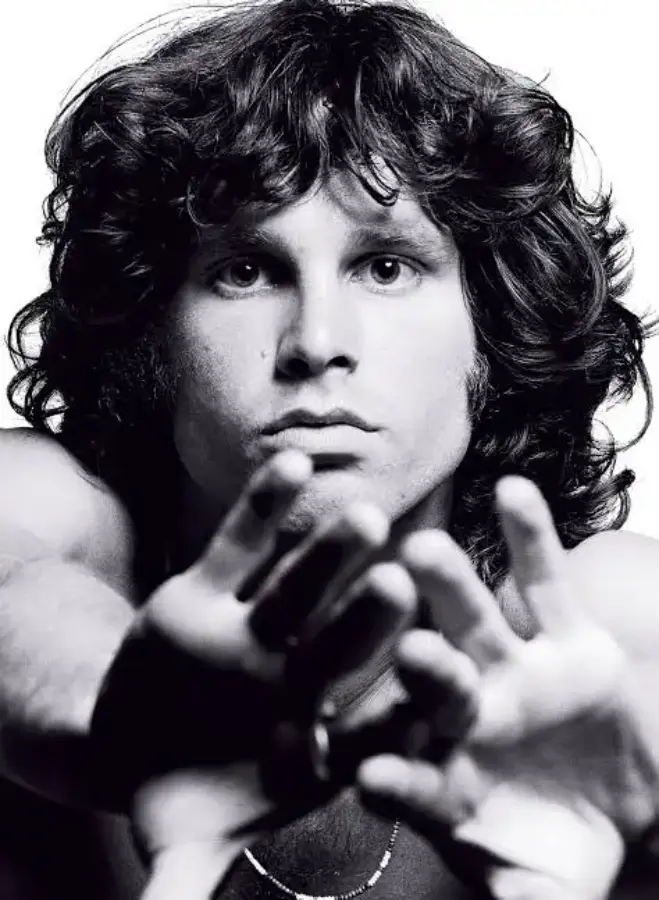
Quick Facts
- Born
- December 8, 1943
- Died
- July 3, 1971
- Movement
- countercultural poetry
- Known For
- The Lords and the New Creatures
Jim Morrison was an American poet, singer, and Doors frontman who helped define psychedelic rock in the 1960s. Born James Douglas Morrison on December 8, 1943, in Melbourne, Florida, he became famous as the lead singer and primary lyricist of The Doors. His deep voice, dramatic performances, and unusual lyrics made him one of the most recognizable figures of the counterculture era. Beyond music, Morrison saw himself as a serious writer and spent much of his life creating poetry, journals, film ideas, and other literary works. His published poetry includes The Lords and the New Creatures while later collections revealed much more of his writing. Morrison died in Paris on July 3, 1971, at age 27. His short life, mysterious death, and lasting artistic influence continue to attract readers, music fans, and poetry lovers.
Quick Facts About Jim Morrison
| Fact | Details |
|---|---|
| Full name | James Douglas Morrison |
| Born | December 8, 1943 |
| Birthplace | Melbourne, Florida, United States |
| Died | July 3, 1971 |
| Deathplace | Paris, France |
| Nationality | American |
| Occupation | Singer, songwriter, poet, filmmaker |
| Famous for | The Doors, poetry, lyrics, psychedelic rock |
| Famous works | The Lords and the New Creatures, An American Prayer, The Doors albums |
| Literary movement | Beat-influenced, countercultural poetry |
| Music genres | Psychedelic rock, blues rock, spoken word |
| Burial place | Père Lachaise Cemetery, Paris |
Who Was Jim Morrison?
Jim Morrison was the lead singer and main lyricist of the rock band The Doors, as well as a poet and filmmaker.
He became famous during the 1960s as the frontman of The Doors, a Los Angeles band formed with Ray Manzarek, John Densmore, and Robby Krieger. The group combined rock, blues, jazz, classical ideas, and psychedelic sounds. Morrison’s powerful baritone voice and theatrical stage presence gave the band a distinctive identity.
Morrison was more than a rock singer. His notebooks contained poems, observations, film ideas, and short pieces of prose. He read widely and was influenced by writers and thinkers including Arthur Rimbaud, Charles Baudelaire, Friedrich Nietzsche, William S. Burroughs, Jack Kerouac, and Allen Ginsberg.
His artistic identity developed between literature, cinema, theater, and music. This mixture explains why his lyrics often feel different from ordinary rock songs. He used vivid images, strange characters, dreams, death, desire, freedom, and altered states of consciousness.
Where Was Jim Morrison Born and What Was His Childhood Like?
Jim Morrison was born on December 8, 1943, in Melbourne, Florida, to George Stephen Morrison and Clara Virginia Morrison.
His father was a United States Navy officer who later became a rear admiral. Because of his father’s military career, the family moved several times during Morrison’s childhood. He lived in places including Florida, California, Virginia, and New Mexico.
New Mexico became especially important to his imagination. A childhood experience involving a road accident in the desert later became part of his artistic mythology. Images of deserts, Native American imagery, death, animals, and ancient landscapes appeared in his later songs and poetry.
Morrison was an avid reader from an early age. The Jim Morrison life story therefore cannot be understood only through rock music. Literature, philosophy, theater, film, and poetry were central to his development long before he became famous.
Where Did Jim Morrison Go to School?
Jim Morrison studied theater and film before completing his degree at UCLA in 1965.
He first attended St. Petersburg Junior College and later Florida State University. He eventually moved to California and enrolled at the University of California, Los Angeles. At UCLA, he studied film in the Theater Arts department.
His education strongly shaped his writing style and stage performances. He became interested in film editing, visual storytelling, theater, and experimental ideas. His studies also exposed him to Antonin Artaud, whose ideas about theater influenced Morrison’s dark and highly physical artistic style.
Rather than following a conventional career path, Morrison wanted to create films and write. His future music career began almost by accident when he reconnected with Ray Manzarek in Los Angeles.
How Did Jim Morrison Start His Music Career?
Jim Morrison’s music career began when he met Ray Manzarek and the two developed the idea that became The Doors.
Morrison and Manzarek had known each other at UCLA, but their musical partnership developed after Morrison showed Manzarek some of his writing. John Densmore joined the group, followed by guitarist Robby Krieger. The Doors were formed in 1965.
The band quickly developed a sound that was difficult to place in one category. Their music mixed psychedelic rock with blues, jazz, classical keyboard work, and spoken-word elements. Morrison’s lyrics added a strong poetic quality to the songs.
The Doors signed with Elektra Records and released their first album, The Doors, in 1967. The record introduced songs that became central to Morrison’s reputation, including “Break On Through” and “The End.” His unusual voice and intense delivery helped make the album a major success.
What Made Jim Morrison and The Doors So Famous?
The Doors became famous because their music combined powerful rock sounds with Morrison’s poetic lyrics and dramatic performances.
Their second album, Strange Days, followed in 1967 and included songs such as “People Are Strange” and “When the Music’s Over.” In 1968, Waiting for the Sun brought the band another major success with “Hello, I Love You.”
The band continued with The Soft Parade in 1969, Morrison Hotel in 1970, and L.A. Woman in 1971. These records show changes in Morrison’s musical career as he moved between psychedelic sounds, blues, spoken word, and more direct rock writing.
Morrison’s performances also became part of his legend. He treated the stage almost like a theater. He could whisper, shout, improvise, move unpredictably, and turn a concert into a dramatic event.
Jim Morrison’s Most Famous Songs and Lyrics
Some of Morrison’s best-known songs with The Doors include “Light My Fire,” “The End,” “People Are Strange,” “Break On Through,” “Riders on the Storm,” and “When the Music’s Over.”
His lyrics often avoided simple storytelling. Instead, Morrison created scenes filled with symbolic images and emotional tension. His writing could move from intimate love to fear, violence, freedom, death, and spiritual searching within the same song.
“Light My Fire” helped establish The Doors as major stars, while “The End” showed Morrison’s interest in longer, darker forms. “Riders on the Storm” later became one of the band’s most recognizable songs and helped define the atmosphere of L.A. Woman.
His songs should also be viewed as part of his larger literary works. Morrison often wrote poetry separately from music, then explored similar images in his songs and spoken-word recordings.
Was Jim Morrison a Poet?
Yes, Jim Morrison was a published poet who wrote poetry throughout his life.
Morrison began writing seriously during adolescence and continued while studying at UCLA. His poetry was often fragmented, visual, and dreamlike. He was interested in short images rather than traditional rhyme and meter.
His writing was influenced by French poets, Beat writers, philosophers, filmmakers, and experimental theater. Arthur Rimbaud was particularly important to his imagination, while Nietzsche influenced his thinking about art, morality, and the tension between opposing forces.
Morrison’s poetry also overlapped with his lyrics. Both forms used dark images, repetition, cinematic scenes, and sudden changes in mood. This is why he is often described as an American poet or rock poet rather than simply a singer-songwriter.
How Many Poems Did Jim Morrison Write?
There is no reliable final count of every poem Jim Morrison wrote because many pieces remained in notebooks, recordings, and unpublished manuscripts.
His surviving writings include finished poems, fragments, journals, song lyrics, film ideas, transcripts, and experimental prose. The 2021 Collected Works of Jim Morrison brings together more than 600 pages of poetry, journals, transcripts, lyrics, and other material.
His lifetime poetry publications were limited, but later editors and Morrison’s estate made much more of his writing available. This makes his poetry collection larger than the few books he published while alive.
Jim Morrison’s Most Famous Poems and Poetry Books
Morrison’s best-known poetry books include The Lords, The New Creatures, An American Prayer, The Lords and the New Creatures, Wilderness, and The American Night.
His poetry is marked by dark imagery, short scenes, dream logic, sexuality, death, cinema, nature, and the search for freedom. Many pieces read more like fragments or visions than traditional poems.
The Lords: Notes on Vision
The Lords: Notes on Vision was privately published in 1969 and contains short observations connected to people, places, events, and cinema.
The work is important because it shows Morrison developing as a writer outside The Doors. Its brief pieces often resemble cinematic notes or fragments rather than conventional poems.
The New Creatures
The New Creatures was privately published in 1969 and has a more traditional poetic appearance than The Lords.
The collection explores strange places, human desire, violence, isolation, and transformation. Its darker images help explain the poetic world that later appeared in Morrison’s lyrics.
The Lords and the New Creatures
The Lords and the New Creatures combined Morrison’s first two poetry books and was published commercially by Simon & Schuster in 1970.
This became the most important poetry book published during Morrison’s lifetime. It also helped readers see that his literary ambitions existed separately from his fame as a rock musician.
An American Prayer
An American Prayer was privately printed in 1970 and became closely associated with Morrison’s later spoken-word work.
The work mixes poetry, spoken language, memory, death, and surreal imagery. A later Doors recording combined Morrison’s poetry with new music and introduced the material to a much wider audience.
Wilderness: The Lost Writings of Jim Morrison
Wilderness was published posthumously in 1988 and became a major source for readers interested in Morrison’s unpublished poetry.
The collection presents a broader picture of his writing than the small volumes he published himself. It helped renew interest in Morrison as a literary figure rather than only a rock star.
The American Night
The American Night: The Writings of Jim Morrison appeared posthumously in 1990 and expanded the public record of his poetry and writings.
The collection reveals more of Morrison’s unfinished ideas, observations, and poetic experiments. Together with Wilderness, it shows how much writing existed beyond his famous Doors lyrics.
The Collected Works of Jim Morrison
The Collected Works of Jim Morrison was published in 2021 and gathers poetry, journals, transcripts, lyrics, and other writings in one major volume.
The book contains nearly 600 pages and gives readers a fuller view of Morrison’s creative process. It is especially useful for studying the connection between his poetry, music, film ideas, and private notebooks.
What Was Jim Morrison’s Writing Style?
Jim Morrison’s writing style was fragmented, cinematic, symbolic, and heavily influenced by poetry, philosophy, theater, and film.
He often wrote through images instead of straightforward explanations. A desert, animal, road, door, storm, or night scene could become a symbol for fear, freedom, desire, death, or change.
His poetry frequently shifts quickly between scenes. This creates a dreamlike effect. Morrison also liked repetition, dramatic contrasts, short statements, and sudden changes in perspective.
Cinema was another major influence. His UCLA film studies encouraged him to think in images and sequences. As a result, some of his poems feel like unfinished movie scenes rather than traditional literary compositions.
What Themes Did Jim Morrison Explore?
Morrison repeatedly explored death, freedom, desire, darkness, nature, identity, rebellion, and altered states of consciousness.
- Death and mortality: Death appears often as both a frightening reality and a subject of philosophical reflection.
- Freedom and rebellion: His work reflects the counterculture’s rejection of social limits and conventional behavior.
- Desire and sexuality: Romantic and sexual desire frequently appear beside loneliness and emotional conflict.
- Nature and the desert: Landscapes, animals, storms, roads, and ancient places create much of his symbolic world.
- Transformation: Doors, journeys, dreams, and changing identities suggest movement from one state of life to another.
- Cinema and vision: Many poems use images as though the reader is watching a film unfold.
Who Influenced Jim Morrison’s Poetry?
Jim Morrison was influenced by Arthur Rimbaud, Friedrich Nietzsche, Beat writers, French poets, and experimental theater.
Morrison read widely and admired writers such as William S. Burroughs, Jack Kerouac, Allen Ginsberg, Charles Baudelaire, Franz Kafka, and Albert Camus. These writers helped shape his interest in rebellion, consciousness, morality, and unusual forms of expression.
Nietzsche’s ideas about art and the Apollonian and Dionysian forces were especially important to Morrison’s thinking. The contrast between control and instinct can be seen in both his performances and writing.
His connection with poet Michael McClure also mattered. McClure encouraged Morrison’s literary ambitions and helped him move toward publishing his poetry independently.
Jim Morrison’s Artistic Style and Counterculture
Jim Morrison became a major cultural symbol of the 1960s counterculture because his music and public image challenged conventional ideas about performance and behavior.
His stage persona combined the image of the poet, rebel, shaman, and rock star. The Doors’ psychedelic rock gave him a powerful setting for this persona, while his lyrics gave the music a literary dimension.
However, Morrison’s cultural importance was not simply about rebellion. His interest in literature and film was genuine. He wanted to create serious art, and his notebooks show that writing remained important even after The Doors made him famous.
Jim Morrison’s Relationships and Love Life
Jim Morrison’s longest relationship was with Pamela Courson, although his romantic life also included other relationships.
Courson and Morrison were together for several years and lived together at different points. Their relationship was passionate and troubled, and Courson was with Morrison during his final period in Paris.
Morrison also had a relationship with rock journalist Patricia Kennealy. In 1970, they participated in a Celtic handfasting ceremony. Kennealy later described the ceremony as a serious religious commitment, but it was not a legally recognized marriage.
For the question “Who was Jim Morrison in love with?”, Pamela Courson is the most commonly identified long-term partner. However, his relationships were complicated, and he was involved with more than one woman during his adult life.
What Were Jim Morrison’s Major Achievements?
Jim Morrison’s major achievements include becoming the lead singer and primary lyricist of The Doors and publishing poetry during his lifetime.
The Doors became one of the defining rock bands of the 1960s. Their albums remain widely studied and heard, while Morrison’s lyrics helped establish a stronger connection between rock music and literary expression.
His poetry also gained attention after his death. Wilderness became a New York Times bestseller, and later collections continued to expand interest in his literary works.
His lasting achievement is therefore divided between music and literature. He helped make the rock frontman a cultural figure while also leaving behind a substantial body of poetry and other writings.
What Was Jim Morrison’s Official Cause of Death?
The official cause of death was reported as heart failure, but no autopsy was performed and the circumstances remain disputed.
Morrison died in Paris on July 3, 1971, at age 27. Pamela Courson found him in the bathtub of the apartment they shared. French authorities found no evidence of foul play and did not require an autopsy.
Because there was no autopsy, later claims about a heroin overdose or other causes could not be conclusively confirmed. The Doors’ official site notes that the cause of death is unknown while also discussing the heart-attack explanation reported at the time.
This uncertainty is one reason the Jim Morrison death story remains a major part of his legend.
What Were Jim Morrison’s Last Words?
Jim Morrison’s reported last words are uncertain because different accounts have been attributed to Pamela Courson.
One account says Morrison spoke to Courson while bathing shortly before his death. Another version gives a different final statement. Because there was no independent recording or complete eyewitness account, historians cannot establish his exact last words with certainty.
This uncertainty is important when discussing Jim Morrison’s life story. Many details surrounding his final hours have become part of rock mythology, while the available evidence remains limited.
Did Jim Morrison Have an IQ Score?
There is no reliably documented official IQ score for Jim Morrison.
Claims about a very high IQ sometimes appear in popular biographies and online discussions, but a verified test result from a recognized testing authority has not been established as a reliable historical fact.
His academic ability and wide reading are much better documented. Morrison studied film at UCLA, read philosophy and poetry, and developed strong interests in theater and literature. Those facts provide stronger evidence of his intellectual interests than an unverified IQ number.
Jim Morrison’s Legacy and Influence
Jim Morrison’s influence extends beyond rock music into poetry, performance, film, and popular culture.
He helped create the image of the rock singer as both musician and literary performer. His lyrics encouraged listeners to treat popular music as a place for serious ideas about death, freedom, sexuality, identity, and consciousness.
His poetry remains debated. Some critics see Morrison primarily as a talented lyricist whose literary reputation grew from his fame. Others view his poetry as an important part of the countercultural writing of the 1960s. The Poetry Foundation has noted this continuing debate while recognizing the long-standing interest in his work.
Whatever the critical judgment, Morrison’s legacy remains strong. His songs continue to be performed, his books remain in print, and his grave in Paris attracts visitors from around the world.
Why Is Jim Morrison Still Famous Today?
Jim Morrison remains famous because his music, poetry, personality, and early death created an unusually lasting cultural image.
His work with The Doors connected psychedelic rock with poetry and theatrical performance. His deep voice and dramatic delivery were instantly recognizable, while his lyrics offered images that encouraged multiple interpretations.
His death at 27 also strengthened his myth. Rather than growing older in public, Morrison’s career ended during the height of his fame. His unfinished writings later allowed readers to discover an artistic side that was often hidden behind the rock-star image.
Today, Morrison is remembered as both a legendary Doors frontman and a controversial American poet whose work continues to invite discussion.
Final Talk
Jim Morrison was an American poet, singer, songwriter, and filmmaker whose short life left a lasting mark on music and literature. As the lead singer of The Doors, he helped shape psychedelic rock through powerful vocals, poetic lyrics, and dramatic performances. His literary ambitions were equally important to his identity. Books such as The Lords and the New Creatures, Wilderness, and The American Night reveal a writer interested in dreams, death, freedom, nature, and human desire. Morrison’s influence remains strong because his work crossed the normal boundaries between poetry, music, theater, and film. His death in Paris in 1971 remains surrounded by unanswered questions, but his creative legacy is much clearer. Decades later, Jim Morrison remains a major symbol of 1960s counterculture and one of rock music’s most recognizable poetic voices.
FAQs
Jim Morrison’s longest and most important romantic relationship was with Pamela Courson, who was with him during his final years and in Paris when he died. He also had a significant relationship with Patricia Kennealy, with whom he participated in a Celtic handfasting ceremony in 1970.
Jim Morrison’s exact last words cannot be confirmed. Accounts attributed to Pamela Courson give different versions, so the commonly repeated statements should be treated as uncertain rather than established fact.
There is no reliably verified official IQ score for Jim Morrison. Although he was highly educated and widely read, popular claims about a specific IQ number are not supported by strong historical evidence.
The death was officially reported as heart failure, but no autopsy was performed. Later overdose theories remain unconfirmed, which means the exact medical cause cannot be established with complete certainty.
There is no universally agreed single most famous Jim Morrison poem. His best-known literary works include The Lords, The New Creatures, and An American Prayer, while many readers also encounter his poetry through Doors recordings.
Read About Other Poets
Poems by Jim Morrison Biography
No poems published yet for this poet.