Shel Silverstein: Biography, Poems, Books, Life, and Legacy
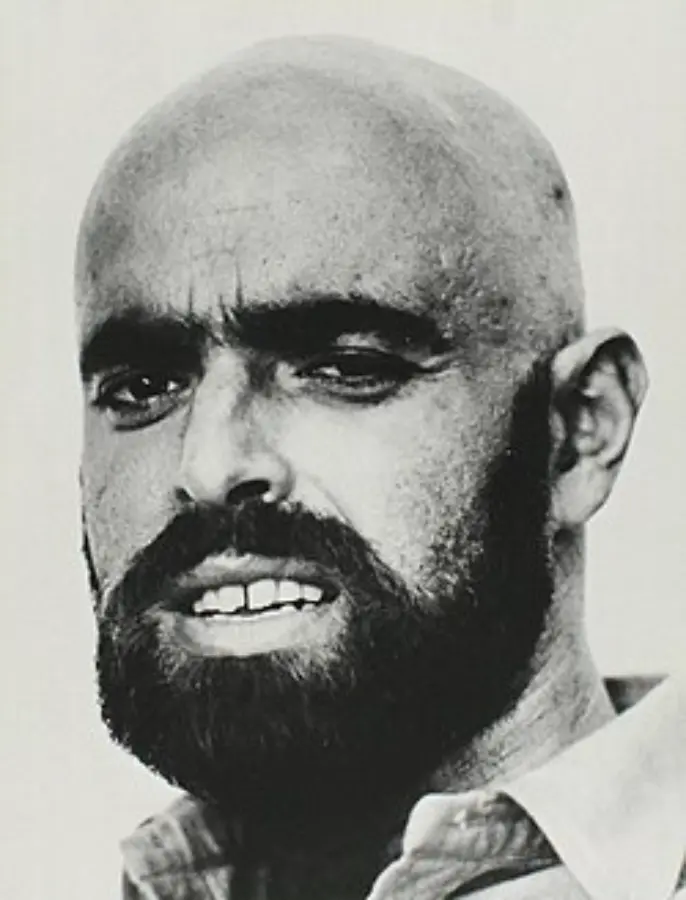
Quick Facts
- Born
- September 25, 1930
- Died
- May 10, 1999
- Movement
- American children's literature and poetry
- Known For
- The Giving Tree
Shel Silverstein Biography: Who Was He?
Shel Silverstein was an American poet, author, cartoonist, and songwriter, born September 25, 1930, and famous for The Giving Tree for generations.
Born in Chicago, Illinois, Sheldon Allan Silverstein became one of the most recognizable American writers for children. He wrote poems, picture books, stories, songs, plays, and cartoons, and he illustrated many of his own books. His work often mixed simple language with strange ideas, dark humor, and playful drawings.
Silverstein did not begin his career as a children’s poet. He first became known as a cartoonist, including through work for Playboy and the military publication Stars and Stripes. He later developed a major career as a songwriter and performer before becoming a leading children’s author.
His best-known books include The Giving Tree, Where the Sidewalk Ends, A Light in the Attic, and Falling Up. His poems remain popular because they sound easy and funny while often asking readers to think about freedom, rules, growing up, imagination, friendship, fear, and human behavior.
Shel Silverstein Quick Facts
| Fact | Details |
|---|---|
| Full name | Sheldon Allan Silverstein |
| Born | September 25, 1930 |
| Died | May 10, 1999 |
| Birthplace | Chicago, Illinois, United States |
| Deathplace | Key West, Florida, United States |
| Nationality | American |
| Occupations | Poet, author, cartoonist, songwriter, illustrator, playwright, performer |
| Famous works | The Giving Tree, Where the Sidewalk Ends, A Light in the Attic, Falling Up |
| Literary field | American children’s literature and poetry |
| Other creative work | Music, cartoons, plays, screenwriting |
Silverstein died in Key West, Florida, on May 10, 1999, after a heart attack. He was 68 years old.
Where Was Shel Silverstein Born and Raised?
Shel Silverstein was born in Chicago, Illinois, on September 25, 1930.
He grew up in Chicago in a middle-class family and showed a strong interest in drawing from an early age. Accounts of his childhood describe a boy who constantly doodled and drew, including on the windowsills of his family’s summer home in Wisconsin.
Silverstein attended Roosevelt College in Chicago but did not complete a degree. His early life was shaped more by drawing, writing, and creative experimentation than by a traditional academic path.
His father was of Russian descent and had immigrated to the United States through England in 1915. Silverstein’s family supported his artistic interests even though they worried about whether a creative career could provide financial security.
How Did Shel Silverstein Start His Career?
Shel Silverstein started as a cartoonist before becoming a famous children’s author.
After serving in the U.S. Army during the Korean War era, Silverstein worked as a cartoonist for Stars and Stripes. He later drew for magazines including Look, Sports Illustrated, and Playboy. His Playboy cartoons helped make him nationally known during the 1950s and 1960s.
His early adult books included collections of cartoons and humorous material. This part of his career is important because it explains why his later children’s books were so visually unusual. He was already comfortable combining a quick drawing with a short joke or surprising idea.
In the 1960s, editor Ursula Nordstrom encouraged him to write for children. His first children’s book, Uncle Shelby’s Story of Lafcadio: The Lion Who Shot Back, appeared in 1963. That change helped launch the literary career for which he is remembered today.
Why Is Shel Silverstein Famous?
Shel Silverstein is famous for combining children’s poetry, unusual drawings, humor, and simple but meaningful ideas.
His popularity rests especially on The Giving Tree, Where the Sidewalk Ends, and A Light in the Attic. These books introduced millions of young readers to poetry without making poetry feel difficult or formal.
Silverstein was also successful as a songwriter. He wrote or co-wrote songs recorded by major performers, including Johnny Cash’s “A Boy Named Sue” and Dr. Hook’s “The Cover of the Rolling Stone.” He was both a Grammy-winning and Oscar-nominated songwriter.
His career therefore crossed several creative fields. He was not simply a children’s poet. He was also a cartoonist, musician, songwriter, playwright, screenwriter, performer, and illustrator.
Shel Silverstein’s Writing Style and Techniques
Shel Silverstein’s writing style is known for simple words, strong rhythm, wordplay, exaggeration, surprise, and dark humor.
His poems often begin with an ordinary childhood situation and then push it into an impossible or funny direction. A child may meet a strange creature, challenge an adult rule, imagine an impossible place, or discover a surprising consequence.
He also used rhyme and rhythm to make poems easy to remember aloud. His short lines and conversational language allow young readers to understand the basic meaning while still leaving room for older readers to notice irony and deeper ideas.
The illustrations are equally important. Silverstein drew his own simple black-and-white pictures, creating a close relationship between words and images. The drawings often add a second joke or meaning that is not stated directly in the poem.
His work is also notable for treating children as intelligent readers. Rather than always teaching a clear moral, he often lets children laugh at rules, adults, fears, and social expectations. Literary criticism has noted that his poems frequently turn adults, parents, teachers, and everyday authority into subjects of humor.
What Are the Best Shel Silverstein Poems?
The most famous Shel Silverstein poems include “Where the Sidewalk Ends,” “Sick,” “Sarah Cynthia Sylvia Stout Would Not Take the Garbage Out,” “The Giving Tree,” and many short poems from his major collections.
Because Silverstein published poems across several collections, there is no single authoritative number for every poem he wrote. His major poetry books contain hundreds of poems, while later collections also appeared after his death. For example, A Light in the Attic contains 135 poems in its original edition.
His poetry is usually funny, imaginative, and easy to read, but it can also be strange, sad, rebellious, or surprisingly serious. He often used exaggeration to turn ordinary childhood problems into memorable stories.
“Where the Sidewalk Ends”
“Where the Sidewalk Ends” was published in 1974 as the title poem of Silverstein’s first major children’s poetry collection.
The poem imagines a magical place beyond the ordinary city street. Its central image contrasts pollution, traffic, and hard pavement with a peaceful world shaped by nature and imagination. It is widely regarded as one of his best-known poems.
Its importance comes from the idea that imagination can offer an escape from the harsh parts of ordinary life. Children are presented as people who can recognize possibilities that adults may overlook.
“Sick”
“Sick” is one of Silverstein’s best-known humorous poems about a child who desperately wants to avoid school.
The poem builds a long list of supposed illnesses and injuries, only for the child’s attitude to change when the situation changes. Its humor comes from exaggeration and the sudden reversal at the end.
The poem remains popular because many children understand the basic wish behind it: wanting a day away from school when responsibilities feel difficult.
“Sarah Cynthia Sylvia Stout Would Not Take the Garbage Out”
This poem turns an ordinary household chore into an exaggerated story about consequences.
Silverstein uses a long, memorable name and a steadily growing problem to create comic tension. The poem is funny because the punishment becomes far larger than the original problem.
Its deeper idea concerns responsibility and procrastination. It shows how a small task can become a major problem when someone refuses to deal with it.
“The Giving Tree”
“The Giving Tree” is closely connected with Silverstein’s poetry and is one of his most famous literary works.
Published as a picture book in 1964, the story follows a relationship between a boy and a tree. The tree repeatedly gives parts of itself to satisfy the boy’s changing needs as he grows older.
The story is simple, but its meaning is not. Readers have interpreted it as a story about unconditional love, generosity, parent-child relationships, selfishness, sacrifice, or unhealthy dependence.
“The Loser”
“The Loser” uses a comic situation to explore frustration and bad luck.
Silverstein’s speaker keeps losing something and then discovering that the problem is even more complicated than expected. The poem demonstrates his talent for creating a full story from a very small idea.
Like many Silverstein poems for children, it works first as a joke and then as a small lesson about mistakes and persistence.
“The Little Blue Engine”
“The Little Blue Engine” appears in Where the Sidewalk Ends and plays with the familiar idea that determination can overcome obstacles.
Silverstein turns the traditional message of positive thinking into something more complicated and humorous. The poem shows how he could take a familiar children’s story pattern and give it a surprising twist.
What Are the Best Shel Silverstein Books for Kids?
The best Shel Silverstein books for kids include Where the Sidewalk Ends, A Light in the Attic, Falling Up, The Giving Tree, and The Missing Piece.
Where the Sidewalk Ends is often the best starting point for children who want poetry. It combines poems and drawings and introduces many of Silverstein’s recurring ideas, including imagination, nonsense, childhood independence, and playful rebellion.
A Light in the Attic is another major choice. Published in 1981, it contains 135 poems in its original edition and became one of Silverstein’s most successful books.
Falling Up, published in 1996, offers another large collection of humorous poems and drawings. The Giving Tree is different because it is primarily a picture-book story rather than a poetry collection, but it remains essential to understanding his career.
Shel Silverstein Biography and Books in Order
A useful way to understand Silverstein’s career is to read his major children’s books in publication order.
Early Children’s Books
- Lafcadio, the Lion Who Shot Back — 1963
- A Giraffe and a Half — 1964
- The Giving Tree — 1964
- Who Wants a Cheap Rhinoceros? — 1964
- Don’t Bump the Glump! and Other Fantasies — 1964
These early books show Silverstein moving from adult cartoons and humor toward children’s storytelling and poetry.
Major Poetry and Story Books
- Where the Sidewalk Ends — 1974
- The Missing Piece — 1976
- Different Dances — 1979
- A Light in the Attic — 1981
- The Missing Piece Meets the Big O — 1981
- Falling Up — 1996
- Draw a Skinny Elephant — 1998
Several important collections were published after his death, including Runny Babbit in 2005 and Every Thing On It in 2011. Runny Babbit Returns followed in 2017.
What Is The Giving Tree About?
The Giving Tree is about a boy and a tree whose relationship changes as the boy grows older.
The tree gives the boy apples, branches, and eventually its trunk. The boy repeatedly returns when he needs something, while the tree continues to offer what it can. The story ends with the boy as an old man and the tree reduced to a stump.
The story can be read as a portrait of unconditional love and generosity. It can also be read more critically as a story about one-sided relationships and endless sacrifice.
That uncertainty is part of the book’s lasting power. Silverstein does not provide a simple explanation telling readers exactly what the tree or boy should represent.
Why Is The Giving Tree Controversial?
The Giving Tree is controversial because readers disagree about whether its message celebrates love or unhealthy self-sacrifice.
Some readers see the tree’s actions as an example of unconditional giving. Others argue that the boy takes advantage of the tree and that the story may normalize a relationship in which one person continually gives while the other continually takes.
The book has also been discussed through feminist and parent-child relationship readings. These interpretations became part of the larger debate surrounding Silverstein’s work, especially because his stories often avoid straightforward moral lessons.
The controversy has helped keep the book relevant. Children may simply experience it as a sad and memorable story, while adults often return to it with questions about love, boundaries, dependence, and responsibility.
Why Was Shel Silverstein Controversial?
Shel Silverstein was controversial because some adults considered his children’s poems too dark, rebellious, violent, or inappropriate for young readers.
A Light in the Attic and Where the Sidewalk Ends were challenged or banned in some schools and libraries. Critics objected to poems involving disobedience, death, violence, frightening ideas, and other subjects they considered unsuitable for children.
Some challenges focused on specific poems that appeared to encourage children to avoid chores or behave badly. Other complaints accused the books of promoting ideas such as suicide, cannibalism, Satanism, or disrespect for authority.
Supporters viewed this differently. They argued that Silverstein used exaggeration, absurdity, and fantasy to let children explore uncomfortable ideas safely. His humor often gave children permission to question rules without treating every joke as a serious instruction.
Was Shel Silverstein White or Black?
Shel Silverstein was a white American writer from a family with Russian ancestry.
Biographical sources identify him as an American born in Chicago and describe his father as being of Russian descent. His family background was not the main subject of his literary career, which focused instead on art, humor, children’s literature, music, and poetry.
Silverstein’s identity is sometimes searched because readers encounter his unusual appearance and distinctive artistic persona. However, his cultural and literary importance is better understood through his American upbringing and his wide-ranging creative career.
What Themes Appear in Shel Silverstein’s Poems?
Silverstein’s poems often explore imagination, independence, childhood fears, humor, responsibility, and resistance to adult rules.
- Imagination: Ordinary places become magical settings where impossible things can happen.
- Childhood independence: Children often question adults, rules, chores, and expectations.
- Humor and absurdity: Strange creatures and exaggerated situations turn ordinary problems into jokes.
- Freedom: Many poems celebrate the ability to think differently and imagine alternatives.
- Fear and death: Silverstein sometimes introduces serious subjects through dark humor.
- Responsibility: Several poems show the funny or painful results of avoiding duties.
- Growing up: His stories often show how people change as they move through different stages of life.
- Relationships: Works such as The Giving Tree invite questions about love, giving, dependence, and selfishness.
These themes help explain why his books appeal to both children and adults. The surface joke is usually easy to understand, while the deeper idea can change as the reader grows older.
Shel Silverstein’s Music and Songwriting Career
Shel Silverstein was also a successful songwriter whose music reached audiences far beyond children’s literature.
He wrote “A Boy Named Sue,” which became strongly associated with Johnny Cash, as well as songs such as “The Cover of the Rolling Stone,” “One’s on the Way,” and “Sylvia’s Mother.” His work was recorded by artists across country and popular music.
Silverstein also recorded albums and wrote music for films. His songwriting shows the same qualities found in his poetry: strong storytelling, humor, unusual characters, and an ability to communicate an idea quickly.
This part of his career is sometimes overlooked in short Shel Silverstein biographies. Yet it proves that his talent was not limited to children’s books.
Shel Silverstein’s Legacy in Children’s Literature
Shel Silverstein changed how many young readers experienced poetry.
Instead of presenting poetry as something formal or difficult, he made it playful, visual, funny, and easy to read aloud. His books also showed that children’s literature could include strange, dark, rebellious, and emotionally complex ideas.
His influence can be seen in the continuing popularity of his books decades after his death. The Giving Tree, Where the Sidewalk Ends, and A Light in the Attic remain familiar titles in homes, classrooms, libraries, and bookstores.
His legacy also comes from his ability to write for several audiences at once. Children could enjoy the jokes and pictures, while adults could notice questions about responsibility, freedom, relationships, and growing up.
When Did Shel Silverstein Die?
Shel Silverstein died on May 10, 1999, in Key West, Florida.
He was 68 years old. Biography sources report that his death followed a heart attack. His death ended a career that had crossed children’s literature, poetry, cartoons, songwriting, performance, and theater.
His death did not end his publishing career. Several collections based on work completed or left behind by Silverstein were published posthumously, including Runny Babbit, Every Thing On It, and Runny Babbit Returns.
Shel Silverstein Facts
- Shel Silverstein was born in Chicago on September 25, 1930.
- He served in the U.S. Army and worked for Stars and Stripes.
- He became widely known as a cartoonist through Playboy.
- The Giving Tree was first published in 1964.
- Where the Sidewalk Ends appeared in 1974.
- A Light in the Attic was published in 1981 and contains 135 poems in its original edition.
- Silverstein wrote the famous song “A Boy Named Sue.”
- He was a Grammy-winning and Oscar-nominated songwriter.
- He died in Key West, Florida, on May 10, 1999.
- Several of his books were published or reissued after his death.
Final Thoughts
Shel Silverstein remains one of America’s most recognizable children’s poets because he made poetry funny, strange, visual, and easy to enter. His books could make children laugh while giving adults something more serious to consider. The Giving Tree continues to create debate about love and sacrifice, while Where the Sidewalk Ends, A Light in the Attic, and Falling Up continue to introduce young readers to rhyme and imagination. His work as a cartoonist and songwriter also shows how broad his creative talent was. From Chicago beginnings to military cartoons, Playboy, country music, children’s books, and poetry, his career followed an unusual path. His lasting achievement is not simply that he wrote for children, but that he trusted children with humor, questions, and ideas usually reserved for older readers.
FAQs
Yes. Shel Silverstein was a successful songwriter who wrote songs including “A Boy Named Sue” and “The Cover of the Rolling Stone.” He also recorded music and wrote songs for films and other performers.
Among his best-known poems are “Where the Sidewalk Ends,” “Sick,” “Sarah Cynthia Sylvia Stout Would Not Take the Garbage Out,” “The Loser,” and many other poems collected in Where the Sidewalk Ends, A Light in the Attic, and Falling Up.
Shel Silverstein was a white American writer. Biographical sources describe his father as being of Russian descent and identify Silverstein as an American born in Chicago.
Shel Silverstein was an American poet, author, cartoonist, illustrator, songwriter, and performer best known for children’s books such as The Giving Tree, Where the Sidewalk Ends, and A Light in the Attic.
“Where the Sidewalk Ends” is widely regarded as one of Shel Silverstein’s most famous poems and serves as the title poem of his 1974 collection.
Read More About Other Poets
Poems by Shel Silverstein: Biography, Poems, Books, Life, and Legacy
No poems published yet for this poet.