Gwendolyn Brooks: Biography, Life, Poems, Books, Awards, and Legacy
Quick Facts
- Born
- June 7, 1917
- Died
- December 3, 2000
- Movement
- Chicago Renaissance
- Known For
- Annie Allen
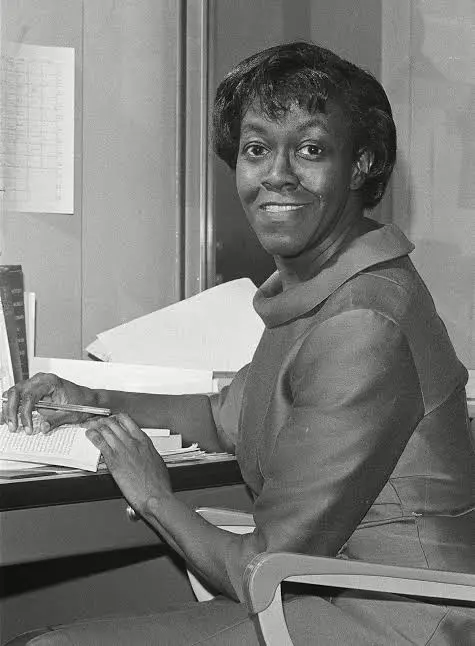
Gwendolyn Brooks was an African American poet born on June 7, 1917, in Topeka, Kansas, and raised mainly in Chicago. She became one of the most important American poets of the twentieth century and made history in 1950 as the first African American to win a Pulitzer Prize. Her winning collection, Gwendolyn Brooks was an African American poet born on June 7, 1917, in Topeka, Kansas, and raised mainly in Chicago. She became one of the most important American poets of the twentieth century and made history in 1950 as the first African American to win a Pulitzer Prize. Her winning collection, Annie Allen, explored Black life, family, identity, poverty, racism, and the hopes of ordinary people. Brooks later became Illinois Poet Laureate and served as Consultant in Poetry to the Library of Congress. Her poems, including “We Real Cool,” “The Bean Eaters,” “kitchenette building,” and “A Song in the Front Yard,” remain widely read. Her writing joined careful poetic form with everyday speech and the rhythms of Black American life. Through poetry, teaching, activism, and mentorship, Brooks created a lasting literary legacy rooted in Chicago and the wider African American experience.
, explored Black life, family, identity, poverty, racism, and the hopes of ordinary people. Brooks later became Illinois Poet Laureate and served as Consultant in Poetry to the Library of Congress. Her poems, including “We Real Cool,” “The Bean Eaters,” “kitchenette building,” and “A Song in the Front Yard,” remain widely read. Her writing joined careful poetic form with everyday speech and the rhythms of Black American life. Through poetry, teaching, activism, and mentorship, Brooks created a lasting literary legacy rooted in Chicago and the wider African American experience.
Quick Facts About Gwendolyn Brooks
| Fact | Details |
|---|---|
| Full name | Gwendolyn Elizabeth Brooks |
| Born | June 7, 1917 |
| Birthplace | Topeka, Kansas, United States |
| Raised | Chicago, Illinois |
| Died | December 3, 2000 |
| Nationality | American |
| Occupation | Poet, author, teacher |
| Education | Wilson Junior College, now Kennedy-King College |
| Husband | Henry Lowington Blakely Jr. |
| Children | Henry Lowington Blakely III and Nora Brooks Blakely |
| Famous works | A Street in Bronzeville, Annie Allen, Maud Martha, The Bean Eaters, In the Mecca |
| Literary style | Modernist poetry, African American poetic traditions, formal verse, colloquial speech |
| Literary movements | Chicago Renaissance, Black Arts Movement |
| Major award | 1950 Pulitzer Prize for Poetry |
| Historic achievement | First African American Pulitzer Prize winner |
| Illinois honor | Illinois Poet Laureate, appointed 1968 |
| Federal literary role | Consultant in Poetry to the Library of Congress, 1985–1986 |
| National honor | National Medal of Arts, 1995 |
Who Was Gwendolyn Brooks?
Gwendolyn Brooks was a major twentieth-century American poet who wrote about Black life, Chicago communities, family, race, poverty, and social change.
She became famous for poems that focused on ordinary people while using strong rhythm, precise language, formal structures, and vivid images. Her work could be both simple to read and complex to study.
Brooks is especially important in African American literary history because she connected earlier Black poetic traditions with the changing politics and artistic ideas of the 1960s and 1970s. Her career moved from formal mid-century poetry toward work more directly connected with Black cultural nationalism and the Black Arts Movement.
Where Was Gwendolyn Brooks Born?
Gwendolyn Brooks was born in Topeka, Kansas, on June 7, 1917.
Her parents were David Anderson Brooks and Keziah Corinne Wims Brooks. The family moved to Chicago when Gwendolyn was still very young, and Chicago became the central setting of her life and writing.
Although her birthplace was Topeka, Brooks is strongly associated with Chicago. She spent almost all her life there and wrote many poems about its South Side, its residents, and its changing Black communities.
What Was Gwendolyn Brooks’ Early Life Like?
Gwendolyn Brooks showed an interest in poetry during childhood, and her family encouraged her writing.
Her mother supported her literary ambitions and famously encouraged her by comparing her future to that of poet Paul Laurence Dunbar. Brooks began writing seriously as a teenager and developed a strong reading habit at an early age.
Her first poem appeared in American Childhood when she was thirteen. By sixteen, she was contributing regularly to the Chicago Defender, a major Black newspaper. These early publications helped her develop confidence and discipline as a young writer.
Where Did Gwendolyn Brooks Go to School?
Gwendolyn Brooks graduated from Wilson Junior College in 1936, an institution now known as Kennedy-King College.
She did not complete a traditional four-year university degree. Instead, she focused heavily on writing, reading, publishing, and developing her craft while working to support herself.
Her education also came through literary communities. A 1941 poetry workshop led by Inez Cunningham Stark gave Brooks an important space to study Modernist poets and receive detailed criticism from other writers.
How Did Gwendolyn Brooks Begin Her Writing Career?
Gwendolyn Brooks began publishing poetry while still a teenager and built her career through newspapers, magazines, workshops, and literary communities.
She sent early poems to established writers such as James Weldon Johnson and Langston Hughes. Both encouraged the young poet, helping strengthen her confidence as she searched for serious publication.
Brooks also faced rejection. Her relationship with Poetry magazine became an important example of her persistence. She submitted work for years before two poems appeared in the magazine in 1944.
Her first poetry collection, A Street in Bronzeville, appeared in 1945. The book established her as an important new voice and focused closely on Black life on Chicago’s South Side.
Gwendolyn Brooks’ Career and Literary Development
Gwendolyn Brooks’ career developed through several important phases, from tightly controlled early poetry to increasingly political and community-centered work.
Her early writing often combined formal poetic structures with everyday speech. She wrote about working-class Black communities without treating ordinary life as small or unimportant. Her poems could turn a kitchen, apartment, street, family, or neighborhood into a serious literary subject.
The publication of Annie Allen in 1949 brought her national recognition. The collection won the Pulitzer Prize for Poetry in 1950, making Brooks the first African American to receive a Pulitzer Prize.
During the 1950s, Brooks continued publishing poetry while raising her family and writing prose. Her 1953 novel Maud Martha later became especially important to Black feminist literary scholarship.
The 1960s brought a major change in Gwendolyn Brooks’ literary outlook. Her involvement with Black cultural movements encouraged her to publish more directly for Black audiences and support younger Black writers. Her poetry became increasingly connected to political awareness, Black identity, and community action.
Gwendolyn Brooks and the Harlem Renaissance
Gwendolyn Brooks was not a central Harlem Renaissance poet because her major career developed after the movement’s peak.
However, the Harlem Renaissance strongly influenced the African American literary tradition in which Brooks developed. Langston Hughes, one of the movement’s major figures, was an important influence and supporter of her early work.
Brooks carried some Harlem Renaissance traditions into a later period. Like Hughes, she valued Black speech, ordinary people, music, community life, and African American cultural identity. Her work also expanded these traditions through Modernist forms and her close attention to Chicago life.
Gwendolyn Brooks and the Black Arts Movement
Gwendolyn Brooks became an important mentor and participant in the Black Arts Movement during the 1960s and 1970s.
After attending a literary conference at Fisk University in 1967, she became more involved with Black cultural and political movements. She also established poetry workshops that helped younger Black writers develop their work.
Her workshops became especially influential. Writers associated with her community included Sonia Sanchez, Nikki Giovanni, and Haki Madhubuti. Brooks believed poetry could strengthen communities and give young writers a space to develop their voices.
This period changed her publishing choices as well. Brooks increasingly supported Black-owned publishing and organizations, reflecting her growing commitment to Black cultural independence.
What Was Gwendolyn Brooks’ Writing Style?
Gwendolyn Brooks’ writing style combined formal poetic structures with everyday speech, African American idioms, music, and sharp social observation.
She was skilled with sonnets, rhyme, rhythm, meter, free verse, and experimental forms. Rather than choosing between traditional poetry and modern speech, Brooks often placed them together. This gave her poems both musical control and a natural conversational quality.
Her literary style also changed over time. Early poems often showed careful formal control, while later work became more experimental and openly connected to Black political and cultural movements.
One important feature of her writing is her attention to small details. Brooks could describe a person, room, street, family, or social problem in a few carefully chosen words. Her poems often make ordinary scenes feel emotionally and politically important.
What Are the Main Gwendolyn Brooks Poetry Themes?
Gwendolyn Brooks’ poetry themes include race, poverty, family, identity, gender, community, love, death, war, injustice, and Black cultural pride.
- Black identity: Brooks explored what it meant to live as a Black person in America, including pride, discrimination, colorism, and cultural change.
- Poverty and class: Many poems examine people living with limited money while still finding dignity, love, humor, and hope.
- Family: Mothers, children, couples, and family responsibilities appear throughout her work.
- Chicago life: The city’s South Side became one of her most important literary settings.
- Women and gender: Brooks frequently explored women’s hopes, limitations, relationships, motherhood, and social expectations.
- Social injustice: Her later poetry became increasingly direct about racism, violence, political struggle, and Black liberation.
- Community: Brooks treated poetry as a way to connect people rather than simply as private artistic expression.
Gwendolyn Brooks’ Most Famous Poems and Poetry
Gwendolyn Brooks wrote hundreds of poems across more than twenty books and collections during a career spanning six decades.
Her poetry ranges from short lyrics to long narrative works and experimental political poems. She often focused on Black working-class life while blending formal poetic techniques with natural speech and musical rhythms.
“We Real Cool”
“We Real Cool” first appeared in Poetry magazine in 1959 and became Gwendolyn Brooks’ most famous individual poem.
The poem presents young people who spend their time at a pool hall and live outside conventional social rules. Its short lines, repeated rhythm, and controlled ending create a powerful sense of confidence mixed with danger. The poem’s popularity comes partly from how much meaning Brooks creates with very few words.
“The Bean Eaters”
“The Bean Eaters” was published as part of Brooks’ 1960 collection of the same name.
The poem focuses on an older Black couple living a modest life together. Its simple domestic setting becomes a study of memory, marriage, poverty, and endurance. The poem shows how Brooks could find emotional depth in an ordinary meal and a small home.
“kitchenette building”
“kitchenette building” explores Black families living in crowded urban housing.
The poem considers how poverty and limited space affect dreams. Brooks contrasts everyday survival with larger hopes, showing how social conditions can shape private life. The poem is especially important to studies of class, race, housing, and the Black urban experience.
“A Song in the Front Yard”
“A Song in the Front Yard” appeared in A Street in Bronzeville in 1945.
The poem uses the contrast between a respectable front yard and a rougher back area to explore curiosity, freedom, social rules, and the desire to experience a wider life. Its clear language makes it accessible, while its deeper questions give it lasting literary value.
“The Mother”
“The Mother” is one of Brooks’ most discussed poems because it addresses abortion, motherhood, memory, and loss.
Rather than treating the subject in a simple political way, Brooks gives the speaker conflicting emotions. The poem explores love, regret, responsibility, and the difficult memories that can remain after a decision about pregnancy.
“The Boy Died in My Alley”
“The Boy Died in My Alley” examines violence, fear, responsibility, and the distance between private life and public injustice.
The poem places an individual death within a larger social setting. Brooks uses the speaker’s limited knowledge of the victim to ask difficult questions about how communities respond to violence and how society recognizes whose lives matter.
“In the Mecca”
In the Mecca was published in 1968 and is one of Brooks’ major long works.
The poem is set around the Mecca Flats, a large Chicago apartment building, and follows the search for a missing child. It brings together poverty, race, family, violence, religion, urban life, and community. The work shows Brooks moving toward a more expansive and experimental style.
“Beverly Hills, Chicago”
“Beverly Hills, Chicago” reflects Brooks’ interest in the social contrasts within Chicago.
Like much of her work, the poem turns attention toward a specific community rather than presenting an abstract picture of America. Brooks repeatedly used Chicago’s neighborhoods as a way to explore class, race, aspiration, and identity.
What Are Gwendolyn Brooks’ Most Famous Books?
Gwendolyn Brooks’ famous books include A Street in Bronzeville, Annie Allen, Maud Martha, The Bean Eaters, In the Mecca, and Riot.
Her first collection, A Street in Bronzeville, appeared in 1945 and established her reputation as a major Chicago poet. It presented detailed portraits of Black residents and working-class life.
Annie Allen, published in 1949, became her most important early book because it won the Pulitzer Prize for Poetry in 1950. The collection follows the experiences of a Black girl and woman while exploring family, race, war, adulthood, and social expectations.
Maud Martha, published in 1953, was Brooks’ only novel. It tells the story of a Black woman navigating beauty standards, marriage, family life, class, and racism. Its importance grew substantially in later Black feminist literary scholarship.
The Bean Eaters appeared in 1960 and contains several poems that became central to her reputation, including “We Real Cool” and “The Bean Eaters.”
In the Mecca and Riot show a later Brooks responding more directly to urban conflict, Black political consciousness, and the changing cultural climate of the 1960s.
Did Gwendolyn Brooks Win the Pulitzer Prize?
Yes. Gwendolyn Brooks won the 1950 Pulitzer Prize for Poetry for Annie Allen.
Her Pulitzer victory was historic because she became the first African American to receive a Pulitzer Prize. The official Pulitzer record lists Annie Allen as the winning volume of verse for 1950.
The award made Brooks an important national literary figure, but she did not allow the prize to define her entire career. She continued experimenting with form, supporting younger writers, and responding to major changes in Black American life.
Did Gwendolyn Brooks Win the National Book Award?
Gwendolyn Brooks was a National Book Award finalist for In the Mecca, but she did not win the poetry award.
The 1968 collection marked an important stage in her career because it showed her increasingly experimental approach and stronger engagement with Black political and cultural concerns.
Her major honors included the Pulitzer Prize, Frost Medal, National Medal of Arts, fellowships, honorary degrees, and several other literary awards.
What Awards Did Gwendolyn Brooks Receive?
Gwendolyn Brooks received major literary and cultural honors throughout her long career.
- 1950: Pulitzer Prize for Poetry for Annie Allen.
- 1968: Named Illinois Poet Laureate.
- 1976: Became the first African American woman inducted into the National Institute of Arts and Letters.
- 1985–1986: Served as Consultant in Poetry to the Library of Congress.
- 1989: Received the Robert Frost Medal.
- 1995: Received the National Medal of Arts.
- Career-wide: Received numerous fellowships, awards, and more than fifty honorary degrees.
Was Gwendolyn Brooks the First Black Woman to Win a Pulitzer Prize?
Gwendolyn Brooks was the first African American to win a Pulitzer Prize, winning the Poetry prize in 1950.
Because she was an African American woman, her victory also made her the first Black woman to receive a Pulitzer Prize. Her achievement broke an important barrier in American literary institutions.
Her success was especially significant because she wrote about people and communities that were often ignored or stereotyped in mainstream American literature.
Was Gwendolyn Brooks Married?
Yes. Gwendolyn Brooks married fellow writer Henry Lowington Blakely Jr. in 1939.
They met through Chicago’s NAACP Youth Council and built a family while both remained committed to writing. Their marriage lasted for decades, although they experienced a period of separation before later reconciling.
Brooks and Blakely had two children, Henry Lowington Blakely III and Nora Brooks Blakely. Her family life influenced her writing, particularly her interest in motherhood, marriage, domestic life, and the pressures placed on working families.
Did Gwendolyn Brooks Have Children?
Yes. Gwendolyn Brooks had two children, a son named Henry and a daughter named Nora.
Her first child, Henry Jr., was born in 1940, while her daughter Nora was born in 1951. Brooks continued to write while raising her family and working in literary and educational settings.
Her experience as a mother also informed her poetry. Children, family responsibility, motherhood, and generational change appear repeatedly throughout her work.
What Was Gwendolyn Brooks’ Activism?
Gwendolyn Brooks used poetry, teaching, mentoring, and community work as forms of cultural activism.
She was involved with the NAACP and later became increasingly connected to Black political and artistic movements. Her commitment was not limited to writing poems; she also created opportunities for younger writers and supported literary education in Black communities.
Brooks often treated the poet as someone responsible to the community. She gave readings in prisons and hospitals, supported school poetry contests, and helped young writers develop their voices.
How Did Gwendolyn Brooks Influence Other Writers?
Gwendolyn Brooks influenced generations of poets through both her writing and her personal mentorship.
Her influence extended beyond the page because she actively supported younger Black writers. Her home workshops and community programs helped poets such as Sonia Sanchez, Nikki Giovanni, and Haki Madhubuti develop their work.
Her poetry also influenced later writers through its mixture of formal technique, Black speech, social observation, and community-centered themes. The Poetry Foundation notes that her work has inspired later poetic responses and the modern Golden Shovel form, in which writers build new poems from the words of an earlier poem.
What Is Gwendolyn Brooks’ Legacy?
Gwendolyn Brooks’ legacy rests on her poetry, her historic awards, her Chicago-centered vision, and her lifelong support of younger writers.
She demonstrated that poems about ordinary Black people could become major works of American literature. Her characters were not symbols alone; they were parents, children, neighbors, workers, lovers, dreamers, and people facing difficult choices.
Her legacy also lives through institutions and writers influenced by her work. The Gwendolyn Brooks Center at Chicago State University is among the institutions that carry her name, while poets continue to study and respond to her writing.
What Happened to Gwendolyn Brooks Before Her Death?
Gwendolyn Brooks remained active as a poet, teacher, mentor, and public literary figure during her later years.
She continued reading poetry, supporting young writers, attending literary events, and taking part in community programs. Her public work showed that she viewed poetry as a form of service as well as artistic expression.
Brooks died in Chicago on December 3, 2000, at the age of 83. Her death marked the end of a six-decade career that had transformed the place of Black urban life in American poetry.
Gwendolyn Brooks Facts
- Gwendolyn Brooks was born on June 7, 1917, in Topeka, Kansas.
- Her family moved to Chicago shortly after her birth.
- She published her first poem at age thirteen.
- She became a regular contributor to the Chicago Defender as a teenager.
- Her first poetry collection was A Street in Bronzeville, published in 1945.
- Annie Allen won the 1950 Pulitzer Prize for Poetry.
- She became Illinois Poet Laureate in 1968.
- She served as Library of Congress Consultant in Poetry in 1985–1986.
- She received the National Medal of Arts in 1995.
- She died in Chicago on December 3, 2000.
Gwendolyn Brooks Famous Quotes
Brooks has many widely shared statements, but her published poetry and prose remain protected by copyright. For that reason, this biography does not reproduce copyrighted lines from her works.
Instead, her most famous ideas can be understood through recurring principles in her writing: poetry should pay attention to ordinary people, Black communities deserve full literary representation, and writers can use art to strengthen their communities. Her career consistently connected artistic discipline with public responsibility.
What Was Gwendolyn Brooks Most Known For?
Gwendolyn Brooks was best known for her powerful poetry about Black life, Chicago communities, race, poverty, family, and social change.
She is also remembered for becoming the first African American to win a Pulitzer Prize. Her poem “We Real Cool” remains one of the most widely taught and recognized short poems in American literature.
What Is Gwendolyn Brooks’ Most Famous Poem?
“We Real Cool” is generally considered Gwendolyn Brooks’ most famous poem.
The poem first appeared in Poetry magazine in 1959 and is known for its brief lines, strong rhythm, and portrayal of young people living outside conventional expectations.
What Was Gwendolyn Brooks Famous For?
Gwendolyn Brooks was famous for combining poetic craft with close portraits of African American life.
Her major achievements include the Pulitzer Prize for Annie Allen, her role as Illinois Poet Laureate, her position as Library of Congress Consultant in Poetry, and her influence on the Black Arts Movement and later generations of poets.
Who Is the Only Poet to Win Four Pulitzer Prizes?
Robert Frost is the only poet to have won four Pulitzer Prizes for Poetry.
Frost won four times, while Gwendolyn Brooks won once, in 1950, for Annie Allen. Brooks’ single Pulitzer was nevertheless historically important because she was the first African American Pulitzer Prize winner.
Gwendolyn Brooks’ Importance in American Poetry
Gwendolyn Brooks changed American poetry by making the lives of ordinary Black Chicagoans central to serious literature.
Her work shows that poetry does not need distant subjects to be powerful. A small apartment, a neighborhood child, an aging couple, a mother, or a group of teenagers can reveal larger truths about race, class, gender, and American society.
Her career also demonstrates how a poet can change with history. Brooks moved from the formal poetry of her early career toward more experimental and politically engaged work while continuing to value sound, rhythm, image, and poetic structure.
Final Talk
Gwendolyn Brooks remains one of the most important African American poets in American literary history. Born in 1917, she transformed her Chicago surroundings into poetry about race, family, poverty, love, identity, and social change. Her 1950 Pulitzer Prize for Annie Allen made her the first African American to win a Pulitzer, but her importance reaches far beyond that historic award. Her poems continue to be studied because they combine musical language, strong poetic forms, everyday speech, and sharp social insight. Brooks also used her success to support younger Black writers and strengthen literary communities. From “We Real Cool” to In the Mecca, her work shows how ordinary lives can carry extraordinary meaning. Her influence remains visible in contemporary poetry, Black literature, Chicago culture, and the writers she inspired.
Read About Other Poets
Poems by Gwendolyn Brooks: Biography, Life, Poems, Books, Awards, and Legacy
No poems published yet for this poet.