Paul Laurence Dunbar Biography: Life, Poems, Career, and Legacy
Quick Facts
- Born
- June 27, 1872
- Died
- February 9, 1906
- Movement
- Late 19th- and early 20th-century American literature
- Known For
- “Sympathy”
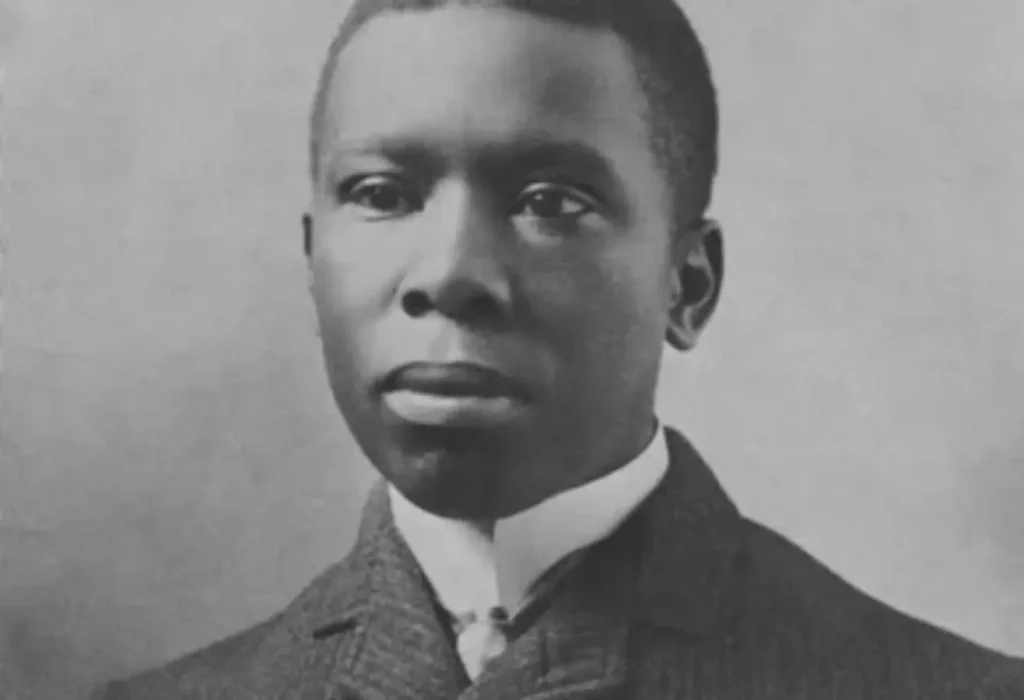
Paul Laurence Dunbar was born on June 27, 1872, in Dayton, Ohio, and became one of the first African American poets to gain national and international recognition. His work explored race, identity, love, freedom, faith, nature, and the everyday lives of Black Americans. Dunbar wrote in both standard English and African American dialect, a combination that made his poetry distinctive. His most famous poems include “We Wear the Mask,” “Sympathy,” “When Malindy Sings,” and “Ode to Ethiopia.” He also wrote novels, short stories, essays, songs, and dramatic works during his short life. Born to parents who had experienced slavery, Dunbar drew deeply from family history and Black American life. Although he died from tuberculosis at only 33, his work became an important foundation for later African American poetry.
Quick Facts About Paul Laurence Dunbar
| Fact | Details |
|---|---|
| Full name | Paul Laurence Dunbar |
| Born | June 27, 1872 |
| Birthplace | Dayton, Ohio, United States |
| Died | February 9, 1906 |
| Place of death | Dayton, Ohio, United States |
| Age at death | 33 |
| Nationality | American |
| Occupation | Poet, novelist, short-story writer, essayist, lyricist |
| Parents | Joshua Dunbar and Matilda Murphy Dunbar |
| Education | Dayton Central High School |
| Famous works | Oak and Ivy, Majors and Minors, Lyrics of Lowly Life, “We Wear the Mask,” “Sympathy” |
| Literary period | Late 19th- and early 20th-century American literature |
| Literary importance | One of the first African American poets to gain national and international recognition |
| Burial | Woodland Cemetery, Dayton, Ohio |
The National Park Service records Dunbar’s birth and death in Dayton and identifies him as one of the foremost African American poets and writers of the early 20th century.
Who Was Paul Laurence Dunbar?
Paul Laurence Dunbar was an African American poet, novelist, and short-story writer whose career helped open American literature to a wider Black literary voice. He became famous for both dialect poetry and poems written in standard English.
Dunbar’s importance goes beyond the number of poems he wrote. He gave literary form to experiences involving racial prejudice, hidden pain, family, love, faith, work, and the search for freedom.
His career was also shaped by racism. Although he showed exceptional talent at school, he faced barriers to college and employment because he was Black. His struggle to earn a living as a writer became part of his larger life story.
Where Was Paul Laurence Dunbar Born?
Paul Laurence Dunbar was born in Dayton, Ohio, on June 27, 1872. His parents, Joshua Dunbar and Matilda Murphy Dunbar, had both experienced enslavement in Kentucky before emancipation.
His father’s experiences were especially significant. Joshua Dunbar escaped slavery and served in Black Union military units during the Civil War. His mother’s memories and family history also influenced Dunbar’s understanding of slavery and plantation life.
Growing up in Dayton gave Dunbar access to public education, books, newspapers, and literary societies. These opportunities helped develop the writing skills that would later make him a major African American poet.
Paul Laurence Dunbar Early Life and Childhood
Paul Laurence Dunbar showed a strong interest in writing while he was still young. His mother recognized his talent and encouraged his education and literary interests despite the family’s financial limitations.
Dunbar’s childhood was shaped by the stories of parents who had lived through slavery. Those family memories later appeared in his poems and prose, especially when he wrote about Black identity, plantation life, freedom, and racial injustice.
By his teenage years, Dunbar was already publishing poetry. His early success showed that his literary ability was developing faster than the opportunities available to him as a young Black writer.
Paul Laurence Dunbar Education
Paul Laurence Dunbar graduated from Dayton Central High School in 1891, where he was the only African American student in his class. He became class poet, edited the school newspaper, and served as president of the school’s literary society.
Dunbar wanted to continue his education and reportedly hoped to study law. Financial problems prevented him from attending college, so he had to build his literary career without a university education.
His reading was broad. He studied writers such as John Keats, William Wordsworth, John Greenleaf Whittier, Henry Wadsworth Longfellow, Shakespeare, and James Whitcomb Riley. These influences helped shape his formal poetry and musical language.
How Did Paul Laurence Dunbar Start His Writing Career?
Paul Laurence Dunbar began his professional writing career as a teenager, publishing poems in the Dayton Herald and becoming involved in local journalism. He also helped produce The Dayton Tattler, a short-lived Black newspaper.
After high school, Dunbar struggled to find suitable work. His race prevented him from obtaining some positions in journalism and business, so he eventually worked as an elevator operator in Dayton.
The job was demanding but gave him time to write. He continued producing poems, stories, and articles while looking for ways to reach a larger audience.
Paul Laurence Dunbar Career and Rise to Fame
Paul Laurence Dunbar’s career changed after he spoke at a meeting of the Western Association of Writers in Dayton in 1892. There he met James Newton Matthews, whose praise helped bring Dunbar’s work to newspapers outside Ohio.
Dunbar later received encouragement from the poet James Whitcomb Riley. With help from supporters, he published Oak and Ivy in 1893. The collection included both standard-English poems and dialect verse.
His next major collection, Majors and Minors, appeared in 1895. The book attracted wider attention, especially after the influential critic William Dean Howells praised Dunbar’s work.
How Did William Dean Howells Affect Dunbar’s Career?
William Dean Howells helped increase Dunbar’s national literary reputation by praising his poetry in Harper’s Weekly. His support introduced Dunbar to a much wider reading public.
However, Howells’s praise also had a complicated effect. White readers became especially interested in Dunbar’s dialect poems, sometimes treating them as the defining feature of his work.
This created a problem for Dunbar’s literary legacy. His standard-English poems often explored serious questions of race, dignity, identity, and emotional suffering, but dialect poems received much of the attention.
Paul Laurence Dunbar and Lyrics of Lowly Life
Lyrics of Lowly Life was published in 1896 and became one of the most important books in Paul Laurence Dunbar’s career. It brought together poems from earlier collections and helped establish his national reputation.
The collection showed Dunbar’s range. It included dialect poems, formal verse, love poems, nature poetry, and poems dealing with racial experience.
The success of the book also led to an important international opportunity. Dunbar traveled to England on a reading tour and found a British publisher for the collection.
Paul Laurence Dunbar and the Library of Congress
Paul Laurence Dunbar worked at the Library of Congress in Washington, D.C., from September 1897 through December 1898. The position gave him a prestigious government workplace but also placed heavy demands on his health.
During this period, Dunbar continued publishing poetry and prose. He also expanded his work into short stories and novels.
His Washington years were productive but difficult. His health began to decline, and the pressures of his personal and professional life increasingly affected him.
Paul Laurence Dunbar’s Marriage and Personal Life
Paul Laurence Dunbar married writer and intellectual Alice Moore in 1898. She later became known as Alice Dunbar-Nelson and had her own important literary career.
Their marriage became troubled, and the couple separated after several years. Dunbar’s personal struggles occurred alongside worsening health and professional pressure.
His personal life should be understood alongside the demands placed on him as a Black writer at the turn of the 20th century. His literary success did not remove the racial and economic barriers he had faced throughout his life.
Paul Laurence Dunbar’s Struggles With Racism
Racism shaped Paul Laurence Dunbar’s education, employment, publishing career, and literary reputation. He had exceptional academic achievements but still struggled to obtain opportunities that were available to white writers.
Dunbar’s writing often reflects the tension between outward appearance and inner suffering. This is especially clear in “We Wear the Mask,” where a public smile hides private pain.
His work did not always present race in a direct or openly political way. Instead, he used symbols, characters, humor, music, and emotional contrast to show the realities of Black life in America.
Paul Laurence Dunbar’s Use of Dialect
Paul Laurence Dunbar became especially famous for dialect poetry, which used forms of African American speech associated with the late 19th-century South. His dialect verse often included humor, music, storytelling, and everyday experiences.
His use of dialect was both a strength and a source of tension. It helped him create vivid voices and preserve elements of Black folk speech, but white audiences often demanded more dialect poetry from him than he wanted to write.
Modern readers therefore study Dunbar’s dialect poems with care. They can be understood as artistic records of language and culture while also considering the racial stereotypes surrounding Black representation during his lifetime.
Paul Laurence Dunbar Writing Style and Literary Techniques
Paul Laurence Dunbar’s writing style combines musical language, traditional poetic forms, vivid imagery, storytelling, and contrasts between public and private life. His poems can sound simple while carrying complex emotional meanings.
One of his strongest techniques is contrast. He often places joy beside sorrow, freedom beside confinement, and a cheerful public voice beside private suffering.
Dunbar also used rhyme, repetition, rhythm, symbolism, personification, and dialect. These literary devices gave his poems a strong spoken and musical quality.
His work in standard English is especially important because it shows that Dunbar’s talent extended far beyond dialect verse. The Poetry Foundation notes that dialect poems make up only a small portion of his larger literary canon.
What Themes Did Paul Laurence Dunbar Explore?
Paul Laurence Dunbar’s themes include racial injustice, identity, hidden suffering, freedom, love, nature, faith, family, work, and the complexity of Black American life.
- Race and racism: Dunbar examined the restrictions and emotional burdens created by racial prejudice.
- Freedom: The desire to escape social and emotional confinement appears throughout his work.
- Identity: His poems often explore the difference between the self people show and the self they hide.
- Love and relationships: Dunbar wrote about romantic love, longing, family affection, and emotional loss.
- Nature: Gardens, seasons, birds, fields, and natural landscapes often provide emotional settings.
- Faith: Religious ideas sometimes offer comfort, endurance, and hope.
- Black life and culture: His dialect poems preserve elements of speech, music, humor, storytelling, and community life.
Paul Laurence Dunbar Poems and Poetry
Paul Laurence Dunbar wrote more than 400 poems during his short career, along with numerous books of poetry, stories, novels, essays, and other literary works.
His poetry ranges from formal English verse to dialect poems, love lyrics, sonnets, nature poems, social commentary, and poems about Black identity. His ability to move between these forms is central to his literary importance.
Among his most famous poems are “We Wear the Mask,” “Sympathy,” “When Malindy Sings,” “Ode to Ethiopia,” “The Haunted Oak,” “Little Brown Baby,” “Douglass,” and “The Poet.”
“We Wear the Mask”
“We Wear the Mask” is one of Paul Laurence Dunbar’s most famous poems, exploring the hidden pain people conceal behind a public appearance of happiness. It was published in 1896 in Lyrics of Lowly Life.
The mask becomes a powerful symbol of survival. The poem suggests that people may smile and behave normally while carrying deep suffering that others cannot see.
Its simple central image has made the poem one of the most studied examples of Dunbar’s use of symbolism and emotional contrast.
“Sympathy”
“Sympathy” is best known for its image of a caged bird struggling against confinement. The poem was included in Lyrics of Lowly Life and became one of Dunbar’s most enduring works.
The caged bird represents a person whose freedom has been restricted. The bird’s repeated attempts to escape turn physical confinement into a larger symbol of oppression.
The poem’s central image later became widely associated with the struggle for freedom in African American literature.
“When Malindy Sings”
“When Malindy Sings” is a dialect poem that celebrates the power and emotional depth of a Black singer’s voice. It contrasts natural musical ability with formal musical training.
The poem shows Dunbar’s gift for rhythm and character. The spoken voice feels lively, personal, and connected to community traditions.
At the same time, the poem raises questions about how Black cultural expression was judged by formal institutions and white audiences.
“Ode to Ethiopia”
“Ode to Ethiopia” expresses pride in Black identity, heritage, endurance, and hope. It appears in Lyrics of Lowly Life, the collection that helped establish Dunbar’s national reputation.
The poem treats Ethiopia as a powerful symbol of African heritage. Dunbar connects history with a future in which Black people can claim dignity and strength.
Its importance lies in the way Dunbar links personal identity with a broader cultural history.
“The Haunted Oak”
“The Haunted Oak” is a darker poem dealing with violence, racial terror, guilt, and historical memory. It uses the image of an oak tree as a witness to a brutal event.
The tree becomes more than part of the landscape. It carries memory and seems unable to escape the violence connected to the place.
The poem demonstrates Dunbar’s ability to address racial violence through dramatic imagery rather than simple explanation.
“Little Brown Baby”
“Little Brown Baby” is a warm dialect poem centered on a father’s affection for his child. Its intimate tone differs from Dunbar’s darker poems about racial oppression.
The poem presents Black family life through tenderness, humor, and everyday speech. It reminds readers that Dunbar’s poetry was not limited to protest or suffering.
This domestic focus is important because it shows ordinary love and family relationships as central parts of Black American life.
“Douglass”
“Douglass” honors Frederick Douglass, the major abolitionist, writer, and public speaker who influenced Dunbar’s generation. The poem expresses a desire for strong leadership and freedom.
Dunbar admired Douglass and had encountered him during his own rise in literary circles. The poem therefore carries both personal and historical meaning.
Its central feeling is a longing for the courage and moral force associated with Douglass.
“The Poet”
“The Poet” reflects on the role of the writer and the emotional cost of creating art. It suggests that poetry can transform personal suffering into something meaningful.
The poem is useful for understanding Dunbar’s own position as a professional writer. He was expected to entertain readers while also carrying the weight of representing Black experience.
Paul Laurence Dunbar’s Major Books and Literary Works
Paul Laurence Dunbar produced poetry, short stories, novels, essays, songs, and dramatic writing during a career that lasted only about 14 years.
Oak and Ivy (1893)
Oak and Ivy was Dunbar’s first poetry collection. He published it with financial help and included both dialect poems and poems written in standard English.
The book established the foundation for his later career. It also included “Sympathy,” which became one of his best-known poems.
Majors and Minors (1895)
Majors and Minors expanded Dunbar’s reputation and demonstrated the variety of his poetic voice. It included poems on different subjects and in different styles.
The collection became especially important after William Dean Howells praised Dunbar’s work. The attention helped Dunbar reach readers beyond Ohio.
Lyrics of Lowly Life (1896)
Lyrics of Lowly Life became Dunbar’s breakthrough poetry collection. It brought together earlier work and introduced his poetry to a large national audience.
The book contains several poems that remain central to discussions of Dunbar, including “We Wear the Mask,” “Sympathy,” and “Ode to Ethiopia.”
Folks From Dixie (1898)
Folks From Dixie was Dunbar’s first collection of short stories. The stories examine Black life in the American South and the social conditions surrounding emancipation and racial prejudice.
The collection shows that Dunbar’s literary interests extended well beyond poetry. His fiction also allowed him to explore social class, race, community, and regional life.
The Uncalled (1898)
The Uncalled was Dunbar’s first novel. Unlike many of his works about Black American life, the novel focuses primarily on white characters and spiritual struggle.
The novel demonstrated Dunbar’s willingness to experiment with different subjects and literary forms during his short career.
Lyrics of the Hearthside and Lyrics of Sunshine and Shadow
These later poetry collections continued Dunbar’s exploration of love, nature, family, race, faith, and personal emotion. Lyrics of Sunshine and Shadow appeared in 1905, shortly before his death.
Together, these books show how broad his poetic interests remained. Dunbar could write playful dialect verse, formal lyrics, love poetry, and serious poems about racial experience.
Paul Laurence Dunbar’s Health Problems
Paul Laurence Dunbar suffered from tuberculosis, a serious illness that weakened him during the final years of his life. His health problems were made worse by heavy alcohol use.
His illness affected his personal and professional life. During his final years, he returned to Dayton and lived with his mother while continuing to write despite declining health.
Dunbar’s health struggles were especially tragic because his literary career was still developing. He died at only 33, leaving a large body of work behind.
What Happened to Paul Laurence Dunbar?
Paul Laurence Dunbar died in Dayton, Ohio, on February 9, 1906, at age 33, after years of declining health associated with tuberculosis. He was buried at Woodland Cemetery in Dayton.
His death ended one of the most remarkable early African American literary careers. Although he lived only 33 years, he produced poetry, fiction, essays, and other works across many genres.
Dunbar’s reputation continued to change after his death. Later scholars increasingly looked beyond his dialect poems and gave greater attention to his formal English poetry and his complex treatment of race.
Paul Laurence Dunbar and American Literature
Paul Laurence Dunbar became one of the first African American writers to reach a large national and international audience through literature. The Library of Congress describes him as one of the first important Black poets in American literature.
His importance lies partly in timing. He wrote during a period when Black writers faced severe restrictions in publishing, education, employment, and public life.
Dunbar demonstrated that an African American writer could build a national literary career through poetry and prose. His success helped create possibilities for later generations.
Paul Laurence Dunbar’s Influence on Later Poetry
Paul Laurence Dunbar influenced later African American writers by showing how poetry could combine formal literary traditions with Black speech, music, history, and experience.
His influence can be seen in later writers including Langston Hughes, Maya Angelou, Gwendolyn Brooks, Countee Cullen, and Nikki Giovanni. His work helped establish an important tradition of African American poetry centered on voice, identity, dignity, and social experience.
The legacy of Dunbar is therefore larger than his lifetime. His poetry became part of the literary foundation that later writers could study, challenge, reshape, and extend.
Paul Laurence Dunbar’s Literary Legacy
Paul Laurence Dunbar’s literary legacy is defined by both achievement and complexity. He gained recognition in a period when few Black writers had access to national literary markets.
His dialect poetry was celebrated during his lifetime, but later scholars questioned some of the stereotypes found in certain characters and situations. At the same time, his standard-English poems increasingly received attention for their emotional depth and treatment of race.
This changing reputation makes Dunbar especially important to study today. His work shows how a talented Black writer could succeed while still being shaped by the expectations and prejudices of the literary market.
Paul Laurence Dunbar Famous Quotes
Dunbar’s poems contain several lines that have become widely recognized in American literature. Because his major works were published before 1928, short quotations from them are in the public domain.
“We wear the mask that grins and lies.”
“We Wear the Mask”
This opening idea captures the poem’s central theme: hiding suffering behind an outward appearance of happiness.
“I know why the caged bird sings.”
“Sympathy”
The famous image connects the bird’s song with the longing for freedom and the pain of confinement.
Paul Laurence Dunbar Facts
- Paul Laurence Dunbar was born on June 27, 1872, in Dayton, Ohio.
- Both of his parents had been enslaved in Kentucky before emancipation.
- He graduated from Dayton Central High School in 1891.
- Dunbar was the only Black student in his high school class.
- He published his first poetry collection, Oak and Ivy, in 1893.
- He worked at the Library of Congress from 1897 to 1898.
- He married writer Alice Moore in 1898.
- He died from tuberculosis on February 9, 1906.
- Dunbar was only 33 when he died.
- His poetry helped establish an important foundation for later African American literature.
What Is Paul Laurence Dunbar Most Known For?
Paul Laurence Dunbar is most known for pioneering African American poetry and for works such as “We Wear the Mask” and “Sympathy.”
He became especially famous for his use of dialect poetry, but his complete literary work is much broader. He wrote poems in standard English, novels, short stories, essays, songs, and dramatic pieces.
Today, readers often study Dunbar for the tension between his public literary success and the racial limitations placed on him by publishers and audiences.
Paul Laurence Dunbar’s Significance Today
Paul Laurence Dunbar remains significant because he helped establish Black literature as an important part of American literary culture at a time of intense racial discrimination.
His poems continue to appear in classrooms and literary studies because they address questions that remain understandable today: Who gets to speak? What happens when people hide their pain? How does racism affect identity? What does freedom mean?
His work also encourages readers to look beyond a single famous poem. Dunbar’s full body of writing reveals a much more versatile writer than the narrow image created by his reputation as a dialect poet.
Final Talk
Paul Laurence Dunbar was a groundbreaking African American poet whose short life produced an unusually rich body of poetry and prose. Born in Dayton in 1872 to parents who had experienced slavery, he overcame financial and racial barriers to become one of the first Black writers to gain a national and international literary audience. His poems such as “We Wear the Mask,” “Sympathy,” and “Ode to Ethiopia” explore hidden suffering, freedom, identity, race, and hope. His dialect poetry made him famous, but his standard-English verse shows an equally important side of his art. Dunbar also wrote novels, short stories, essays, songs, and dramatic works. Although tuberculosis ended his life in 1906 at age 33, his influence continued through later African American writers. His literary legacy remains important because it captures both the beauty and limits of Black artistic expression in post-Reconstruction America.
FAQs
Paul Laurence Dunbar’s most famous poem is often considered “We Wear the Mask,” although “Sympathy” is also among his best-known works. “We Wear the Mask” explores the experience of hiding pain behind a public appearance of happiness. “Sympathy” uses the image of a caged bird to express the desire for freedom.
Paul Laurence Dunbar is best known as one of the first African American poets to gain national and international recognition. He became particularly famous for dialect poetry, while also writing influential poems in standard English, including “We Wear the Mask” and “Sympathy.”
Paul Laurence Dunbar died in Dayton, Ohio, on February 9, 1906, at age 33. He suffered from tuberculosis during the final years of his life, and his health declined significantly before his death.
Paul Laurence Dunbar’s life was marked by literary achievement, racial barriers, financial hardship, personal difficulties, and serious illness. He excelled in school, struggled to find work because of racism, became a successful writer, married Alice Dunbar-Nelson, and died young from tuberculosis.
Some of Paul Laurence Dunbar’s best-known poems include “We Wear the Mask,” “Sympathy,” “When Malindy Sings,” “Ode to Ethiopia,” “The Haunted Oak,” “Little Brown Baby,” “Douglass,” and “The Poet.”
Read About Other Poets
Countee Cullen: Biography, Life, Poems, Books, and Legacy
Gwendolyn Brooks: Biography, Life, Poems, Books, Awards, and Legacy
Poems by Paul Laurence Dunbar Biography: Life, Poems, Career, and Legacy
No poems published yet for this poet.